Road Trip Prep: The Complete Pre-Trip Car Checklist
Quick Answer
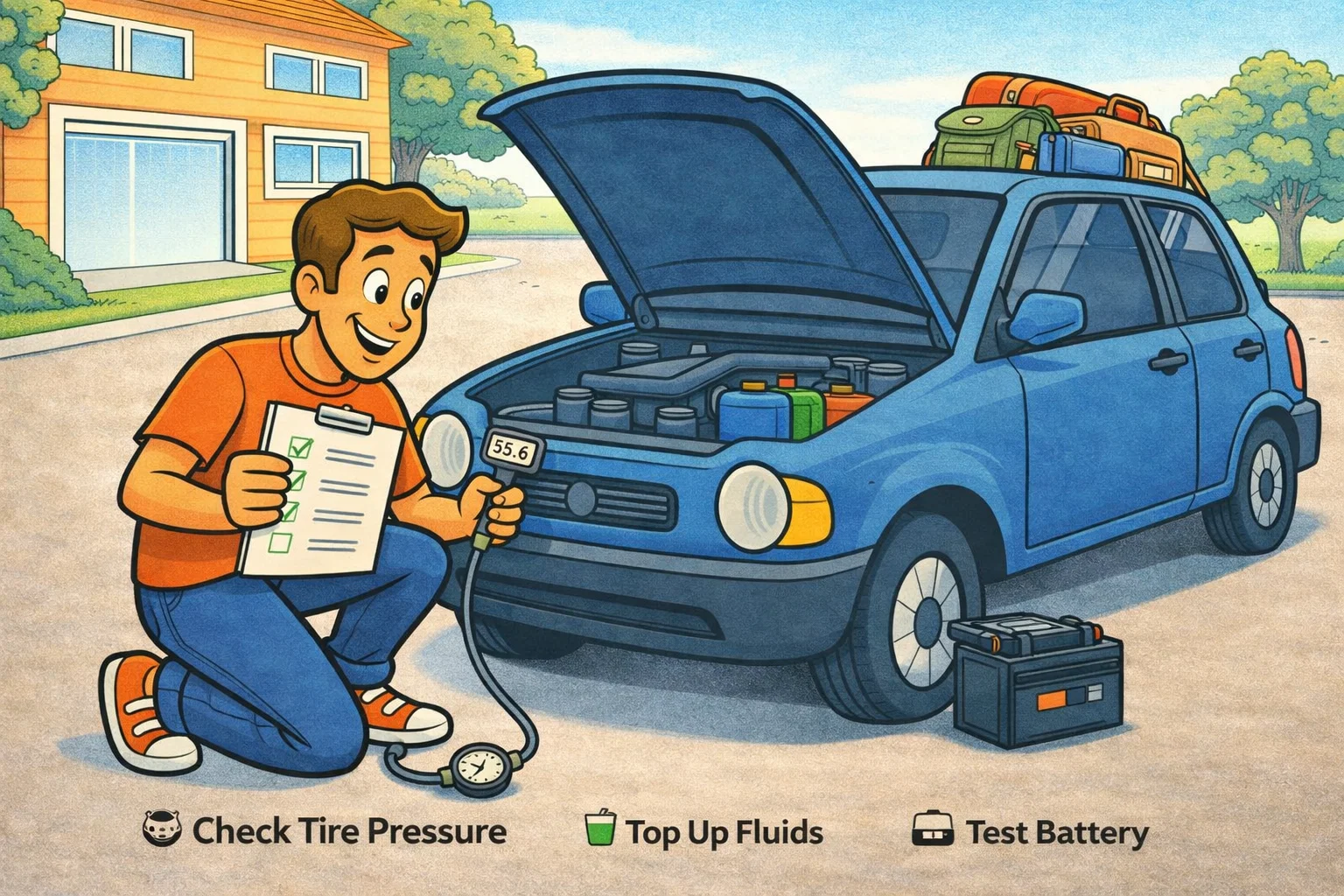
Before any road trip, check these 5 things: tire pressure and tread depth, engine oil level, coolant level, brake fluid, and windshield washer fluid. Also test your battery voltage, inspect wiper blades, and verify all lights work. This 90-minute inspection prevents the $500+ average cost of a highway breakdown.
A single breakdown on the highway can cost you $500 or more in towing, emergency repairs, and lost vacation time. The good news? Most road trip breakdowns are preventable with about 90 minutes of preparation. This 10-point checklist walks you through every system you need to inspect before hitting the road, so you can drive with confidence instead of anxiety.
The 10 Pre-Trip Checks That Prevent Breakdowns
The ten most important pre-road trip checks are: tire pressure and tread depth, engine oil level and condition, coolant level and concentration, brake pad thickness, battery voltage and terminals, belts and hoses, all exterior lights, wiper blades and washer fluid, AC system performance, and your emergency kit. Complete all ten and you will dramatically reduce your chances of a roadside emergency.
Short on Time? Do These 3 Things First
1. Check tire pressure and tread depth because tire failure is the number one cause of highway breakdowns.
2. Test your battery since a weak battery that works fine around town can fail on a long highway drive.
3. Top off all fluids to prevent overheating and ensure safe braking during extended driving.
These three checks take under 20 minutes and address the most common road trip failures.
Why Pre-Trip Inspections Save Money and Stress
According to the AAA Foundation for Traffic Safety, more than 32 million drivers needed roadside assistance in 2024. The top three causes were dead batteries, flat tires, and overheating. All three are completely preventable with a basic pre-trip inspection. A tow from a rural highway can easily cost $300 to $500, and that does not include the repair itself or the hotel night you did not plan for.
The inspection in this guide takes about 90 minutes and costs $20 to $50 in materials if you need to top off fluids or replace wiper blades. Compare that to the average roadside breakdown cost of $500 or more, and the math is simple. Spending a Saturday morning in your driveway beats spending a Saturday afternoon on the shoulder of I-95.
When to Do Your Pre-Trip Inspection
Complete your inspection 3 to 7 days before departure. This gives you time to order parts or schedule a shop visit if you find a problem. Checking the night before leaves zero margin for unexpected issues like a weak battery that needs replacement or brake pads that are thinner than you expected.
Mileage Tip
Vehicle Variability
Tools and Materials
Tools Needed
- •Tire pressure gauge
- •Tread depth gauge or penny
- •Multimeter or battery tester
- •Flashlight
- •Basic wrench set
- •Funnel for fluid top-offs
Materials and Supplies
- •Engine oil (1 quart, correct weight)
- •Coolant (pre-mixed, vehicle-specific)
- •Washer fluid
- •Jumper cables or portable jump starter
- •First aid kit
- •Reflective warning triangles or flares
- •Phone charger and portable battery bank
10-Point Pre-Trip Checklist
Check Tire Pressure and Tread Depth
Tire failure is the leading cause of highway breakdowns. Under-inflated tires overheat at sustained speeds, and worn tread cannot channel water during rain.
- Check pressure when tires are cold (before driving)
- Set to the pressure listed on your driver's door jamb, not the tire sidewall
- Use a penny to check tread: if you see Lincoln's full head, tires need replacement
- Inspect sidewalls for cracks, bulges, or cuts from potholes
- Do not forget the spare tire, verify it is inflated and the jack works
Need a tire rotation before the trip? Follow our tire rotation guide.
Check Engine Oil Level and Condition
Long highway drives put more sustained load on your engine than city driving. Starting with fresh, full oil prevents overheating and premature wear.
- Pull the dipstick on a cold engine, wipe, reinsert, and read the level
- Oil should be between the min and max marks
- Check color: golden or light brown is good, dark black or gritty means it is time to change
- If your next oil change falls within the trip mileage, change it now
- Bring one quart of the correct weight oil for top-offs during the trip
Due for an oil change? See our complete oil change guide.
Inspect Coolant Level and Condition
Your cooling system works hardest during long drives in warm weather. Low or degraded coolant is the fastest path to an overheated engine on a summer highway.
- Check the coolant reservoir when the engine is cold (never open a hot radiator cap)
- Level should be between the min and max lines on the reservoir
- Coolant should be its original color (green, orange, or pink), not brown or rusty
- Top off with the correct type for your vehicle if low
- Look under the car for coolant puddles, which signal a leak
Not sure which coolant to use? Check our coolant types guide. Seeing leaks? Read our leak diagnosis guide.
Check Brake Pads and Brake Fluid
Mountain driving, towing, and loaded vehicles put extra stress on brakes. Starting a long trip with thin pads or low fluid is a safety risk you can easily avoid.
- Look through wheel spokes to visually inspect brake pad thickness
- Minimum safe pad thickness is 3 to 4mm (about the thickness of two pennies)
- Check brake fluid level in the master cylinder reservoir under the hood
- Fluid should be clear to light amber, not dark brown or black
- Listen for squealing or grinding during a test drive around the block
Pads looking thin? Our brake pad replacement guide walks you through the swap.
Test Battery Voltage and Terminals
A battery that starts your car fine for 10-minute commutes can fail on a 6-hour highway drive. Sustained accessory load (GPS, phones, AC) drains a weak battery fast.
- Use a multimeter: should read 12.4V or higher with the engine off
- With the engine running, should read 13.7V to 14.7V (charging system working)
- Inspect terminals for white or green corrosion buildup
- Clean corroded terminals with baking soda and water
- Check the battery age sticker: most batteries last 3 to 5 years
- If over 4 years old or testing below 12.4V, replace before the trip
For full diagnostics, see our battery troubleshooting guide.
Inspect Belts and Hoses
A broken serpentine belt will kill your power steering, AC, and alternator simultaneously, leaving you stranded. Rubber degrades faster in heat, making this critical for summer trips.
- Inspect the serpentine belt for cracks, fraying, or glazing on the ribbed side
- Press on the belt: it should have no more than half an inch of deflection
- Squeeze radiator hoses: they should feel firm but flexible, not spongy or brittle
- Look for bulges, cracks, or wet spots on any hose
- Check hose clamps for tightness and corrosion
Belts over 60,000 miles should be replaced. See our timing belt guide if your vehicle uses one.
Test All Exterior Lights
A burned-out tail light or brake light can earn you a ticket in an unfamiliar state and create a safety hazard. Checking lights takes five minutes and saves real headaches.
- Turn on headlights and check both low and high beams
- Verify both tail lights and both brake lights work (have someone press the pedal)
- Test all four turn signals and hazard flashers
- Check reverse lights by shifting to reverse briefly
- Clean foggy headlight lenses for maximum visibility
Need a bulb replacement? See our headlight bulb guide. Hazy lenses? Try our headlight restoration guide.
Replace Wiper Blades and Fill Washer Fluid
Driving through rain or road spray with streaky wipers is dangerous and exhausting. Fresh blades and a full washer fluid reservoir make all the difference on long drives.
- Test wipers: if they streak, chatter, or skip, replace them
- Wiper blades last 6 to 12 months depending on climate and use
- Fill the washer fluid reservoir completely (use bug remover formula for summer)
- Test the washer spray pattern: nozzles should hit the windshield evenly
- Clean the inside of the windshield for glare-free night driving
Test the AC System
Driving 8 hours in summer heat without AC is miserable and potentially dangerous. Test the system now so you have time to address any issues before departure.
- Turn the AC to maximum cold and let it run for 5 minutes
- Air should blow noticeably cold within 2 to 3 minutes
- Check for unusual smells (musty = dirty cabin filter, sweet = coolant leak)
- Listen for clicking or grinding noises from the compressor
- If cooling is weak, the system may need a refrigerant recharge
AC not cold enough? Our AC diagnosis guide covers the fix. Also see our summer car prep guide for heat-specific maintenance.
Pack Your Emergency Kit
Even with a perfectly maintained car, other drivers, weather, and road debris can create emergencies. A well-stocked kit turns a potential crisis into a manageable inconvenience.
- Jumper cables or a portable jump starter (the portable option is easier solo)
- Reflective warning triangles or road flares
- First aid kit with bandages, antiseptic, and basic medications
- Flashlight with fresh batteries or a rechargeable model
- Phone charger and portable battery bank
- Basic tool kit (pliers, screwdrivers, adjustable wrench, duct tape)
- Water and non-perishable snacks for each passenger
- Blanket (useful for warmth or as a ground cover during tire changes)
Pre-Trip Inspection: DIY vs. Shop Cost
A dealership or service center will charge $100 to $200 for a pre-trip inspection. That price covers the inspection only, not any parts or services they recommend. By doing it yourself, you spend $20 to $50 on materials (wiper blades, washer fluid, and a quart of oil) and catch the same issues a technician would. Plus, you actually learn what is going on with your car.
| Check | DIY Cost | Shop Cost |
|---|---|---|
| Tire pressure and tread check | $0 | Included in inspection |
| Oil level and condition check | $0 | Included in inspection |
| Battery test | $0 (free at parts stores) | $20-40 |
| Wiper blade replacement | $15-30 | $40-80 |
| Washer fluid top-off | $3-5 | $10-15 |
| Total pre-trip prep | $20-50 | $100-200 |
Extra Steps for Trips Over 500 Miles
For longer trips, a few additional precautions can prevent problems that shorter drives would never reveal.
- Research roadside assistance coverage. Verify your AAA membership, insurance roadside benefit, or manufacturer warranty coverage is active and covers your route.
- Download offline maps. Cell coverage can be spotty in rural areas. Download your route in Google Maps or Apple Maps before you leave.
- Plan fuel stops. In remote areas, gas stations can be 50 to 100 miles apart. Do not let the tank drop below a quarter.
- Check your spare tire tools. Make sure the jack, lug wrench, and jack stand points are accessible and functional. Practice a tire change at home if you have never done one.
If you are a first-time car owner planning your first big road trip, our first-time car owner guide covers the basics of understanding your vehicle and staying on top of essential maintenance.
Do Not Drive If You Find These
Brake pad thickness under 2mm. You could lose braking ability on a long downhill.
Battery voltage below 12.0V. This battery will fail, it is a matter of when, not if.
Coolant leak. Even a small leak will worsen under sustained highway temperatures.
Serpentine belt with deep cracks or missing chunks. Belt failure kills power steering, AC, and charging simultaneously.
Tire with visible cord or sidewall bulge. This tire can blow at any moment.
Related Seasonal Guides
Your pre-trip inspection is one piece of a bigger seasonal maintenance picture. These related guides cover the full seasonal prep that keeps your car reliable year-round.
- Spring Car Maintenance Checklist for post-winter vehicle recovery
- Summer Car Prep Guide for hot weather maintenance
- Winter Car Prep Guide for cold weather driving
- Car Maintenance Schedule for mileage-based service intervals
Frequently Asked Questions
Don't Miss Critical Car Care Tips
Get exclusive guides, money-saving maintenance tips, and early warning signs delivered straight to your inbox.