5 Signs Your Timing Belt Needs Replacement: Don't Let a $15 Part Destroy Your Engine
Quick Answer
Replace your timing belt every 60,000 to 100,000 miles (check your owner's manual). Warning signs include a ticking noise from the engine, misfires, oil leaking from the front, the engine not turning over, and visible cracks on the belt. On interference engines, a broken timing belt destroys valves and pistons, costing $2,000 to $4,000+.
Tools and Parts for a Timing Belt Service
Most pros replace the water pump and refresh coolant during a timing belt job. Bundle the work, save the labor.
tool
1/2" Drive Torque Wrench
Calibrated, 10-150 ft-lb. Essential for any DIY job.
Check pricepart
Water Pump Replacement Kit
OEM-grade water pump with gasket included.
Check pricefluid
Premixed 50/50 Coolant (Universal)
Ready-to-pour, no mixing required.
Check priceAffiliate links. We may earn a small commission at no extra cost to you. Learn more.
Your timing belt synchronizes engine valve and piston movement. The five warning signs of failure are: persistent ticking noises matching engine RPM, engine stumbling and hesitation, failure to start, visible belt cracks or missing teeth, and check engine light with performance issues. Ignoring these signs risks $2,000 to $4,000 in engine damage.
That persistent ticking sound coming from under your hood isn't your engine keeping perfect time. It's actually counting down to disaster.
Here's the brutal truth about timing belt failure: ignore the warning signs, and you could be facing a $4,000+ engine rebuild instead of an $800 replacement. We're talking about the difference between:
- • A manageable repair that takes half a day
- • Complete engine destruction that could total your car
Your timing belt is one of those critical components that works silently in the background, synchronizing your engine's most vital functions. When it fails, it doesn't just leave you stranded on the roadside. In most modern cars, a snapped timing belt creates a domino effect of catastrophic damage that can destroy pistons, valves, and cylinder heads in milliseconds.
The scary part? Timing belt failure often happens without warning. One moment you're cruising down the highway, the next moment your engine seizes up completely, leaving you with a repair bill that exceeds your car's value.
But here's what most drivers don't realize: your timing belt actually gives you plenty of advance warning before it reaches the point of no return. You just need to know what to listen for, what to look for, and exactly how urgent each symptom really is.
In the next few minutes, you'll discover the 5 unmistakable warning signs that your timing belt is crying out for replacement. More importantly, you'll learn the specific timeline for each symptom, so you know whether you need to:
- • Schedule a repair within days
- • Get to a mechanic within the week
- • Stop driving immediately and call for a tow truck
Don't let a $15 rubber belt turn into a $4,000 nightmare. Let's dive into these critical warning signs before it's too late.
Warning Sign #1: That Persistent Tick-Tick-Tick Under Your Hood
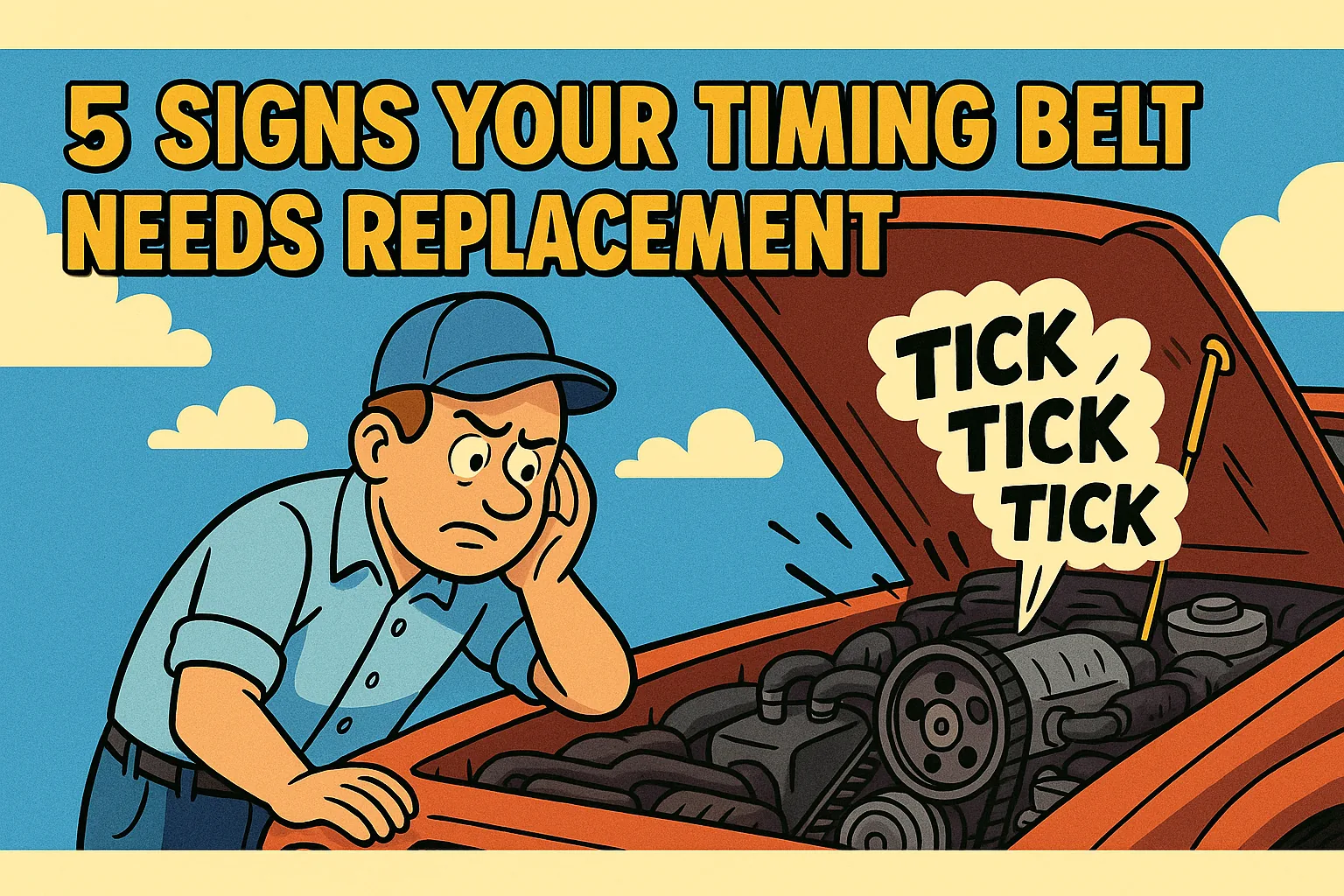
This is the #1 warning sign that sends most car owners searching for answers, and for good reason. That distinctive ticking sound coming from your engine bay is often your timing belt's cry for help.
What You're Actually Hearing
What you're actually hearing:
- • Your worn timing belt losing precise control over valve movements
- • Components operating less smoothly as the belt stretches
- • The rhythmic sound of impending failure that's impossible to ignore
Important distinction: Before assuming it's your timing belt, check your oil level first. Low oil pressure can create similar ticking sounds. If your oil is at proper levels and you're still hearing persistent ticking, your timing belt is likely the culprit.
Urgency Level: Schedule Inspection Within 1-2 Weeks
While this isn't an immediate emergency that requires pulling over right now, don't treat it as something you can put off indefinitely. The ticking sound indicates your timing belt is in the early stages of failure.
Listen for these warning signs:
- • Consistent ticking that matches your engine's RPM
- • Sound becomes more pronounced when accelerating
- • Noise persists even after the engine warms up
- • Gets progressively worse over days or weeks
Warning Sign #2: Your Engine Stumbles and Hesitates
When your timing belt starts slipping or skipping teeth, your engine's precisely choreographed dance falls apart. You'll experience this as noticeable performance issues that make driving frustrating and potentially dangerous.
What You'll Experience Behind the Wheel
Behind the wheel, you'll experience:
- • Hesitation during acceleration
- • Rough, uneven idling at traffic lights
- • Noticeable vibration throughout the vehicle
- • Sudden loss of power when you need it most
This happens because a worn timing belt causes your engine valves to open and close at incorrect intervals, completely disrupting the combustion process that powers your vehicle.
Urgency Level: Schedule Repair Within 1 Week Maximum
Engine misfires indicate your timing belt may be slipping or skipping teeth. This is the danger zone where complete failure can happen quickly and without additional warning.
These signs demand immediate attention:
- • Multiple misfires during a single drive
- • Progressively worsening acceleration problems
- • Check engine light with rough running
- • Car struggles to maintain consistent idle speed
Never ignore persistent misfires. Each misfire event puts additional stress on your already compromised timing belt, accelerating the timeline toward complete failure.
Warning Sign #3: Your Car Won't Start (Or Barely Starts)
When your car struggles to start or won't start at all, a failing timing belt could be preventing your camshaft from turning properly. You might hear the starter motor engage and work normally, but the engine simply won't catch and run because the timing is completely off.
The Starting Failure Progression
Starting failure progression:
- • Early stage: Engine takes longer cranking than usual
- • Middle stage: Intermittent starting problems
- • Late stage: Engine cranks but won't start at all
- • Complete failure: No compression, potential internal damage
Urgency Level: Immediate Attention Required
If your car won't start and you suspect timing belt issues, have it towed immediately. Do not continue attempting to start the engine, as this can cause severe internal damage if the timing belt has already failed.
Critical safety rule: Never attempt to force-start an engine with suspected timing belt failure. Each attempt to start could be causing pistons to collide with valves, turning a timing belt replacement into a complete engine rebuild.
Red flag scenarios:
- • Engine cranks normally but won't fire up
- • No compression when cranking (engine turns too easily)
- • Metallic rattling sounds during start attempts
- • Recent history of the other warning signs listed above
Warning Sign #4: Visible Signs of Belt Wear and Damage
Good news: You can actually inspect your timing belt condition yourself without major disassembly. Many vehicles have a small removable cover that provides visual access to at least part of the timing belt.
Your DIY Inspection Checklist
Look for these obvious signs of wear and impending failure:
Surface damage indicators:
- • Cracks running across the belt width
- • Fraying or fuzzy edges on belt sides
- • Glazed, shiny appearance from heat exposure
- • Oil contamination making the belt dark and slippery
Structural damage signs:
- • Missing or worn teeth on inner belt surface
- • Excessive stretching creating loose tension
- • Chunks of rubber missing from belt body
- • Visible cord or fabric showing through worn areas
Urgency Level: Schedule Replacement Within Days
Visible belt wear indicates you're in the final stages before failure. Unlike the other warning signs that give you weeks, visible damage means your timing belt could snap at any moment.
Professional inspection tip: Even if you can only see a small section of your timing belt, significant wear in one area typically indicates the entire belt is compromised. Don't assume the hidden portions are in better condition.
Warning Sign #5: Advanced Engine Performance Issues and Dashboard Warnings
As timing belt problems progress, you'll start experiencing a combination of symptoms that indicate your engine's timing system is failing comprehensively.
Dashboard Warning Signals
Common diagnostic codes indicating timing issues:
- • P0300: Random/multiple cylinder misfires
- • P0016: Crankshaft/camshaft position correlation error
- • P0017: Crankshaft/camshaft position bank 1 sensor B
- • P0340 & P0341: Camshaft position sensor circuit problems
Additional Performance Red Flags
Power and acceleration issues:
- • Gradual loss of engine power over weeks
- • Poor throttle response during acceleration
- • Engine seems to "work harder" for same performance
- • Reduced fuel economy as timing becomes inefficient
Less common but serious symptoms:
- • Squealing sounds during acceleration or braking
- • Smoke from the engine after startup
- • Unusual vibrations transmitted through the steering wheel
- • Engine "surging" or inconsistent power delivery
Urgency Level: Varies by Symptom Severity
Check engine lights require immediate professional diagnosis, while gradual power loss allows for scheduling within a week. However, any combination of multiple symptoms should be treated as high priority.
The Catastrophic Cost of Ignoring These Warning Signs
Proactive timing belt replacement costs $580 to $1,400 depending on your engine type. Waiting until the belt fails in an interference engine can result in $2,000 to $4,000 or more in repairs, often exceeding the vehicle's value. Non-interference engines avoid catastrophic damage but still leave you stranded.
The financial consequences of timing belt failure depend entirely on your engine type, but the results are universally expensive and potentially devastating.
Interference Engines (Most Modern Vehicles)
In interference engines, pistons and valves occupy the same space at different times. When the timing belt fails, pistons collide with valves at high speed, causing:
- • Bent or broken valves requiring complete cylinder head work
- • Damaged pistons needing engine block repairs
- • Potential connecting rod damage from valve/piston impacts
- • Complete engine replacement in severe cases
Typical repair costs: $2,000 to $4,000+ (often exceeding vehicle value)
Non-Interference Engines (Older Vehicles)
In non-interference engines, pistons and valves don't occupy the same space. Timing belt failure results in:
- • Engine stops running but typically no internal damage
- • You'll be stranded but avoid major repair costs
- • Simple timing belt replacement restores normal operation
Typical repair costs: $580 to $1,400 (standard timing belt service). For manufacturer-specific intervals, check the Gates timing belt knowledge center or your owner's manual.
Immediate Safety Dangers
Complete timing belt failure while driving creates serious safety hazards:
- • Instant loss of power at highway speeds
- • Heavy steering due to power steering loss
- • Reduced braking effectiveness in vehicles with vacuum-assisted brakes
- • Potential accident risk if failure occurs in traffic
Your Immediate Action Plan
If you've recognized any of these warning signs in your vehicle, here's exactly what you need to do:
For Ticking Noises or Visible Wear:
- • Check your maintenance records to see when the belt was last replaced
- • Schedule professional inspection within 1-2 weeks maximum
- • Avoid aggressive driving until the issue is diagnosed
- • Consult your owner's manual for manufacturer-specific recommendations
For Engine Misfires or Performance Issues:
- • Schedule repair within 1 week maximum
- • Drive gently and avoid high RPM situations
- • Monitor symptoms closely for any worsening
- • Have diagnostic codes read if check engine light is present
For Starting Problems or Complete Failure:
- • Stop attempting to start the engine immediately
- • Have the vehicle towed to a qualified repair facility
- • Do not drive even if you get it started temporarily
- • Inform the mechanic about suspected timing belt issues
Prevention and Maintenance Strategy:
- • Follow manufacturer replacement intervals religiously
- • Address oil leaks promptly to prevent belt contamination
- • Keep detailed maintenance records for future reference
- • Consider replacing related components during timing belt service
Key Takeaway:
Remember: every day you wait increases your risk. Don't let your car become another $4,000 statistic.
Planning Your Maintenance
Frequently Asked Questions
1. How long can I drive with a ticking timing belt?
You shouldn't drive indefinitely with timing belt ticking sounds. While you typically have 1-2 weeks before failure becomes likely, the exact timeline depends on how worn your belt is and your driving conditions. Aggressive driving, high temperatures, and stop-and-go traffic can accelerate failure. Schedule professional inspection immediately rather than gambling with your engine's life.
2. Can a timing belt last longer than the recommended replacement interval?
While some timing belts exceed recommended intervals, this is extremely risky gambling. The replacement interval accounts for normal driving conditions and includes a safety margin. Factors like extreme temperatures, oil contamination, and driving habits can significantly reduce belt life. The cost of premature replacement is always less than catastrophic engine damage.
3. What's the difference between timing belt and timing chain maintenance?
Timing chains typically last 100,000-200,000 miles and rarely break catastrophically, but they stretch over time and create rattling noises. Timing belts are quieter when functioning properly but fail more suddenly and completely. If your vehicle has a timing chain, you'll typically hear rattling during startup rather than the persistent ticking associated with timing belt wear.
4. Will my car insurance cover timing belt failure damage?
Standard auto insurance typically does NOT cover timing belt failure as it's considered normal maintenance rather than an accident or covered peril. Mechanical breakdown insurance or extended warranties may provide coverage, but regular comprehensive and collision policies exclude mechanical failures due to wear and tear.
5. How can I tell if my engine is interference or non-interference?
Check your owner's manual or search online using your exact engine specifications (year, make, model, and engine size). Most modern engines are interference designs, meaning timing belt failure causes internal damage. When in doubt, treat your engine as interference type and address timing belt issues with maximum urgency to avoid catastrophic repair costs.
Don't Miss Critical Car Care Tips
Get exclusive guides, money-saving maintenance tips, and early warning signs delivered straight to your inbox.