Summer Car Prep: Complete Hot Weather Maintenance Guide
Quick Answer
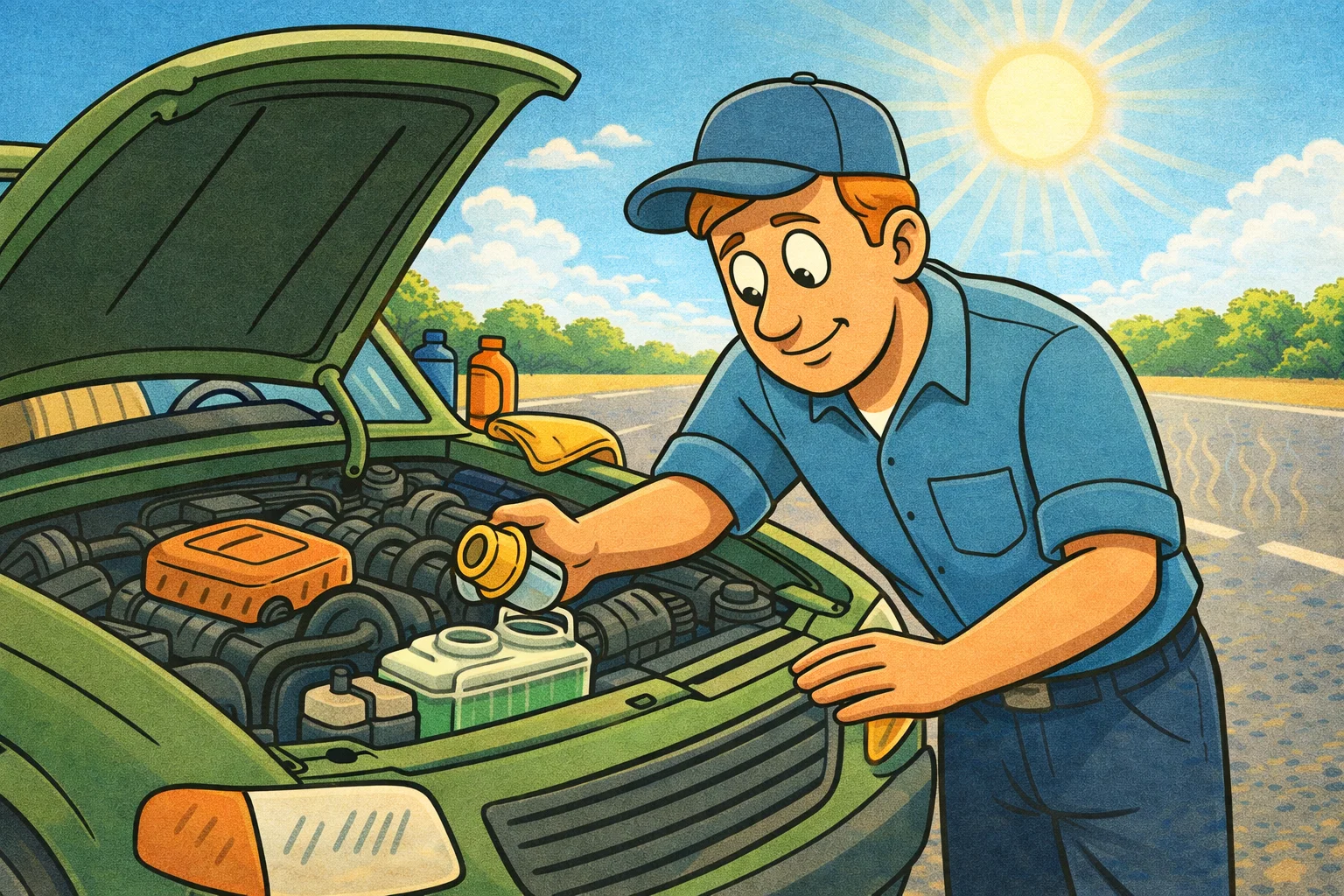
Before summer hits, check your coolant level and condition, test AC performance, inspect tire pressure (heat increases PSI), replace cabin air filter, and test your battery. Heat kills batteries faster than cold. A 90-minute inspection prevents the most common summer breakdowns: overheating, AC failure, and tire blowouts.
Summer heat is the number one cause of roadside breakdowns in the United States. High temperatures stress your cooling system, drain your battery, and can leave you stranded on a scorching highway. This guide picks up where our Spring Maintenance Guide left off, walking you through every step to get your vehicle ready for the hottest months of the year.
If You Only Do 3 Things
The three most important summer car prep tasks are: test your AC system to catch refrigerant leaks early, check coolant level and concentration to prevent overheating, and adjust tire pressure for hot pavement. Complete these three tasks and you will avoid the most common summer breakdowns.
Why Summer Prep Matters
Extreme heat accelerates wear on nearly every system in your vehicle. Your engine runs hotter, your battery degrades faster, and your tires face increased blowout risk on scorching pavement. According to AAA, nearly 8 million drivers request roadside assistance each summer, with overheating and tire failures topping the list.
The good news is that most summer breakdowns are preventable. A few hours of inspection and maintenance now can save you from being stranded on a 100 degree highway. And if you are planning a road trip, this prep work is essential for a safe, trouble-free journey.
Quick AC Health Check
DIY Summer Prep Saves Real Money
A dealership summer inspection typically costs $100 to $250. By doing the checks yourself, you will spend $30 to $75 in materials and keep $100 or more in your pocket. You will also know exactly what condition your vehicle is in before the heat arrives or before heading out on a road trip.
Cost Comparison: DIY vs. Professional
DIY Cost
- AC system check: Free
- Coolant test and top-off: $10-20
- Tire pressure check: Free
- Wiper blade replacement: $15-30
- Cabin air filter: $10-20
- Total: $30-75
Professional Cost
- AC inspection: $50-100
- Coolant service: $30-50
- Tire inspection: $15-30
- Wiper replacement: $30-60
- Cabin filter replacement: $30-50
- Total: $150-300
Tools and Materials
Tools Needed
- •Tire pressure gauge
- •Coolant hydrometer or refractometer
- •Multimeter or battery tester
- •Flashlight
- •Basic hand tools (wrenches, pliers)
- •Funnel
Materials Needed
- •Coolant/antifreeze (correct type for your vehicle)
- •Distilled water
- •New wiper blades
- •Cabin air filter (if needed)
- •Washer fluid
- •Emergency kit supplies
8-Step Summer Prep Guide
Timing Tip
Test Your AC System
A weak AC system will make summer driving miserable and can indicate a refrigerant leak that damages the compressor over time.
- Start the engine and turn AC to maximum cold with fan on high
- After 5 minutes, check vent temperature (should be 35 to 45 degrees Fahrenheit)
- Listen for unusual noises like clicking or grinding from the compressor
- Check for musty odors that indicate mold in the evaporator
- If cooling is weak, a DIY recharge kit costs $25 to $40 at any auto parts store
For detailed AC troubleshooting, see our Car AC diagnosis guide.
Check Coolant Strength and Level
Your cooling system works hardest in summer. Weak or low coolant is the leading cause of engine overheating.
- Only check coolant when the engine is completely cold
- Verify the level in the overflow reservoir is between the MIN and MAX marks
- Use a hydrometer to test concentration (should protect to at least -34 degrees Fahrenheit)
- Look for discoloration, particles, or oily film on the surface
- If coolant looks dirty or is more than 2 years old, consider a full flush
Learn about coolant types or follow our radiator flush guide.
Inspect Belts and Hoses for Heat Damage
Heat accelerates rubber deterioration. A broken serpentine belt or burst radiator hose will strand you instantly.
- Inspect the serpentine belt for cracks, fraying, or glazing
- Squeeze radiator hoses when cold to check for soft spots or swelling
- Look for coolant stains or wet spots around hose connections
- Check for belt tension and alignment
- Replace any belt showing visible wear, as failure risk increases in heat
Related: Timing belt warning signs and cooling system leak detection.
Adjust Tire Pressure for Hot Pavement
Hot pavement increases tire temperature, which raises internal pressure. Over-inflated tires on hot roads have a higher blowout risk, especially during highway driving.
- Check pressure when tires are cold (before driving or in the morning)
- Set pressure to your vehicle's recommended PSI found on the driver's door sticker
- Do not over-inflate to compensate for heat, as pressure rises naturally while driving
- Inspect tread depth and look for uneven wear patterns
- Check sidewalls for cracks, bulges, or damage from potholes
For rotation patterns and torque specs, see our tire rotation guide.
Test and Replace Wiper Blades
Summer thunderstorms can reduce visibility to near zero. Worn wipers make a bad situation dangerous.
- Inspect blades for cracks, splits, or hardened rubber
- Test by spraying washer fluid and observing for streaking or skipping
- Replace if blades are over 6 months old or show any wear
- Fill washer fluid reservoir with a bug-removing formula for summer
Check Battery Health
Most people think winter kills batteries, but extreme heat actually causes more battery failures. High temperatures accelerate chemical degradation and fluid evaporation inside the battery.
- Use a multimeter to test voltage (should read 12.4V or higher with engine off)
- Inspect terminals for corrosion and clean with baking soda if needed
- Ensure cable connections are tight and secure
- If your battery is over 3 years old, have it load-tested at an auto parts store (usually free)
For detailed diagnostics, see our battery troubleshooting guide.
Replace Cabin Air Filter
A clogged cabin air filter reduces AC airflow, makes the system work harder, and can cause musty odors. Replacing it takes minutes and costs under $20.
- Locate the cabin filter behind the glove box (most vehicles) or under the dashboard
- Remove the old filter and check for dirt, leaves, or debris
- Install the new filter with the airflow arrow pointing in the correct direction
- Replace every 15,000 to 20,000 miles or once per year
Learn more about filters in our air filter guide.
Build a Summer Emergency Kit
Summer breakdowns in extreme heat can be dangerous. Having the right supplies can keep you safe until help arrives.
- Extra water (at least 1 gallon for drinking and coolant top-off)
- Jumper cables or portable jump starter
- Flashlight with extra batteries
- Basic first aid kit with sunscreen
- Reflective triangles or flares
- Phone charger (12V adapter or battery pack)
- Tire inflator or compact air compressor
- Duct tape and zip ties for temporary fixes
Road Trip Readiness Checklist
Planning a summer road trip? Complete all 8 steps above, then add these pre-trip checks to make sure your vehicle is truly ready for long-distance driving in the heat.
- ✓Check oil level and condition (change if due within the next 1,000 miles)
- ✓Verify all lights work, including brake lights and turn signals
- ✓Test brakes for any pulling, squealing, or soft pedal feel
- ✓Check transmission fluid level and color
- ✓Verify spare tire is properly inflated
- ✓Pack your emergency kit (Step 8 above)
For a complete service timeline, see our car maintenance schedule by mileage.
When to See a Professional
Get Professional Help If
Year-Round Protection
This Summer Prep Guide is part of our complete seasonal maintenance series. Staying on top of seasonal checks is one of the easiest ways to extend your vehicle's life and avoid surprise repair bills.
Winter Prep
Battery, antifreeze, tires, and emergency kit for cold weather. Read the Winter Guide.
Spring Recovery
Post-winter cleanup, salt removal, and AC preparation. Read the Spring Guide.
Frequently Asked Questions
Don't Miss Critical Car Care Tips
Get exclusive guides, money-saving maintenance tips, and early warning signs delivered straight to your inbox.