How to Save Money on Car Repairs: DIY vs. Mechanic
Quick Answer
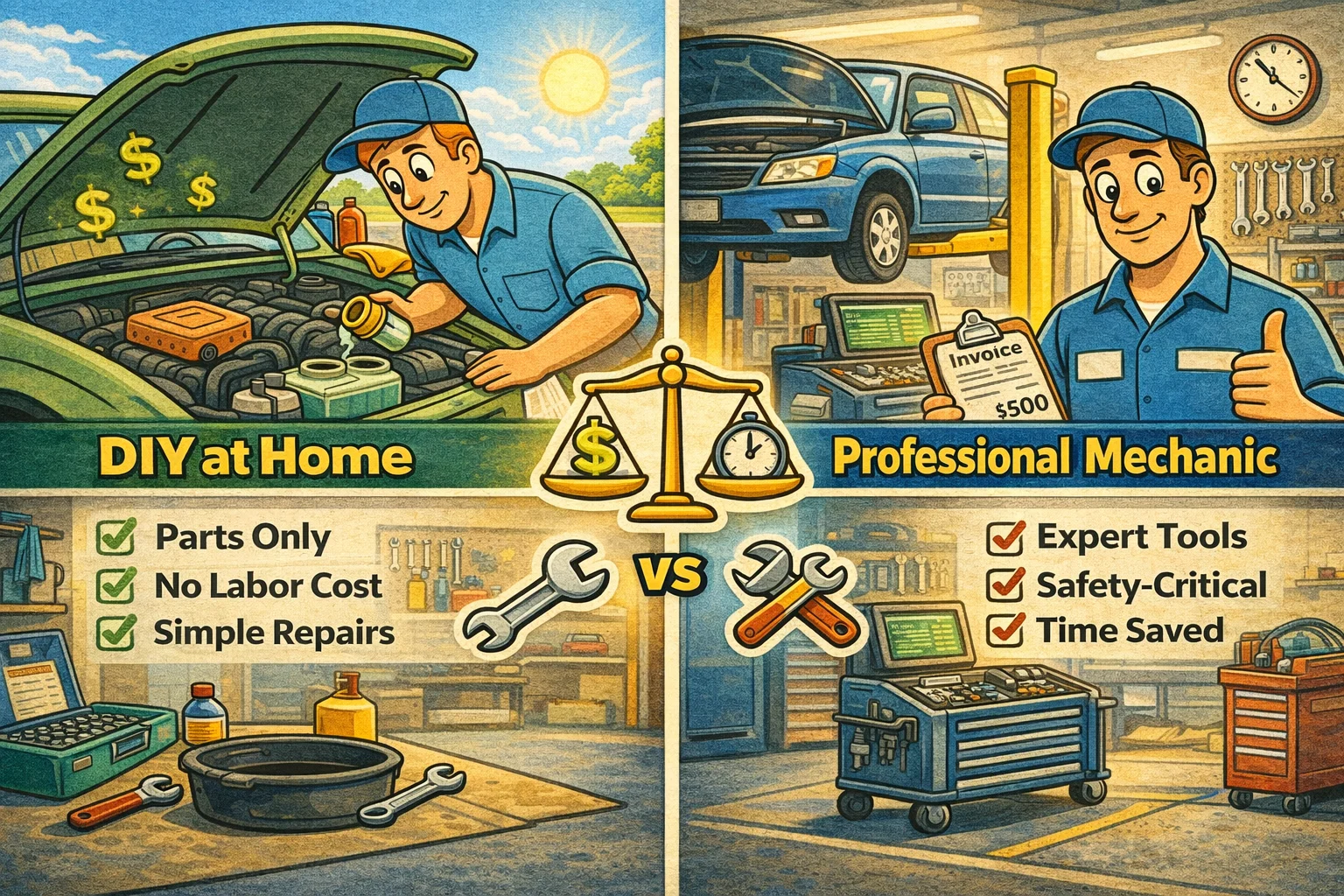
The easiest DIY repairs (oil changes, air filters, brake pads, spark plugs) save $100 to $300 each in labor. Leave complex jobs like timing belts, transmission rebuilds, and AC compressor work to professionals. Buy OEM-equivalent parts online to save 30 to 50% over dealer prices.
The average American spends over $1,200 a year on car repairs and maintenance. But here is the thing: a huge chunk of that money goes toward labor, not parts. For many common repairs, the parts cost a fraction of what a shop charges for the complete job. This guide breaks down exactly where DIY makes sense, where a mechanic is worth every dollar, and how to make the smartest call for your wallet and your safety.
The Real Cost Breakdown: Parts vs. Labor
On most car repairs, labor accounts for 50% to 70% of the total bill. That means for every $500 repair, you are paying $250 to $350 just for someone's time. When you do a repair yourself, you eliminate the labor cost entirely and pay only for parts. On common maintenance tasks, that translates to savings of $100 to $500 per job.
Of course, not every job is worth doing yourself. Some repairs require specialized tools, extensive experience, or involve safety-critical systems where a mistake could cost more than the savings. The key is knowing which jobs fall into the "easy DIY win" category and which ones belong in a professional shop.
Biggest DIY Savings: Jobs Worth Learning
The ten most common DIY car repairs can save a typical car owner $1,500 to $3,000 per year. Oil changes, brake pads, air filters, spark plugs, and battery replacement top the list for the best return on your time investment.
| Repair | Shop Cost | DIY Cost | You Save | DIY Time |
|---|---|---|---|---|
| Oil change | $40 to $75 | $25 to $40 | $15 to $35 | 30 min |
| Brake pads (per axle) | $200 to $350 | $40 to $80 | $160 to $270 | 1 to 2 hrs |
| Air filter | $40 to $70 | $10 to $25 | $30 to $45 | 5 min |
| Spark plugs | $150 to $300 | $20 to $60 | $130 to $240 | 1 to 2 hrs |
| Alternator | $350 to $600 | $100 to $250 | $250 to $350 | 2 to 3 hrs |
| Transmission fluid | $150 to $300 | $30 to $80 | $120 to $220 | 2 to 4 hrs |
| Headlight bulb | $75 to $150 | $15 to $50 | $60 to $100 | 15 to 30 min |
| Power steering flush | $100 to $200 | $20 to $40 | $80 to $160 | 30 to 45 min |
| Tire rotation | $30 to $60 | $0 (just time) | $30 to $60 | 30 to 45 min |
| Radiator flush | $100 to $200 | $20 to $40 | $80 to $160 | 1 to 2 hrs |
If you performed all ten of these jobs once per year (at their typical intervals), you would save between $955 and $1,640 annually. That is real money, and it does not require years of mechanical experience. According to AAA's auto repair research, the average vehicle owner spends over $1,000 per year on maintenance and repair, much of which is avoidable through DIY.
The DIY Decision Framework
Before tackling any repair yourself, run it through this five-question framework. If you answer "yes" to all five, the job is a strong DIY candidate.
Do I Have the Right Tools?
Most common repairs need only a basic socket set, wrenches, jack, and jack stands. If a job requires a specialty tool costing $200 or more that you will only use once, the economics shift toward paying a professional. Check tool requirements before buying parts.
Can I Find a Reliable Guide?
A quality repair guide specific to your vehicle make and model is essential. Look for step-by-step instructions with photos or video from a reputable source. Manufacturer service manuals (like those from Haynes or Chilton) are excellent investments. If you can not find detailed instructions for your specific vehicle, reconsider DIY.
Is It Safety-Critical?
Be honest about the consequences of a mistake. Brake work, suspension components, and steering repairs are safety-critical. If you do these jobs, you must be confident in your ability and willing to double-check everything. A botched oil change is an inconvenience. A botched brake job is potentially life-threatening.
Do I Have Enough Time?
Your first attempt at any repair will take 2 to 3 times longer than an experienced mechanic. Factor that into your schedule. If you are rushed, mistakes happen. A brake pad job that takes a shop 45 minutes might take you 2 to 3 hours the first time, including setup and cleanup.
What Is the Cost of Failure?
If a DIY attempt goes wrong, will it cost more to fix than paying a professional from the start? Stripping a drain plug bolt on an oil change costs $20 to fix. Cross-threading a spark plug in an aluminum head can cost $500 or more. Weigh the potential downside against the savings.
When a Mechanic Is Worth Every Dollar
Some repairs genuinely belong in a professional shop. Not because they are impossible for a DIYer, but because the tools, expertise, and liability make professional service the smarter financial choice.
Always Use a Professional For These
- Timing belt replacement: Incorrect installation can destroy the engine. A $600 to $1,000 shop bill prevents a $3,000 to $5,000 engine replacement. See our timing belt guide for warning signs.
- Transmission rebuild: Requires specialized knowledge and tools. A rebuild involves hundreds of precision components and must be done by a specialist.
- AC refrigerant work: Requires EPA certification and specialized equipment. DIY recharge kits can mask underlying problems and potentially damage the system.
- Airbag system repairs: Accidental deployment causes serious injury. Airbag systems must be handled by trained technicians.
- Electrical diagnostics: Modern vehicle electronics are complex. Intermittent electrical problems often require professional scan tools and expertise to pinpoint.
How to Save Money Even at a Mechanic
When you do need a professional, there are still ways to keep costs down without sacrificing quality:
💰 Smart Shopping Strategies
- Get 3 quotes: Prices vary 30% to 50% between shops for the same job.
- Ask about parts options: Aftermarket parts cost 30% to 60% less than OEM and work fine for most repairs.
- Supply your own parts: Some shops allow this and charge labor only. You save the shop's parts markup (typically 30% to 50%).
- Ask for the old parts back: Honest shops always return old parts. This confirms the work was actually done.
🔍 Finding a Trustworthy Mechanic
- Look for ASE certification: This ensures the mechanic has passed standardized competency tests.
- Check online reviews: Look for patterns in reviews, not individual complaints. Consistent praise for honesty and communication is a good sign.
- Start with small jobs: Test a new shop with an oil change or inspection before trusting them with major work.
- Independent shops vs. dealers: Independent shops charge 20% to 40% less than dealerships for the same work.
The "Hybrid Approach": DIY Diagnosis, Professional Repair
One of the smartest money-saving strategies combines DIY skills with professional service. You diagnose the problem yourself, then bring the car to a shop with a clear understanding of what needs fixing. This prevents the two biggest drains on your wallet: unnecessary diagnostic fees and upselling.
For example, if your check engine light comes on, you can scan the code yourself with a $20 OBD2 scanner (our check engine light guide shows you how). Then you walk into the shop and say "I have a P0420 code, catalytic converter efficiency below threshold, bank 1." That kind of specific information prevents the shop from spending (and charging you for) an hour of diagnostic time.
The same approach works for transmission issues. Check the fluid yourself using our transmission slipping guide, scan for codes, and note exactly when symptoms occur. Then give that information to the specialist. You save $50 to $150 in diagnostic fees and get a more accurate repair estimate.
Annual Maintenance Budget: What to Expect
Here is a realistic annual maintenance budget comparison for a typical vehicle, based on the jobs most cars need every year:
| Annual Task | All Shop | All DIY |
|---|---|---|
| 2 oil changes | $80 to $150 | $50 to $80 |
| 1 tire rotation | $30 to $60 | $0 |
| Air + cabin filter | $60 to $120 | $20 to $40 |
| Brake pads (every 2 yrs avg) | $200 to $350 | $40 to $80 |
| Wiper blades | $40 to $60 | $15 to $30 |
| Annual Total | $410 to $740 | $125 to $230 |
The DIY approach saves $285 to $510 per year on routine maintenance alone. Add in occasional repairs like alternator replacement or spark plug changes, and the annual savings climb past $1,000.
For a complete breakdown of what needs attention at every mileage milestone, see our car maintenance schedule guide.
Parts Buying Tips: Where to Get the Best Deals
Where you buy parts matters almost as much as whether you DIY. Here are the best strategies for getting quality parts at the lowest price:
- Online retailers (RockAuto, Amazon): Typically 20% to 40% cheaper than local stores. Order ahead and have parts ready before you start the job.
- Auto parts stores (AutoZone, O'Reilly, NAPA): Slightly higher prices, but you can get parts same-day and return unused items easily. Many also offer free tool loans and code scanning.
- Salvage yards: Excellent for expensive components like alternators, starters, and body panels. Pay 50% to 80% less than new. Our parts selling guide covers the salvage yard ecosystem in detail.
- OEM vs. aftermarket: For most repairs, quality aftermarket parts (brands like Bosch, Denso, Moog, Monroe) perform identically to OEM at 30% to 50% less cost. Reserve OEM for critical systems or when warranty coverage matters.
Preventive Maintenance: The Biggest Money Saver of All
The $40 Oil Change That Prevents a $4,000 Engine Replacement
If you are new to car ownership, start with our first-time car owner's maintenance guide to build a foundation of good habits that will save you thousands over the life of your vehicle.
What to Read Next
Car Maintenance Schedule by Mileage
Know exactly when every service is due, from 3,000 to 100,000+ miles.
First-Time Car Owner's Maintenance Guide
The five essential maintenance tasks every new car owner should master.
How to Change Oil Like a Pro
Start your DIY journey with the most impactful maintenance task.
DIY Brake Pad Replacement Guide
Save $150+ per axle with this step-by-step brake service guide.
Frequently Asked Questions
Don't Miss Critical Car Care Tips
Get exclusive guides, money-saving maintenance tips, and early warning signs delivered straight to your inbox.