Check Engine Light On? How to Diagnose and Fix Common Causes
Quick Answer
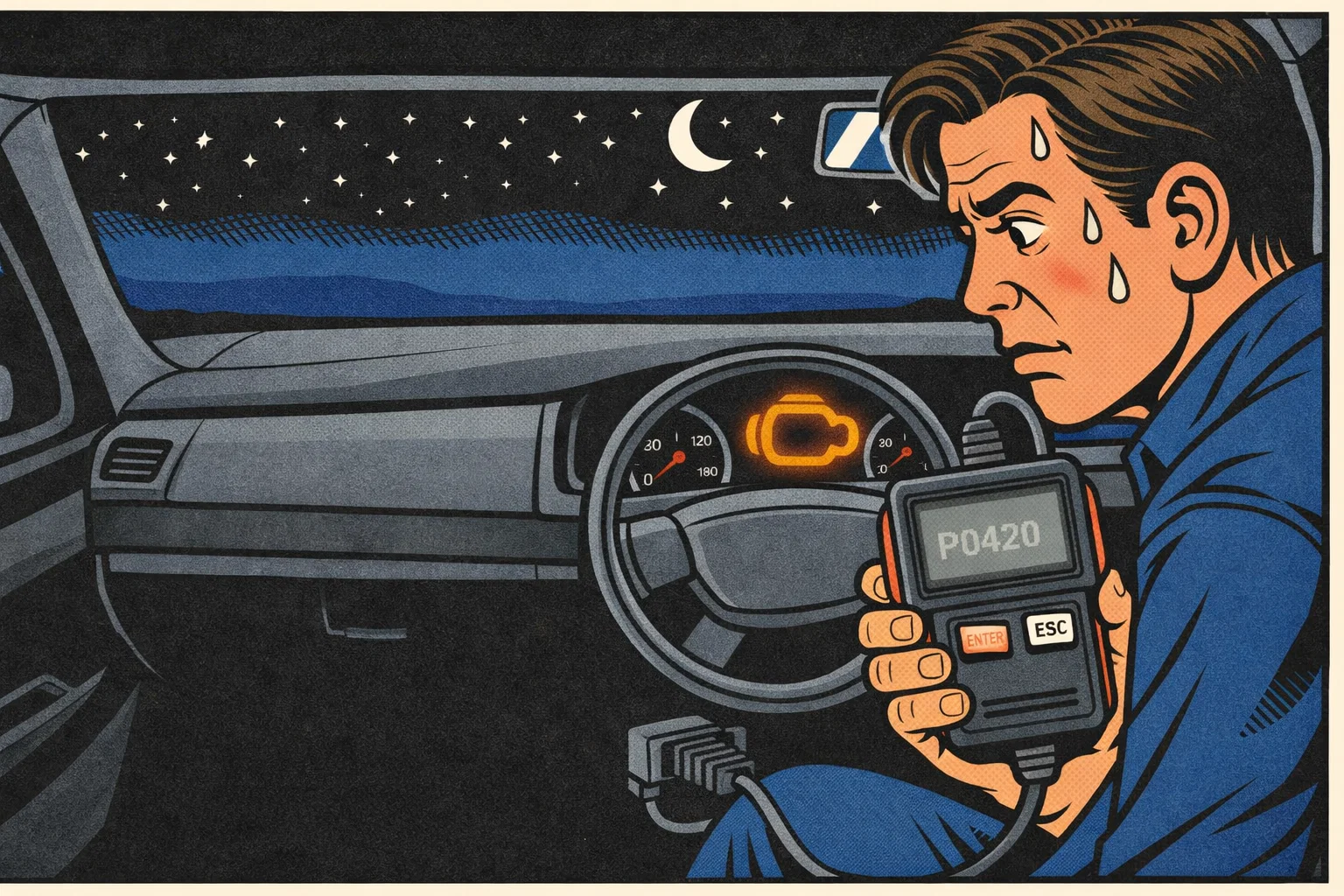
Buy a $20 OBD2 scanner, plug it into the port under your dashboard, and read the trouble code. The five most common causes are a loose gas cap, failing oxygen sensor, catalytic converter issue, mass airflow sensor, or spark plug misfire. Many of these are DIY-fixable for under $50.
The check engine light strikes fear into many drivers, but it does not have to. With an inexpensive OBD2 scanner and a few minutes of your time, you can read the trouble code yourself and often fix the problem without a trip to the mechanic. This guide walks you through the entire diagnostic process.
What the Check Engine Light Means
The most important thing to know is the difference between a steady and flashing check engine light. A steady light means there is an issue that needs attention but is not immediately critical. A flashing check engine light means you have a severe engine misfire that can damage your catalytic converter within minutes. If your light is flashing, pull over safely and turn off the engine.
Your vehicle's onboard diagnostic system continuously monitors emissions-related components. When it detects a problem, it stores a trouble code and illuminates the check engine light. These codes are standardized across all vehicles made after 1996, making diagnosis straightforward with the right tool.
Flashing Check Engine Light
Tools Needed for Diagnosis
The only tool you absolutely need is an OBD2 scanner. These devices plug into a standardized port found in all cars and light trucks sold in the US since 1996. Prices range from $20 for a basic code reader to $200 or more for professional-grade scanners with live data.
| Scanner Type | Price Range | Features | Best For |
|---|---|---|---|
| Basic Code Reader | $15-30 | Read and clear codes only | Occasional use, basic diagnosis |
| Bluetooth OBD2 Adapter | $20-50 | Pairs with smartphone apps | Convenience, multiple vehicles |
| Mid-Range Scanner | $50-150 | Live data, freeze frame, ABS codes | DIY enthusiasts |
| Professional Scanner | $200+ | All systems, bi-directional control | Serious hobbyists, professionals |
Budget-Friendly Option
Step-by-Step Diagnosis
Follow these steps to diagnose your check engine light at home. The entire process takes about 15 to 30 minutes.
Note the Light Behavior
Is the light steady or flashing? A steady light allows you to continue diagnosis. A flashing light means stop driving immediately. Also note any unusual sounds, smells, or performance changes that started around the same time.
Check for Obvious Issues
The most common cause of a check engine light is a loose, damaged, or missing gas cap. Remove the gas cap, inspect the seal for cracks or damage, and reinstall it with a firm click. If the cap was loose, the light may turn off after a few drive cycles.
Also look under the hood for any obvious issues: disconnected hoses, damaged wires, or visible leaks.
Connect Your OBD2 Scanner
Locate the OBD2 port. It is typically under the dashboard on the driver's side, often near the steering column. The port may be covered by a small panel.
With the ignition in the "ON" position (engine off), plug in your scanner. For Bluetooth adapters, pair with your phone and open your scanning app.
Read and Record Trouble Codes
Navigate to "Read Codes" or "Scan" on your device. Write down all codes displayed, including any "pending" codes. A code looks like P0420 (a letter followed by four numbers).
Common codes include P0420 for catalytic converter efficiency, P0171 or P0174 for lean fuel mixture, P0300 for random misfire, and P0442 for EVAP system leak, often caused by a loose gas cap.
Research the Specific Code
Search online for your specific code along with your vehicle's year, make, and model. For example: "P0128 2018 Toyota Camry." This often reveals common causes and fixes for your exact situation.
Many codes have multiple possible causes. Look for the most common fix first, especially for your specific vehicle.
Decide: DIY Fix or Professional Help
Based on your research, determine if the fix is within your skill level. Many check engine causes, like replacing a gas cap, air filter, or spark plugs, are straightforward DIY repairs.
For complex issues involving sensors, catalytic converters, or internal engine problems, professional diagnosis may be worthwhile.
Most Common Check Engine Codes
While hundreds of diagnostic codes exist, certain codes appear far more frequently than others. Here are the most common codes and what they typically mean.
P0420 / P0430: Catalytic Converter Efficiency Below Threshold
What it means: The catalytic converter is not cleaning exhaust gases efficiently enough.
Common causes: Failing catalytic converter, faulty oxygen sensor, exhaust leak before the catalyst.
DIY potential: Low. Catalyst replacement is expensive ($500-2,500), but sometimes a faulty O2 sensor is the real culprit.
P0171 / P0174: System Too Lean (Bank 1/2)
What it means: The engine is receiving too much air or not enough fuel.
Common causes: Vacuum leak, dirty mass airflow sensor, weak fuel pump, clogged fuel filter.
DIY potential: Moderate. Cleaning the MAF sensor is easy. Vacuum leaks require some investigation. See our Air Filter Guide.
P0300: Random/Multiple Cylinder Misfire
What it means: The engine is misfiring in multiple cylinders, not just one.
Common causes: Worn spark plugs, faulty ignition coils, vacuum leak, low fuel pressure.
DIY potential: High for spark plugs, moderate for ignition coils. Both are common DIY repairs.
P0442: EVAP System Small Leak
What it means: A small leak in the evaporative emissions system, which captures fuel vapors.
Common causes: Loose or damaged gas cap, cracked EVAP hose, faulty purge valve.
DIY potential: High. Check the gas cap first. If that does not fix it, inspect EVAP hoses for cracks.
P0128: Coolant Thermostat Below Regulating Temperature
What it means: The engine is not reaching proper operating temperature quickly enough.
Common causes: Stuck-open thermostat, low coolant level, faulty coolant temperature sensor.
DIY potential: Moderate. See our Thermostat Replacement Guide.
P0301-P0312: Cylinder Specific Misfire
What it means: The last digit indicates which cylinder is misfiring. P0301 = cylinder 1, P0304 = cylinder 4.
Common causes: Bad spark plug, faulty ignition coil, injector problem, low compression.
DIY potential: High for spark plugs and coils. Replace the spark plug and/or coil on the affected cylinder.
P0700 / P0730: Transmission Control System / Incorrect Gear Ratio
What it means: The transmission control module has detected a fault, or the transmission is not shifting into the correct gear ratio.
Common causes: Low or degraded transmission fluid, faulty shift solenoid, worn clutch packs, or wiring issues.
DIY potential: Moderate. Start with a transmission fluid change, which resolves many shifting issues caused by old or contaminated fluid.
DIY Fixes for Common Issues
Many check engine light causes can be fixed at home for a fraction of the shop cost. A shop typically charges $75 to $150 just for diagnosis, before any repairs. With a $25 OBD2 scanner, you can diagnose issues yourself and potentially save hundreds of dollars on straightforward repairs like gas cap replacement, air filter changes, or spark plug replacement.
Gas Cap Replacement
Cost: $5-20
If the seal is cracked or the cap does not click when tightened, replace it. Use an OEM or quality aftermarket cap.
Air Filter Replacement
Cost: $15-30
A clogged air filter can trigger lean codes. See our Air Filter Guide.
Spark Plug Replacement
Cost: $20-60 for a set
Worn spark plugs cause misfires. Most 4-cylinder engines make this an easy DIY job.
MAF Sensor Cleaning
Cost: $8-15 for cleaner
A dirty mass airflow sensor causes lean codes. Use MAF-specific cleaner only.
When to See a Professional
While many check engine issues are DIY-friendly, some situations call for professional expertise. Knowing when to seek help can save you time and prevent making a problem worse.
Seek Professional Help If:
- •The check engine light is flashing, indicating a severe misfire
- •Multiple unrelated codes appear at once
- •The vehicle has noticeable performance problems, stalling, or rough running
- •You have cleared the code but it returns immediately
- •The repair requires specialized tools or significant disassembly
- •You are not comfortable with the diagnosis or repair
Free Code Reading
Repair costs and diagnostic procedures can vary significantly depending on your vehicle and location. Always consult your owner's manual for vehicle-specific information.
Check Engine Light and Emissions Testing
In states with mandatory vehicle inspections, including California, New York, Texas, Pennsylvania, and many others, a check engine light will fail your emissions test regardless of whether your car runs perfectly fine. The inspection station's equipment connects to your OBD2 port and checks for stored codes and pending issues.
State Inspection Warning
Emissions Testing Key Points
- •EVAP codes (P0440, P0442, P0446) are emissions-related and will fail inspection
- •Catalytic converter codes (P0420, P0430) are among the most common inspection failures
- •Most vehicles require 50 to 100 miles of driving after code clearing for monitors to reset
- •Repeated inspection failures add up quickly in fees, often exceeding the cost of repair
If you have an upcoming inspection and your check engine light is on, address the issue first. The cost of fixing the problem is almost always less than paying for multiple failed inspections plus the eventual repair.
Related Repair Guides
Once you have identified your trouble code, these guides can help you complete the repair:
Best OBD2 Scanners for 2026
Top picks from $25 to $500. Buy once, use forever.
Dashboard Warning Lights
Understand all your warning lights
Thermostat Replacement
Fix P0128 and overheating codes
Air Filter Guide
Address lean fuel mixture codes
Radiator Flush Guide
Cooling system maintenance
Battery Troubleshooting
Electrical system diagnosis
Maintenance Schedule
Prevent future check engine lights
Frequently Asked Questions
Don't Miss Critical Car Care Tips
Get exclusive guides, money-saving maintenance tips, and early warning signs delivered straight to your inbox.