Transmission Slipping: Symptoms, Causes, and Fixes
Quick Answer
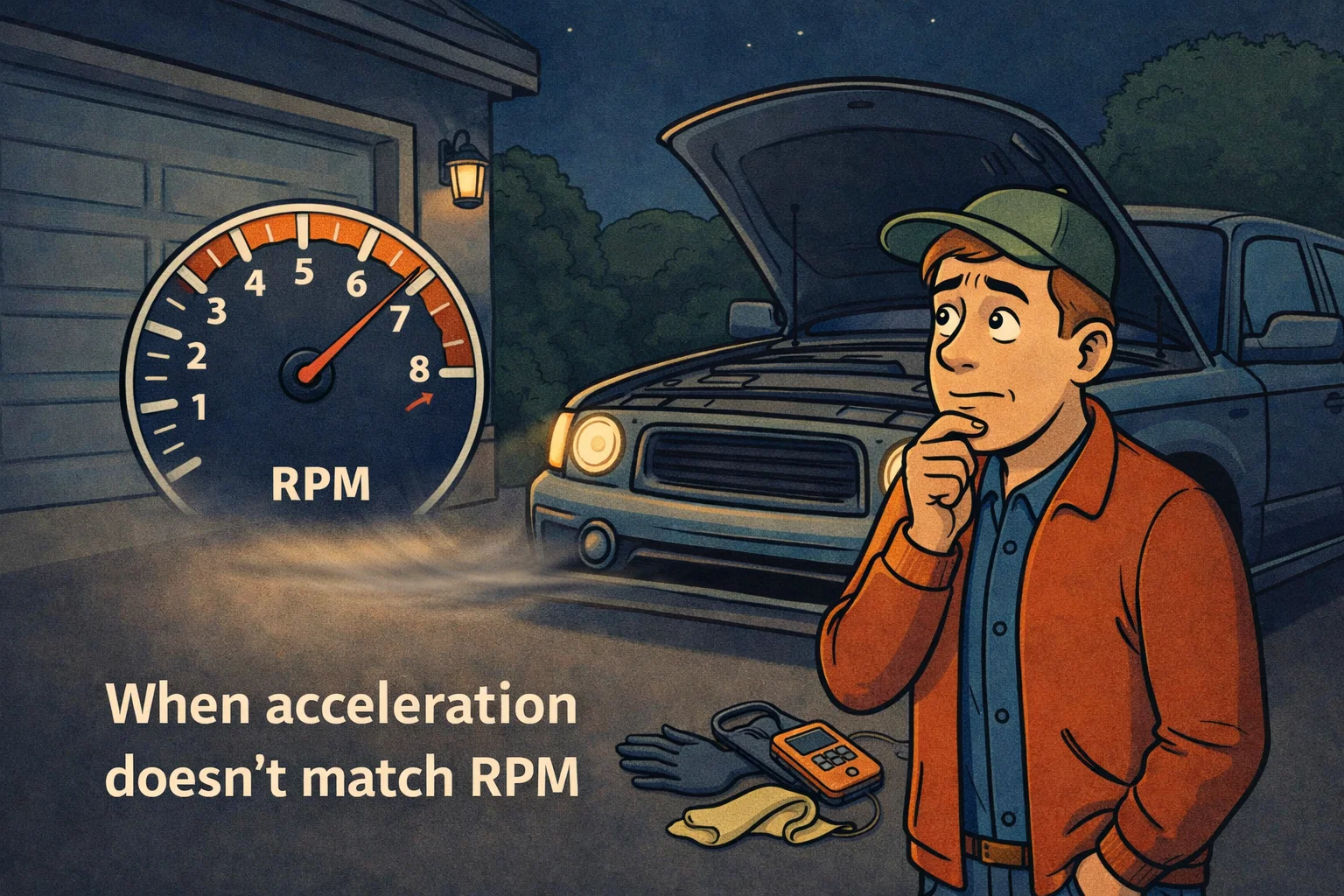
Transmission slipping feels like the engine revs high but the car barely accelerates, or gears change unexpectedly. The most common cause is low or burnt transmission fluid, which is a $20 to $40 DIY fix. Other causes include worn clutch packs, a failing torque converter, or solenoid issues. Check the fluid level and condition first before assuming the worst.
Your car revs high but barely accelerates. Or the gears change on their own when you least expect it. That gut-sinking feeling of a slipping transmission is something no driver wants to experience. The good news? Not every slip means a $3,000 repair bill. Some causes are surprisingly simple to fix yourself, and knowing the difference can save you thousands.
Tools to Diagnose and Top Up
Gear we trust for this job. Links route to the closest store that ships to you.
As an Amazon Associate we earn from qualifying purchases at no extra cost to you. Learn more.
Recommended tool
OBD2 Scanner
Read and clear check engine codes in seconds.
Recommended fluid
ATF Transmission Fluid
Multi-vehicle automatic transmission fluid.
Recommended tool
Manual Fluid Transfer Pump
For clean ATF top-ups and fills.
What Does "Transmission Slipping" Actually Mean?
Transmission slipping happens when your transmission momentarily loses its connection between the engine and the wheels. Instead of delivering power smoothly, the gears disengage or fail to hold, causing a sudden loss of acceleration. Think of it like a bicycle chain jumping off its sprocket. The pedals spin freely, but you go nowhere.
This can happen in both automatic and manual transmissions, though the symptoms feel slightly different in each. In an automatic, you might notice the engine revving higher than normal without a corresponding increase in speed. In a manual, the clutch may feel like it is not fully engaging, and you lose power despite the engine screaming.
Understanding what is happening mechanically helps you make smarter decisions about repair vs. replacement. A slipping transmission does not always mean catastrophic failure, but ignoring it will absolutely make things worse.
5 Warning Signs Your Transmission Is Slipping
The five warning signs of a slipping transmission are: RPM spikes above 3,500 without acceleration, unexpected gear changes while driving, a noticeable delay of 2 or more seconds when shifting from park to drive, a burning smell from overheated fluid, and the check engine light illuminating with transmission-related codes.
1. High RPM Without Acceleration
Your tachometer climbs past 3,500 RPM during normal driving, but the car barely speeds up. This is the most obvious sign of slipping. The engine is working hard, but the transmission is not transferring that power to the wheels.
2. Unexpected Gear Changes
The transmission shifts up or down on its own without any input from you. This feels jarring and unpredictable. Your car might suddenly drop from third gear to second while cruising at highway speed, or shift into neutral for no reason.
3. Delayed Engagement
You shift from Park to Drive and nothing happens for 2 or more seconds. The engine revs, but the car just sits there before finally lurching forward. This delay gets worse as the problem progresses.
4. Burning Smell
Overheated transmission fluid produces a distinct burning odor, similar to burnt toast. This happens when friction from slipping gears heats the fluid beyond its operating range. If you smell burning while driving, pull over and check your fluid level and condition.
5. Check Engine Light
Modern vehicles monitor transmission performance through sensors. When slipping is detected, the car stores a diagnostic trouble code (DTC) and illuminates the check engine light. Common transmission codes include P0700, P0730, and P0740. Our check engine light diagnosis guide covers how to read these codes yourself with an OBD2 scanner.
Common Causes of Transmission Slipping
Not all transmission slipping points to a catastrophic failure. Some causes are quick, inexpensive fixes that you can handle in your driveway. Others require professional attention. Here is how to tell the difference.
Low or Degraded Transmission Fluid
This is the single most common cause of transmission slipping, and it is often the cheapest to fix. Low fluid means there is not enough hydraulic pressure to engage the clutch packs properly. Degraded fluid (dark brown or black with a burnt smell) has lost its friction properties and can no longer do its job.
The fix? Check your fluid level and condition. If it is low, top it off with the correct type specified in your owner's manual. If the fluid looks dark or smells burnt, a complete transmission fluid change is your next step. This alone resolves slipping in roughly 40% of cases.
Worn Clutch Packs (Automatic)
Inside every automatic transmission, friction-lined clutch packs engage and disengage to change gears. Over time, these clutch plates wear thin and lose their grip. When they can no longer hold firmly, the transmission slips between gears. This is a natural wear item, but neglecting fluid changes accelerates the wear dramatically.
Worn Clutch Disc (Manual)
In a manual transmission, slipping usually means the clutch disc is worn out. You will notice it first in higher gears under load. The engine revs climb, but the car does not accelerate. A worn clutch disc typically needs professional replacement, though experienced DIYers can tackle the job with a transmission jack and a free weekend.
Faulty Solenoids
Transmission solenoids are electro-hydraulic valves that control fluid flow within the transmission. When a solenoid fails or gets stuck, it sends incorrect fluid pressure to the clutch packs, causing erratic shifts or slipping. Solenoid replacement runs $150 to $400 at a shop, making it one of the more affordable transmission repairs.
Torque Converter Problems
The torque converter acts as the bridge between your engine and transmission. When its internal clutch wears out or fluid leaks from the converter, you get symptoms that mimic transmission slipping: shuddering at highway speeds, RPM fluctuation, and overheating. This is a shop-level repair that typically costs $500 to $1,000 for parts and labor.
Worn Transmission Bands
Some automatic transmissions use bands (metal straps lined with friction material) instead of or in addition to clutch packs. These bands can stretch, crack, or break over time. When a band fails, the gear it controls will slip or fail entirely. Band adjustment or replacement is a professional job.
Quick Diagnostic Shortcut
How to Diagnose Transmission Slipping
Before spending money at a shop, run through these diagnostic steps yourself. You will either identify a simple fix or gather the information a mechanic needs to give you an accurate quote.
Check Fluid Level and Condition
With the engine warm and running in Park, pull the transmission dipstick. Check both the level (should be between the two marks) and the condition. Healthy fluid is bright red and translucent. Dark, cloudy, or burnt-smelling fluid needs immediate attention. Not all cars have a dipstick. Some newer models use sealed transmissions that require a lift and a specific fill procedure.
Scan for Trouble Codes
Connect an OBD2 scanner to the diagnostic port (usually under the driver's dash). Look for transmission-related codes starting with P07xx or P08xx. Common slipping codes include P0730 (incorrect gear ratio), P0740 (torque converter clutch malfunction), and P0700 (general transmission fault). Our check engine light guide walks through the scanning process step by step.
Test Drive with Attention to Patterns
Drive the vehicle and pay attention to when the slipping occurs. Does it happen only when cold? Only in certain gears? Only under heavy acceleration? Only at highway speeds? These patterns tell you a lot about the cause. Cold-only slipping often points to worn seals that shrink when cold. Slipping under load suggests clutch pack or band wear.
Check for Leaks
Look under your car for red or brown fluid puddles. Common leak points include the transmission pan gasket, cooler lines, axle seals, and the front pump seal. A leaking transmission will eventually run low on fluid and start slipping. Fixing the leak and topping off the fluid may resolve the slipping entirely. If you see coolant mixing with transmission fluid, see our cooling system leaks guide as this can indicate a radiator cross-contamination issue.
Evaluate the Results
Based on your findings, you can now make an informed decision. Low or burnt fluid? Start with a DIY transmission fluid change. Specific trouble codes? Research the code to understand severity. Leak found? Fix the leak first, then reassess. Multiple symptoms plus metal debris in the fluid? That is your cue to consult a transmission specialist.
Fixes You Can Do Yourself
Not every transmission problem requires a $2,000 to $4,000 rebuild. Here are the fixes that fall within the DIY zone, ranked from easiest to most involved.
Top Off Low Fluid
Difficulty: Easy | Cost: $10 to $30 | Time: 15 minutes
If the fluid level is low but the condition looks good, simply add the correct fluid type. This is the fastest, cheapest fix and works when a small leak has caused the level to drop below the operating range.
Full Fluid and Filter Change
Difficulty: Intermediate | Cost: $50 to $150 | Time: 2 to 4 hours
If the fluid is dark, burnt, or overdue for service, a complete drain-and-refill with a new filter can restore hydraulic pressure and friction properties. Follow our step-by-step transmission fluid change guide for the full process.
Fix a Leaking Pan Gasket
Difficulty: Intermediate | Cost: $20 to $50 | Time: 2 to 3 hours
A leaking pan gasket is a common cause of low fluid. Replacing the gasket is part of a standard fluid change anyway, so you can tackle both at once. The key is using the correct torque spec when reinstalling the pan bolts.
Replace a Faulty Solenoid
Difficulty: Advanced DIY | Cost: $50 to $200 | Time: 3 to 5 hours
If your OBD2 scan points to a specific solenoid code, some vehicles allow access to the solenoid pack by removing the transmission pan. This saves $200+ in labor compared to shop pricing.
When to Call a Professional
These Problems Need a Transmission Specialist
- Metal shavings or chunks in the drained fluid (indicates internal component failure)
- Slipping persists after a fresh fluid and filter change
- The transmission makes grinding, whining, or clunking noises
- The vehicle will not move in one or more gears
- Torque converter shudder at highway speeds
Professional Repair Cost Ranges
- Solenoid replacement: $150 to $400
- Torque converter replacement: $500 to $1,000
- Clutch pack replacement (automatic): $800 to $1,500
- Clutch disc replacement (manual): $500 to $1,200
- Full transmission rebuild: $1,800 to $3,500
- Transmission replacement (remanufactured): $2,500 to $5,000
Costs vary significantly by vehicle make, model, and location. Always get 2 to 3 quotes from transmission specialists rather than general repair shops. For help understanding which repairs are worth the investment, see our car maintenance schedule guide.
How to Prevent Transmission Slipping
Prevention is always cheaper than repair. These habits will significantly extend your transmission's lifespan and reduce the odds of slipping.
Follow Your Service Schedule
Change transmission fluid every 30,000 to 60,000 miles or as specified in your owner's manual. Regular fluid changes prevent 80% of transmission problems. Check our maintenance schedule for all mileage-based intervals.
Use the Correct Fluid
Using the wrong transmission fluid is one of the fastest ways to destroy a transmission. Always verify the exact specification in your owner's manual. ATF+4, Dexron VI, and CVT fluid are not interchangeable.
Let the Engine Warm Up
Cold transmission fluid is thick and does not flow well. Give your car 30 to 60 seconds to idle before driving, especially in winter. This allows the fluid to reach operating temperature and properly lubricate internal components.
Avoid Aggressive Driving
Hard acceleration, rapid gear changes, and towing beyond your vehicle's rated capacity all accelerate transmission wear. Smooth, steady driving habits can double or triple a transmission's lifespan compared to aggressive driving patterns.
If you notice any of the warning signs mentioned above, do not ignore them. A small problem caught early (like low fluid) costs $20 to fix. The same problem ignored for six months can turn into a $3,000 rebuild. Watch your dashboard warning lights and respond quickly when something looks off.
What to Read Next
DIY Transmission Fluid Change
The #1 fix for slipping. Step-by-step fluid and filter replacement that resolves 40% of transmission slipping cases.
Manual vs. Automatic Transmission Maintenance
Understand the maintenance differences between transmission types and what each needs to stay healthy.
Dashboard Warning Lights Guide
Decode the transmission warning light and every other symbol on your dashboard before it becomes an emergency.
Car Maintenance Schedule
Every fluid interval from oil to transmission mapped out by mileage so nothing gets missed between services.
How to Check Transmission Fluid
Before you assume the worst, check the level and color. It takes ten minutes and rules out the cheapest cause.
Frequently Asked Questions
Don't Miss Critical Car Care Tips
Get exclusive guides, money-saving maintenance tips, and early warning signs delivered straight to your inbox.