Why Is My Car Overheating? 7 Causes and Fixes
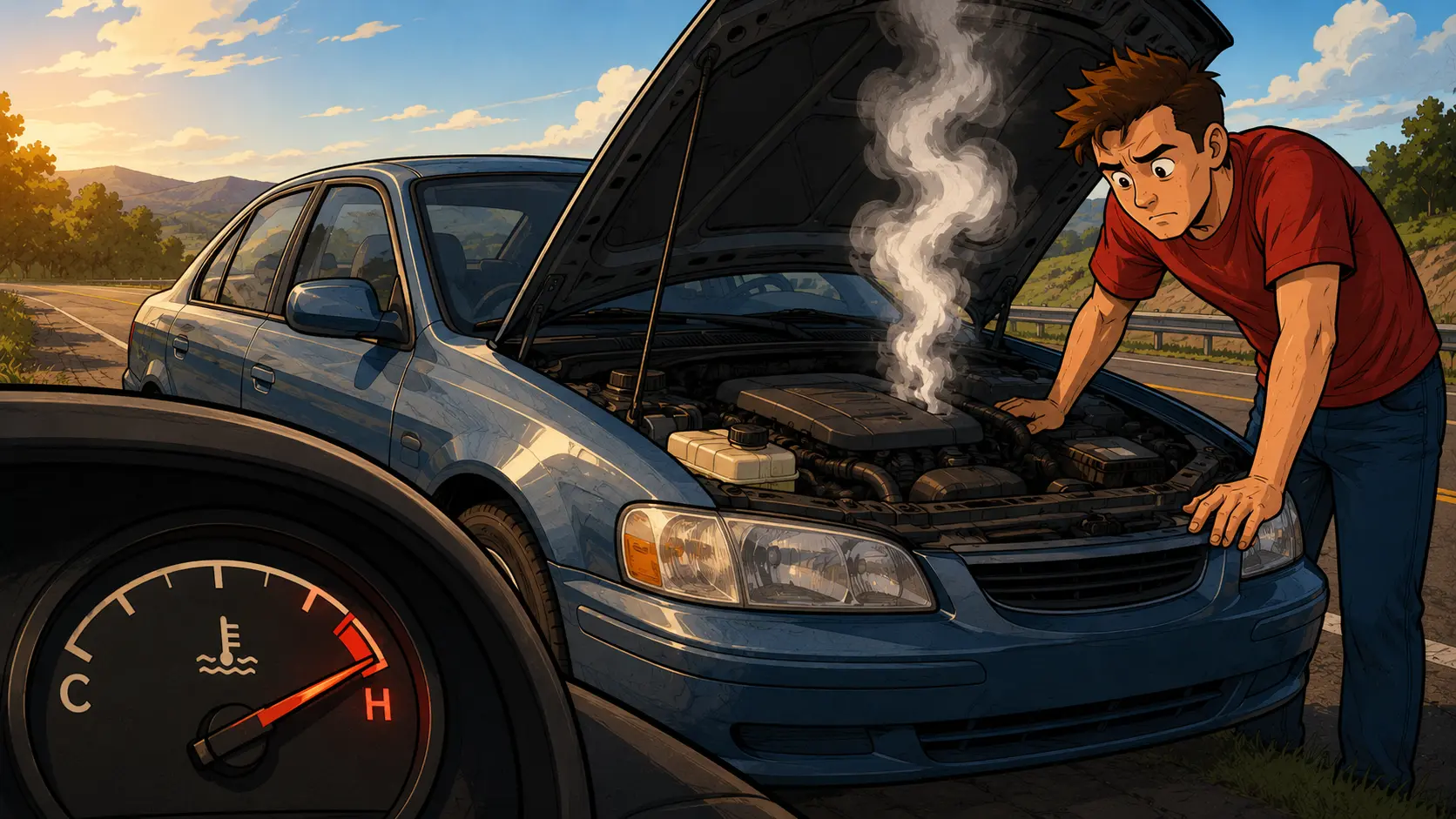
Quick Answer
Most overheating traces back to one of seven culprits: low coolant, a stuck thermostat, a failing water pump, a clogged radiator, a broken cooling fan, a leaking hose or gasket, or a blown head gasket. If your temperature gauge climbs into the red, pull over within 60 seconds, shut the engine off, and let it cool for at least 30 minutes before opening the hood. Driving on a hot engine can warp the cylinder head and cost $1,500 to $4,000 in repairs.
The Temperature Gauge Just Spiked. Now What?
A creeping temperature needle is one of the few dashboard warnings that demands action right now. Modern engines run hot under normal conditions, around 195 to 220 degrees Fahrenheit, and the cooling system is the only thing keeping aluminum cylinder heads from warping into expensive paperweights. Ignore an overheating engine for ten minutes too long and a $30 thermostat job becomes a $3,000 head gasket job.
The good news? The seven causes below cover roughly 95 percent of overheating cases, and most are diagnosable in the driveway with a flashlight and a cold engine. This guide walks through each one in order of likelihood, tells you exactly what to look for, and links you to the deeper repair guide for the fix.
Read the emergency section first if your car is overheating right now. Then work through the seven causes to find your culprit.
If Your Car Is Overheating Right Now
Pull over as soon as it is safe. Then follow these four steps in order:
- Turn off the air conditioning and crank the heater to maximum. The heater core acts as a second radiator and pulls heat off the engine fast.
- Get to the shoulder and shut the engine off. Idling a hot engine is worse than driving it, since airflow through the radiator drops to zero.
- Wait at least 30 minutes before opening the hood or the radiator cap. Cooling system pressure can blast 250-degree coolant into your face.
- Check coolant level once cool. If the overflow tank is empty or the radiator is dry, low coolant is your problem. Top up with the correct coolant or distilled water in a pinch, then drive carefully to a shop.
NEVER OPEN A HOT RADIATOR CAP
Opening the radiator cap on a hot engine is one of the most common causes of severe burns in DIY work. Pressurized coolant flashes to steam the moment the cap loosens. Always wait for the engine to cool completely, then press a thick rag over the cap and turn it slowly to the first stop to release pressure before fully removing it.
Cause 1: Low Coolant Level
This is the single most common reason cars overheat. Coolant either leaks out, evaporates over years, or was never properly topped off after a previous repair. Without enough coolant, there is simply not enough fluid to absorb engine heat.
How to check: With the engine cold, look at the coolant overflow tank. The level should sit between the MIN and MAX marks. If it is below MIN, top up with the manufacturer-specified coolant. If you have to add more than a quart per month, you have a leak.
The fix: Top off, then watch for leaks. If the level keeps dropping, work through our cooling system leaks guide to find the source.
Cause 2: Stuck Thermostat
The thermostat is a temperature-controlled valve that blocks coolant flow when the engine is cold (so it warms up quickly) and opens once the engine hits operating temperature. When a thermostat fails stuck closed, coolant cannot circulate to the radiator and the engine boils within minutes.
Symptoms: Temperature gauge climbs fast even on short drives. Heater blows cold air or fluctuates wildly. Upper radiator hose stays cool to the touch even after 10 minutes of driving (a sign coolant is not flowing).
The fix: Replace the thermostat. It is a $15 to $40 part and a 1 to 2 hour DIY job. Walk through it with our thermostat replacement guide.
Cause 3: Failing Water Pump
The water pump uses an impeller (a finned wheel) to push coolant through the engine and radiator. When the impeller corrodes, the shaft bearings fail, or the seal leaks, coolant flow drops or stops entirely.
Symptoms: Coolant puddle under the front-center of the car. Whining or grinding noise from the front of the engine. Steam rising from the radiator. Temperature climbs slowly during highway driving and spikes in stop-and-go traffic.
The fix: Replace the water pump. Many engines drive the water pump off the timing belt, in which case do both at the same time to save labor. See our water pump replacement guide.
Cause 4: Clogged or Failing Radiator
Years of mineral deposits, rust, and sludge can choke the thin tubes inside a radiator, killing its ability to dump heat. External damage from road debris and bent fins also drops cooling efficiency.
Symptoms: Engine runs cool on the highway but overheats in traffic (limited airflow exposes a weak radiator). Brown or rusty coolant in the overflow tank. Visible bent fins or wet streaks down the front of the radiator.
The fix: Start with a flush. If that does not restore cooling, replace the radiator (typically $150 to $400 in parts). See the full procedure in our radiator flush guide.
Cause 5: Broken Cooling Fan
At low speed, the radiator gets little airflow from the road, so an electric (or clutch-driven) cooling fan does the work. When the fan motor burns out, the relay fails, or the fuse blows, the engine overheats anytime you slow down or idle.
Symptoms: Temperature is fine at highway speed but climbs dramatically in traffic, drive-through lines, or at idle. AC performance also drops because the same fan helps cool the AC condenser.
The fix: Start with the obvious. Check the cooling fan fuse and relay (usually in the under-hood fuse box). If those test good, the fan motor itself needs replacement. Most fan assemblies are $100 to $300 and bolt in within an hour.
Cause 6: Leaking Hoses or Gaskets
Rubber radiator and heater hoses get hard, brittle, and crack with age. Gaskets at the thermostat housing, water pump, and intake manifold also deteriorate. Even a small drip becomes a major leak under cooling system pressure.
How to find them: With the engine cold, top off the radiator and overflow tank. Start the engine and let it idle to operating temperature. Walk around with a flashlight looking for drips, wet spots, or white crusty residue on hoses, fittings, and the thermostat housing.
The fix: Replace any hose that is hard, soft, swollen, cracked, or older than 7 years. Hoses are $15 to $50 each. For deeper leaks (gaskets, water pump seal), our cooling system leaks guide walks through diagnosis and pressure testing.
Cause 7: Blown Head Gasket
The head gasket seals the cylinder head to the engine block, separating coolant passages from combustion chambers. When it blows, combustion gases push into the cooling system and coolant can leak into the cylinders.
Symptoms (any one is a red flag):
- Thick white smoke from the tailpipe (coolant burning in the cylinders)
- Coolant in the engine oil, showing as a milky brown sludge under the oil cap
- Bubbles in the radiator or overflow tank with the engine running
- Engine overheats within minutes of starting
- Misfires or rough idle alongside the temperature climb
The fix: A head gasket job runs $1,500 to $3,500 at a shop. On older or high-mileage cars, this is often the point where owners decide whether to repair, sell, or replace the vehicle. Get a confirmed diagnosis (a chemical block test) before committing.
STOP DRIVING IMMEDIATELY
If you suspect a head gasket failure, do not drive the car except to get it home or to a shop. Continuing to drive will warp the cylinder head and turn a $2,000 repair into a $5,000 engine replacement. Tow it if you can.
How to Prevent Overheating
Most overheating events are preventable with simple habits:
- Check coolant monthly. Five seconds at the overflow tank is all it takes.
- Flush coolant every 30,000 to 60,000 miles per the manufacturer schedule. Old coolant becomes acidic and eats hoses, gaskets, and the radiator from the inside.
- Use the right coolant type. Mixing incompatible coolants creates sludge that clogs passages. See our coolant types guide.
- Replace hoses every 5 to 7 years regardless of how they look. Internal degradation outpaces visible damage.
- Watch the temperature gauge. A gauge that creeps a needle width higher than usual is the earliest warning of a developing problem.
OVERHEATING REPAIR COSTS
The earlier you catch overheating, the cheaper the fix. A thermostat caught early costs $40 in parts. A blown head gasket from ignored overheating runs $2,000 to $4,000. According to AAA's 2024 roadside report, cooling system failures remain one of the top five causes of summer breakdowns nationwide.
Repair Cost at a Glance
| Repair | DIY Cost | Shop Cost |
|---|---|---|
| Coolant top-up | $15 | $50 |
| Thermostat | $30 | $200-400 |
| Radiator flush | $25 | $100-150 |
| Water pump | $80-200 | $400-900 |
| Radiator | $150-400 | $500-1,000 |
| Cooling fan | $100-300 | $400-700 |
| Head gasket | N/A (advanced) | $1,500-4,000 |
BOTTOM LINE
Overheating is rarely a mystery. Nine times out of ten it traces to low coolant, a stuck thermostat, or a tired water pump. The most expensive thing you can do is keep driving with the needle in the red. Pull over, let it cool, identify the cause, and either fix it yourself or get it to a shop on a flatbed.
What to Read Next
Radiator Flush Guide
Restore cooling capacity in 90 minutes with a proper flush.
Thermostat Replacement
A $30 part that fixes most overheating problems in 1 to 2 hours.
Water Pump Replacement
Diagnose a failing pump and swap it before it strands you.
Cooling System Leaks
Track down where your coolant is going and seal it up.
Frequently Asked Questions
Don't Miss Critical Car Care Tips
Get exclusive guides, money-saving maintenance tips, and early warning signs delivered straight to your inbox.