Water Pump Failure: Symptoms, Causes, and Replacement Guide
Quick Answer
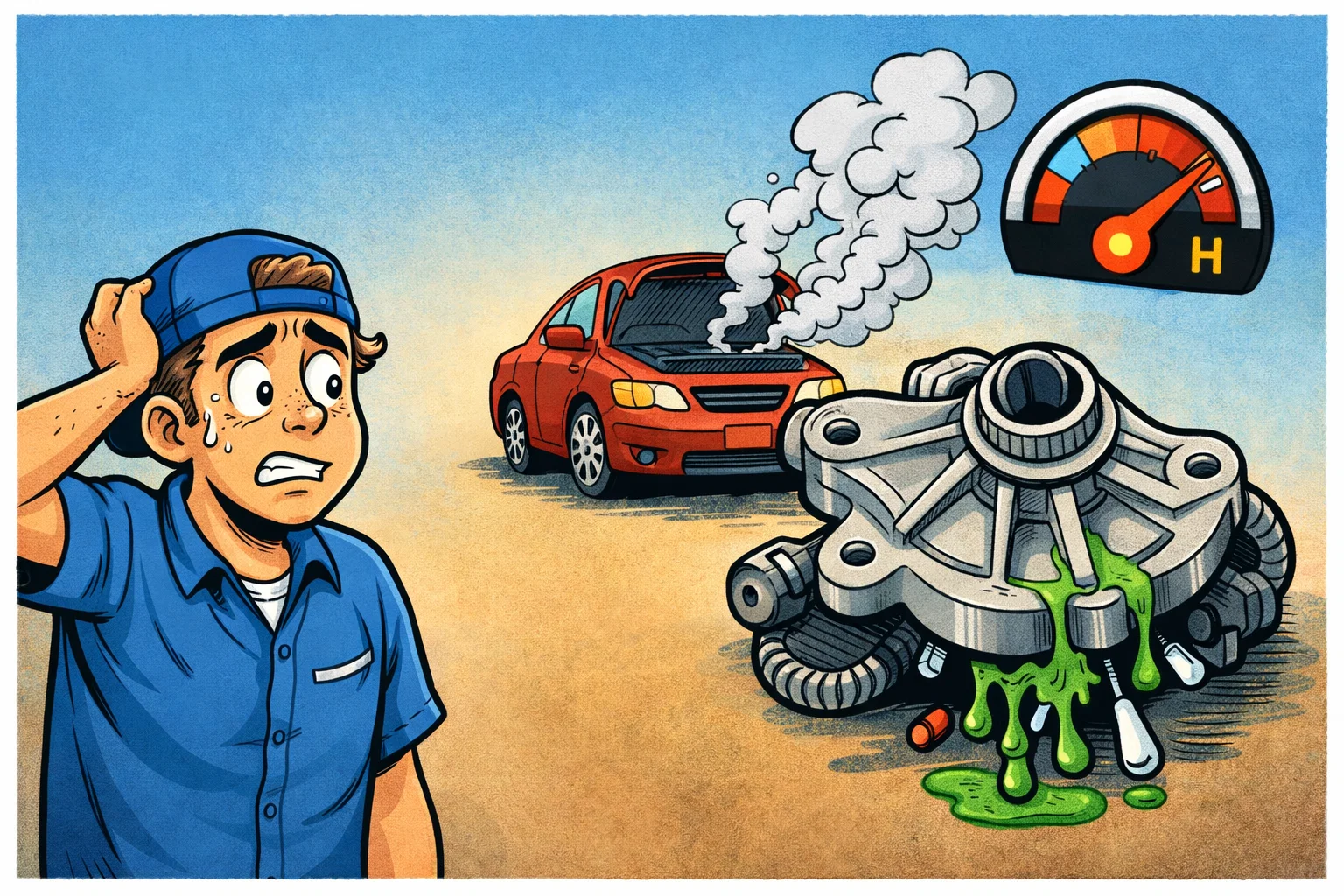
Water pump failure signs include coolant leaks at the front of the engine, whining noise from the pump bearing, engine overheating, and steam from the radiator. Replacement costs $50 to $150 for the part (DIY) versus $300 to $750 at a shop. If your water pump is driven by the timing belt, replace both at the same time to save labor costs.
The water pump is the heart of your engine's cooling system, continuously circulating coolant through the engine block, radiator, and heater core. When it fails, the consequences can be catastrophic, from overheating to complete engine failure. Learn to recognize the warning signs, understand what causes water pump failure, and decide whether this is a repair you can tackle yourself.
What You Need to Replace a Water Pump
Gear we trust for this job. Links route to the closest store that ships to you.
As an Amazon Associate we earn from qualifying purchases at no extra cost to you. Learn more.
Recommended part
Water Pump Replacement Kit
OEM-grade water pump with gasket included.
Recommended fluid
Premixed 50/50 Coolant (Universal)
Ready-to-pour, no mixing required.
Recommended tool
1/2" Drive Torque Wrench
Calibrated, 10-150 ft-lb. Essential for any DIY job.
Recommended tool
15-Quart Oil/Coolant Drain Pan
Wide-mouth, sealable for clean disposal.
Understanding the Water Pump's Role
Your water pump works continuously whenever your engine runs, spinning at thousands of RPM to circulate coolant through the entire cooling system. It draws cool fluid from the radiator, pushes it through the engine block where it absorbs heat, and sends it back to the radiator to be cooled again.
This constant cycling keeps your engine operating within a safe temperature range, typically 195°F to 220°F. Without proper coolant circulation, heat builds up rapidly, and within minutes, your engine can suffer serious damage.
Water Pump Components
Impeller
The spinning vane that creates flow. Plastic or metal, failure here stops circulation.
Bearing/Shaft
Supports the impeller shaft. Failure causes wobble, noise, and leaks.
Seal
Prevents coolant from leaking past the shaft. Most common failure point.
Weep Hole
A small hole that allows coolant to escape when the seal fails, serving as an early warning sign.
Symptoms of Water Pump Failure
Water pumps rarely fail without warning. Learning to recognize these symptoms can save you from a roadside breakdown or worse, a ruined engine.
Coolant Leak at the Front of the Engine
The most telltale sign. Look for coolant drips or stains beneath the water pump area. Fresh coolant is bright colored (green, orange, or pink); dried coolant leaves white or rust-colored deposits.
Whining or Grinding Noise
A high-pitched whine that changes with engine speed often indicates a failing water pump bearing. Grinding suggests the bearing is nearly shot. The noise typically comes from the front of the engine.
Overheating
If your temperature gauge climbs unusually high, especially at highway speeds or under load, and other components check out, the water pump may not be circulating coolant effectively.
Steam from the Radiator
Steam escaping from under the hood indicates boiling coolant, a sign that circulation has stopped or slowed dramatically. Pull over immediately if you see steam.
Wobbling Pulley
With the engine off, try to wiggle the water pump pulley. Any noticeable play indicates bearing wear. A healthy pump pulley shouldn't move at all.
Don't Ignore These Signs
Common Causes of Water Pump Failure
- Normal wear and tear: The seal and bearing wear out over time, typically between 60,000-100,000 miles.
- Contaminated coolant: Old, acidic, or wrong coolant accelerates seal and impeller corrosion.
- Over-tightened belt: Excessive belt tension puts extra stress on the pump bearing.
- Timing belt failure: On timing belt-driven pumps, belt issues can damage the pump.
- Electrolysis: Electrical current in the cooling system (from bad grounds) erodes components.
DIY Difficulty Assessment
Water pump replacement difficulty varies significantly by vehicle. Before committing to DIY, honestly assess your situation:
Easier Replacements
- • External, serpentine belt-driven pumps
- • Water pump visible and accessible
- • Only requires removing belt and pump
- • Common on older vehicles and trucks
- • Typically 2-3 hours for experienced DIYer
Difficult Replacements
- • Timing belt-driven pumps (inside cover)
- • Buried behind engine accessories
- • Requires special tools or timing procedure
- • Common on many modern vehicles
- • Can take 4-8+ hours even for pros
Pro Tip
Tools and Materials
Essential Tools
- Socket set (metric and standard)
- Serpentine belt tool
- Drain pan (large capacity)
- Torque wrench
- Gasket scraper
- Pulley puller (if needed)
- Jack and jack stands
Required Materials
- New water pump (OEM or quality aftermarket)
- Water pump gasket and/or O-rings
- RTV sealant (if specified)
- Fresh coolant
- New serpentine belt (recommended)
- New thermostat (optional but recommended)
Cost Comparison: DIY vs Professional
| Item | DIY Cost | Shop Cost |
|---|---|---|
| Water pump | $40 - $120 | Included |
| Gaskets/sealant | $10 - $25 | Included |
| Coolant | $15 - $30 | Included |
| Serpentine belt | $15 - $40 | Included |
| Labor (2-4 hours) | $0 (your time) | $150 - $400 |
| Total | $75 - $200 | $300 - $700 |
* Timing belt-driven pumps may cost $500-$1,000+ at a shop due to additional labor
Your potential savings: $200 - $500
Step-by-Step Replacement (External Pump)
This guide covers serpentine belt-driven, externally mounted water pumps. Timing belt-driven pumps require additional steps not covered here. Consult a repair manual for your specific vehicle.
Prepare and Drain
Let the engine cool completely. Disconnect the negative battery cable. Position a drain pan and drain the cooling system completely through the radiator petcock. Remove coolant reservoir if it blocks access.
Remove the Serpentine Belt
Use a serpentine belt tool to release tension on the tensioner pulley. Slip the belt off the water pump pulley. This is also a good time to inspect the belt for wear and replace if needed.
Remove Accessories (If Necessary)
Depending on your vehicle, you may need to remove the cooling fan, fan shroud, or other accessories to access the water pump. Take photos and label connections as you go.
Disconnect Hoses
Remove the hoses connected to the water pump. Have rags ready because some coolant will spill. If hoses are stuck, carefully work them loose rather than pulling hard on the pump.
Remove the Old Pump
Remove the mounting bolts in a crisscross pattern. Carefully remove the pump, which may be sealed with RTV and require some gentle prying. Note bolt lengths if they vary.
Prepare Mounting Surface
Scrape all old gasket material from the mounting surface using a gasket scraper. The surface must be clean and flat for a proper seal. Clean the bolt holes as well.
Install New Pump
Apply gasket or RTV as specified for your vehicle. Position the new pump and hand-start all bolts. Tighten in a crisscross pattern to the specified torque, typically 15-22 ft-lbs.
Reassemble and Refill
Reconnect hoses, reinstall accessories, and route the serpentine belt correctly. Close the drain petcock and fill the cooling system with fresh coolant. Bleed air from the system.
Test and Verify
Reconnect the battery. Start the engine and let it warm up with the heater on. Watch the temperature gauge and check for leaks. Top off coolant as needed. Test drive and recheck.
When to Call a Professional
Leave It to the Pros If:
- • Your water pump is driven by the timing belt and you are not confident with timing procedures
- • The pump is buried behind multiple components requiring special tools
- • You have never done major engine work before
- • Time constraints do not allow for potential complications
- • Your vehicle is under warranty, as DIY repairs may void coverage
Related Guides
Frequently Asked Questions
Don't Miss Critical Car Care Tips
Get exclusive guides, money-saving maintenance tips, and early warning signs delivered straight to your inbox.