Selling Your Car for Scrap: When It Makes Sense
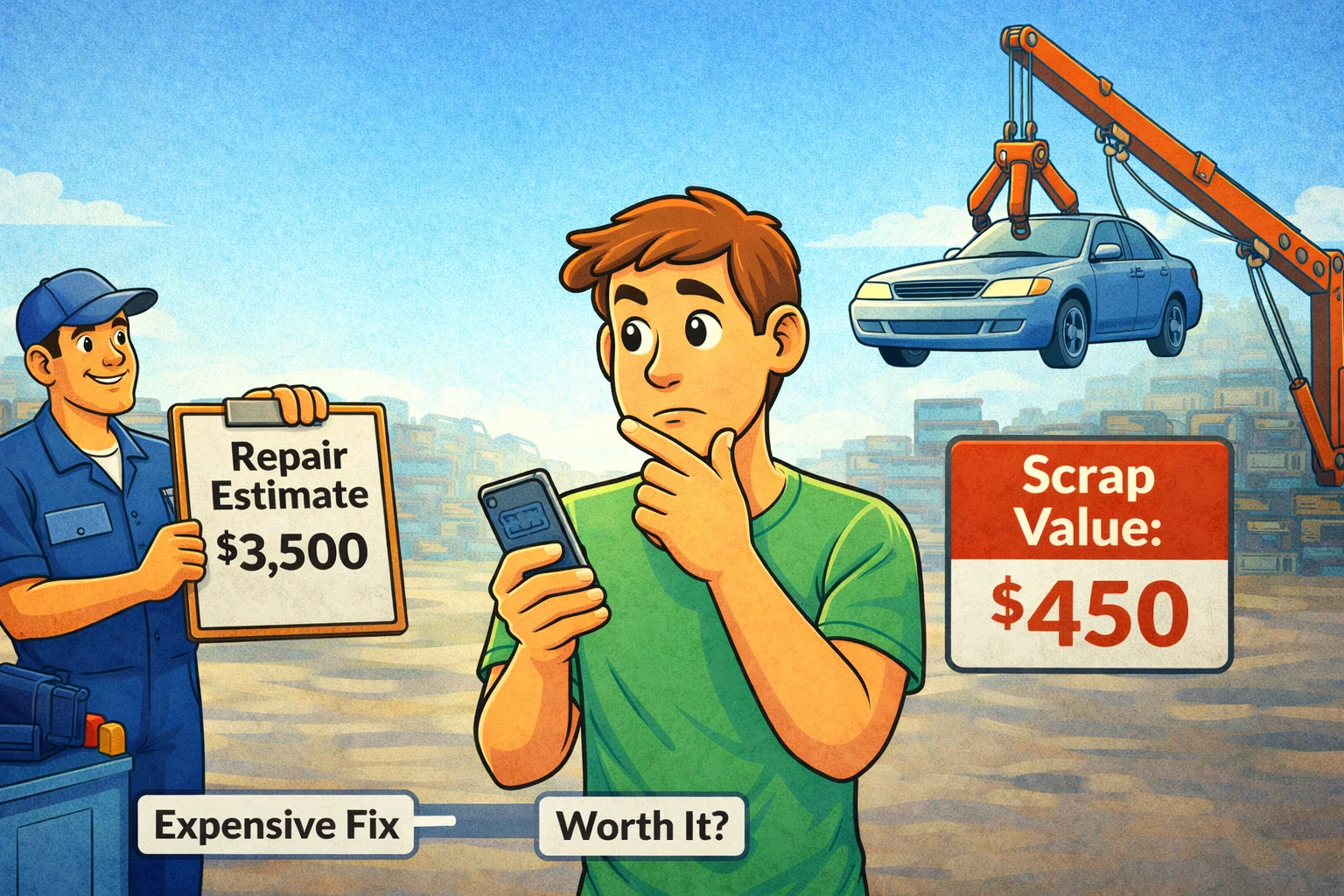
Knowing when to scrap vs. repair can save you thousands in wasted repairs on a vehicle that's past its economic life.
Quick Answer
Scrap your car when the repair cost exceeds 50 to 75% of the vehicle's market value. Scrap values range from $100 to $500 for sedans and $200 to $800 for trucks/SUVs based on weight and current steel prices. Get quotes from at least 3 scrap yards, remove personal items, and have your title ready.
Every car reaches a point where the cost of the next repair exceeds what the vehicle is worth. When that transmission rebuild quote hits $3,500 on a car worth $2,000, you're staring at one of the most common financial decisions car owners face: fix it, part it out, or scrap it.
Scrap car values typically range from $100 to $500 for a standard sedan and $200 to $800 for trucks and SUVs. The exact amount depends on the current price of scrap steel, the vehicle's weight, and whether major components like the catalytic converter are still intact. While scrapping pays less than parting out, it's the fastest option and requires zero mechanical work on your end.
This guide gives you a clear decision framework for choosing between repair, parting out, and scrapping. You'll learn how scrap yards calculate their offers, what paperwork you need, and how to squeeze maximum value from a vehicle at the end of its life.
Whether you're dealing with a flood-damaged sedan, a rusted-out truck, or just a car that's nickel-and-diming you to death, let's figure out the smartest exit strategy for your situation.
Repair vs. Part Out vs. Scrap: The Decision Framework
The right choice depends on three factors: your car's current market value, the cost of needed repairs, and how much time you're willing to invest. Here's a straightforward way to think about it.
Repair
- Repair cost is less than 50% of car's value
- Car is otherwise reliable
- No major rust or structural issues
- You need reliable transportation
Part Out
- Popular make/model with parts demand
- Body and interior in good condition
- You have time and garage space
- Potential return exceeds 3x scrap value
Scrap
- Extensive rust or structural damage
- Repair cost exceeds car's value
- Low parts demand for this model
- You want it gone quickly with no hassle
The 50% Rule
If parting out sounds like the right path, our complete guide to parting out a car walks you through the process step by step. For selling individual components, check our guide to selling car parts.
How Scrap Yards Calculate Your Car's Value
Scrap car pricing isn't random. Yards use a straightforward formula based on weight, metal prices, and salvageable components.
Scrap Value Factors
Track current scrap metal pricing at Daily Metal Price to time your sale for the best payout.
How to Scrap Your Car: Step by Step
Remove Personal Belongings and Valuable Items
Check every compartment, under seats, in the trunk, and in the glove box. Remove your registration, insurance cards, and any personal documents. Pull out any aftermarket accessories you can reuse or sell separately: dash cams, phone mounts, floor mats, and seat covers. Remove the license plates as required by your state.
Gather Required Paperwork
You'll need the vehicle title signed over to the scrapyard. If you've lost the title, contact your state DMV for a duplicate (usually $15 to $30 and takes 1 to 2 weeks). Some states also require a bill of sale and odometer disclosure statement. Cancel your insurance and registration after the transaction is complete.
Get Multiple Quotes
Call or use online quote tools from at least 3 local scrap yards and national services like Peddle, Copart, or Pull-A-Part. Provide the year, make, model, condition, and whether it runs. Ask whether towing is included in the quote or deducted from the payment. Compare offers carefully since the difference between the lowest and highest quote is often $100 to $200.
Schedule Pickup and Get Paid
Most scrap yards offer free towing and same-week pickup. Confirm the final price before the tow truck arrives, as some operators try to renegotiate onsite. Get paid in cash or check at the time of pickup. Keep a copy of the bill of sale and title transfer for your records. Notify your DMV of the sale to avoid future liability.
How to Maximize Your Scrap Value
Even if you're scrapping the whole car, a few quick moves can add $50 to $200 to your payout with minimal effort.
Sell the Battery Separately
A working car battery sells for $30 to $50 on its own. Auto parts stores also pay $10 to $15 for dead batteries as core charges.
Pull Alloy Wheels First
Alloy wheels sell for $50 to $200 each on the used market. Replace them with any steel wheels before sending the car to scrap.
Drain and Sell Fluids
Used motor oil can be taken to auto parts stores for free recycling, but a full tank of gas can be siphoned and used in another vehicle.
Time the Market
Scrap metal prices fluctuate. Check current rates at Daily Metal Price or Trading Economics before accepting an offer. Waiting a month can sometimes mean $50+ more.
Scrap Yard Scams to Watch For
Bait-and-Switch Pricing
They quote $400 on the phone but offer $250 when the tow truck arrives, claiming "the car is in worse condition than described." Get quotes in writing and walk away from lowball revisions.
Hidden Towing Fees
Some operators advertise "free towing" but deduct $75 to $100 from your payment. Always confirm the net amount you'll receive after any fees.
Title Fraud
Never sign a blank title. Fill in the buyer's name, date, and odometer reading before signing. Keep a photocopy for your records. Report the sale to your DMV immediately.
Avoiding the Scrapyard: Preventive Maintenance
The best way to avoid scrapping a car prematurely is consistent maintenance. Many vehicles that end up at the scrapyard could have lasted another 50,000 miles with proper care. Our complete maintenance schedule guide covers every service interval from 3,000 to 100,000+ miles, helping you catch problems before they become terminal.
What to Read Next
How to Part Out a Car for Maximum Profit
Strip it down and sell parts individually for 2 to 4 times what a junkyard offers for the whole car.
Where to Sell Car Parts Online
Best platforms, pricing strategies, and shipping tips for selling auto parts online and locally.
How to Price Used Car Parts
Compare scrap value against individual part prices to decide which route earns you more money.
How to Ship Car Parts Safely
If you decide to sell parts instead of scrapping, learn how to package and ship them without damage.
Frequently Asked Questions: Scrapping Your Car
Don't Miss Critical Car Care Tips
Get exclusive guides, money-saving maintenance tips, and early warning signs delivered straight to your inbox.