How to Part Out a Car for Maximum Profit
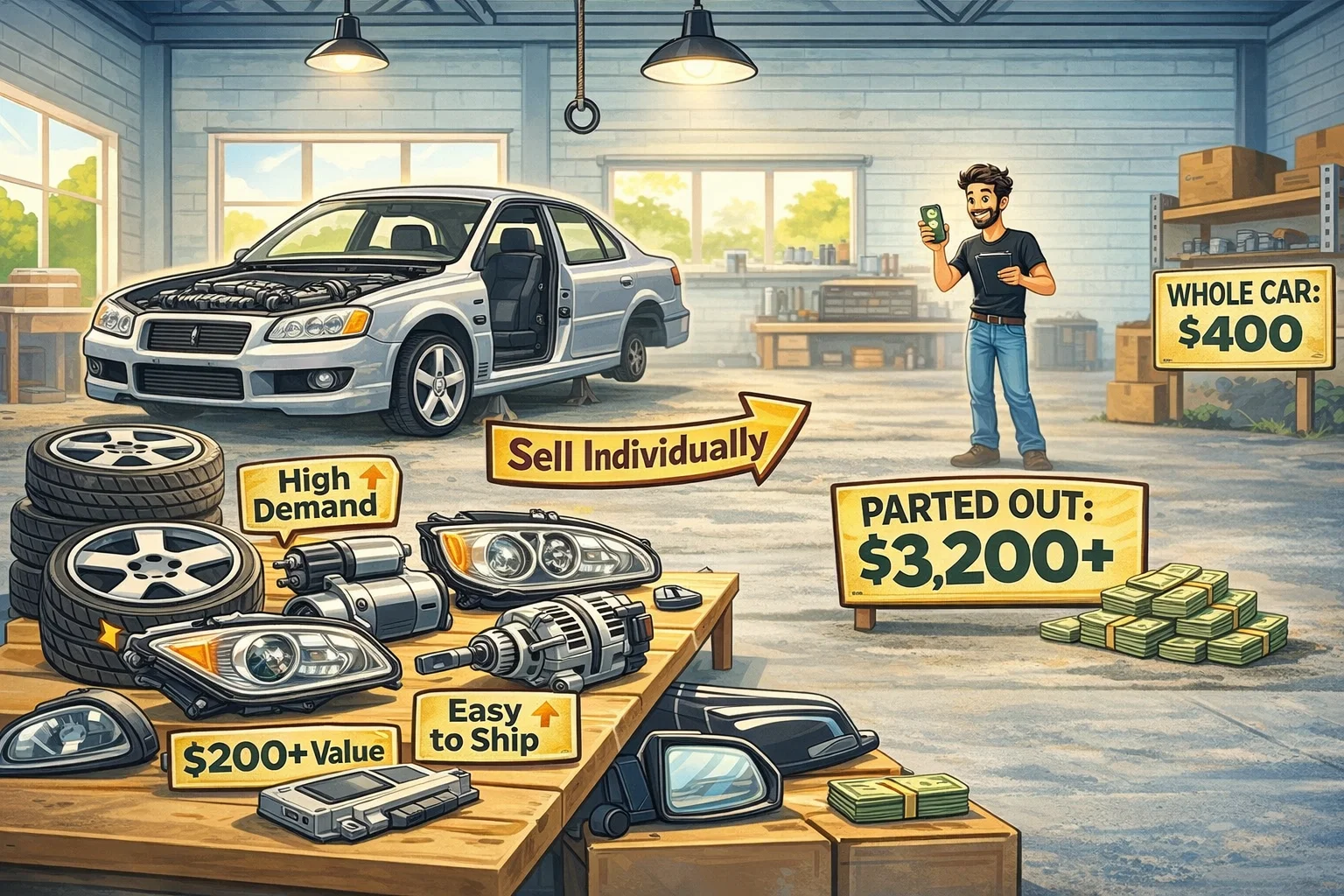
A well-organized part-out can yield 2 to 4 times more than selling a car whole to a junkyard.
Quick Answer
Parting out a car can net $2,000 to $5,000 compared to $300 to $500 from a junkyard. Start with high-value parts: catalytic converter, wheels, headlights, alternator, starter, and electronics. List on eBay Motors and Facebook Marketplace. A typical part-out takes 2 to 4 weekends to complete.
That car sitting in your driveway with a blown engine or a rusted frame might look like a $300 junkyard trade-in. But strip it down methodically, sell each part individually, and that same vehicle can put $2,000 to $5,000 in your pocket. Parting out a car is one of the best-kept secrets in the automotive world.
The math is simple. A used alternator sells for $50 to $150. A set of alloy wheels fetches $200 to $800. Headlight assemblies go for $75 to $300 each. Catalytic converters (legally, from vehicles you own) can be worth $50 to $250 in scrap value alone. Add up 15 to 20 parts, and the total dwarfs any whole-car offer from a salvage yard.
This guide covers the complete process from deciding whether parting out makes financial sense, to identifying the highest-value components, removing them safely, and selling each one through the right channel. Whether you're dealing with a totaled daily driver or a parts car you picked up cheap, these strategies maximize your return per hour of work.
The key is knowing which parts to pull first, where to sell each type, and how to handle what's left over. Let's break it down.
Should You Part Out or Sell Whole?
Parting out isn't always the best move. It takes time, space, and some mechanical ability. Before you commit, run through this quick decision framework.
Part Out When...
- The car has a popular make/model with high parts demand
- Major mechanical failure but body and interior are good
- You have garage space to store parts during selling
- The car is worth less than $2,000 as a whole vehicle
- You have basic tools and mechanical comfort
Sell Whole When...
- The car is still drivable and worth $3,000+ running
- It's an uncommon model with low parts demand
- You lack storage space for parts inventory
- You need the money quickly (part-outs take weeks)
- The car has extensive rust damage across most panels
Quick Profit Estimate
The Highest-Value Parts to Pull First
Start with the parts that bring the most money per hour of removal time. These are the components that sell fastest and command the best prices on the used market.
Top 10 High-Value Parts (Typical Used Prices)
Alloy wheels (set of 4)
$200–$800
Transmission (if working)
$200–$1,000
Headlight assemblies (pair)
$150–$600
Infotainment / nav unit
$150–$500
Seats (leather/heated)
$100–$500
ECU / engine computer
$100–$400
Doors (with glass)
$100–$400 ea
Side mirrors (powered)
$50–$200 ea
Alternator
$50–$150
Starter motor
$40–$120
For detailed guidance on pricing individual components and choosing the right selling platforms, our guide to selling car parts covers eBay Motors, Facebook Marketplace, and local options in depth. If you're pulling electrical components like alternators or starters, review our alternator guide for proper removal techniques and our battery troubleshooting guide for safe disconnection.
The Part-Out Process: Step by Step
Document Everything First
Before removing a single bolt, photograph the entire car inside and out. Take close-ups of every part you plan to sell, including VIN and mileage shots. These photos become your listing images. Check the title status and ensure you legally own the vehicle. Some states require a title to sell individual parts. Remove the license plates and cancel insurance and registration.
Research Parts Values and Demand
Search eBay completed listings, Facebook Marketplace, and Car-Part.com for your specific year, make, and model. Note which parts sell frequently and at what prices. Focus your removal efforts on parts with both high value and high demand. A $500 part that takes 3 months to sell isn't as profitable as a $100 part that sells in 3 days.
Gather Tools and Set Up Your Workspace
You'll need a basic socket set (metric and SAE), screwdrivers, pliers, trim removal tools, a floor jack with stands, and a torque wrench. Set up in a flat, covered area if possible. Have labeled bins or bags ready for hardware. Keeping bolts and clips organized with their corresponding parts increases resale value.
Remove Parts in the Right Order
Work from the inside out. Start with interior components (seats, stereo, trim) since they're easiest to access. Move to under-hood electrical parts (alternator, starter, sensors). Then exterior body panels, lights, and mirrors. Save heavy items like the transmission, engine, and suspension for last. This order prevents you from losing access to components you still need to remove.
List, Ship, and Handle What's Left
Create listings as you remove parts. Include the year, make, model, part number (if visible), condition, and mileage. Ship smaller items via USPS or UPS. For larger parts, offer local pickup. Once you've pulled everything profitable, sell the remaining shell to a scrapyard or junkyard. Even a stripped body typically fetches $100 to $300 in scrap metal value.
Legal Requirements and Paperwork
Title Requirements
Most states require you to hold the title for any vehicle you're dismantling. Keep a copy for your records even after the shell is scrapped.
Catalytic Converter Sales
Federal and state laws regulate catalytic converter sales. Many states require proof of ownership and a bill of sale. Some restrict sales to licensed recyclers only.
Environmental Disposal
Fluids (oil, coolant, transmission fluid, brake fluid) must be drained and disposed of properly. Most auto parts stores accept used oil and coolant for free recycling.
Tips for Maximizing Your Returns
Clean Before Listing
A wiped-down, clean part photographs better and sells for 15 to 25% more than a greasy one. Five minutes of cleaning adds real dollars.
Include Part Numbers
Buyers search by OEM part number. Including it in your listing title puts you in front of serious buyers who know exactly what they need.
Bundle Related Parts
Sell sensor packages, wiring harness sections, or interior trim sets together. Bundles move faster and save you individual shipping headaches.
Time Your Listings
AC compressors sell best in spring. Heater cores and batteries peak in fall. Align your listings with seasonal demand for faster sales.
What to Read Next
Where to Sell Car Parts Online
Best platforms, pricing strategies, and shipping tips for selling auto parts online and locally.
Selling Your Car for Scrap
Decision framework for repair vs. part out vs. scrap, plus how to maximize your scrap value.
How to Price Used Car Parts
Know exactly what your pulled parts are worth before listing them, with research-backed pricing strategies.
How to Ship Car Parts Safely
Packaging and shipping tips for everything from small sensors to full bumper assemblies.
Frequently Asked Questions: Parting Out a Car
Don't Miss Critical Car Care Tips
Get exclusive guides, money-saving maintenance tips, and early warning signs delivered straight to your inbox.