Complete Car Fluids Guide: What Your Vehicle Needs
Quick Answer
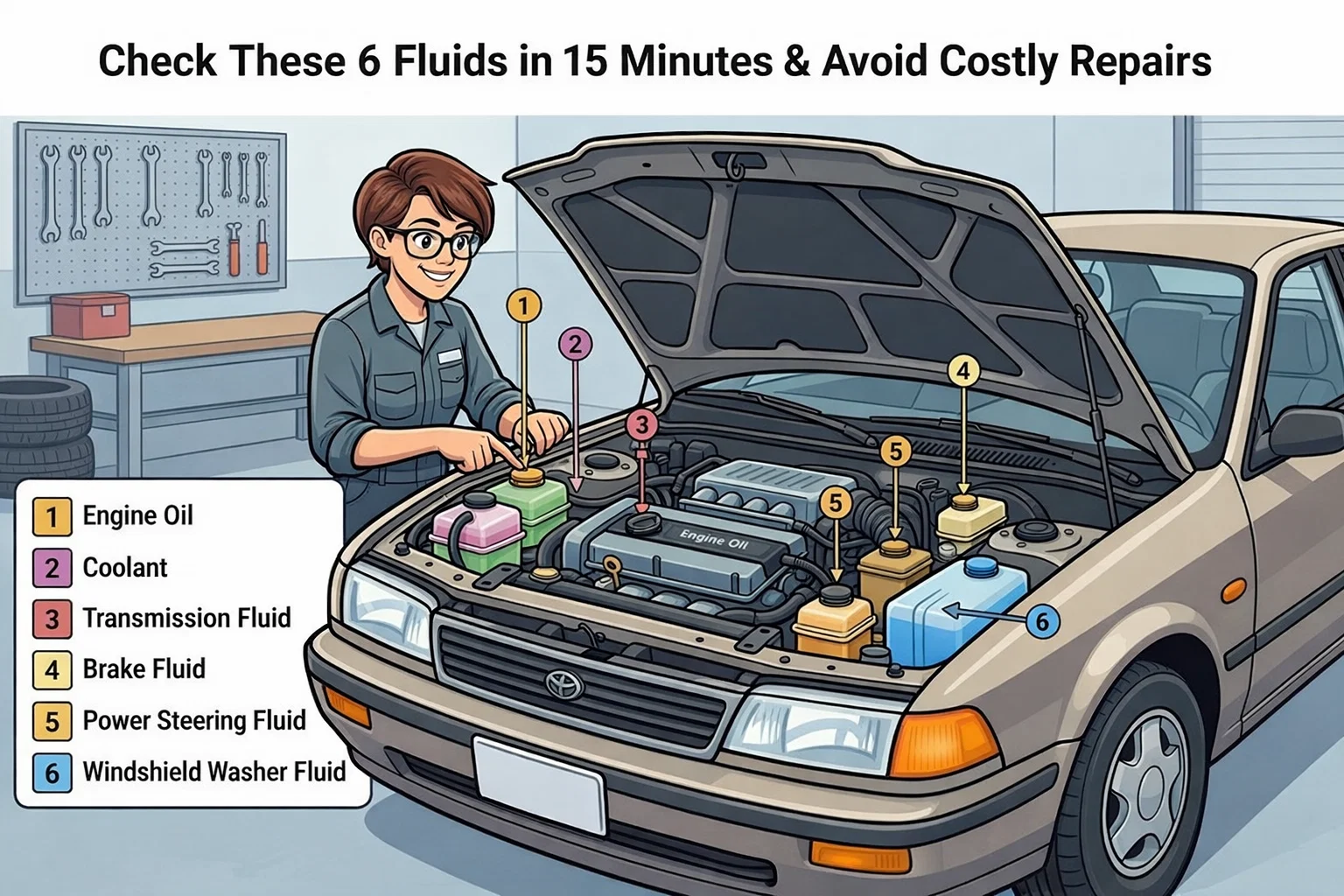
Your car has six essential fluids: engine oil, coolant, transmission fluid, brake fluid, power steering fluid, and windshield washer fluid. Checking all six takes 15 minutes and costs nothing. Low or contaminated fluid is the leading preventable cause of mechanical failure and expensive repairs.
Six Fluids Keep Your Car Alive. Do You Know What They Look Like?
Your car depends on six essential fluids to run safely and reliably. Engine oil, coolant, transmission fluid, brake fluid, power steering fluid, and windshield washer fluid each serve a critical purpose. Letting any one of them run low or go bad can lead to expensive damage or a dangerous breakdown.
The good news? Checking all six takes about 15 minutes and costs nothing. You do not need any special tools or mechanical knowledge. Just a clean rag, a well-lit parking spot, and this guide.
Most car owners only think about fluids when a warning light comes on. By then, the problem has already started. Regular fluid checks are one of the simplest ways to catch issues early, extend the life of your vehicle, and avoid surprise repair bills.
Let's walk through every fluid your car needs, what it looks like when it is healthy versus contaminated, and exactly how to check each one.
Every vehicle relies on a combination of fluids to lubricate, cool, clean, and protect its mechanical components. Understanding what each fluid does, what color it should be, and how often to check it gives you an enormous advantage over drivers who ignore maintenance until something breaks. According to the Car and Driver maintenance guide, fluid neglect is among the top causes of preventable vehicle breakdowns.
Fluid Color Identification Chart
One of the fastest ways to diagnose a leak or check fluid health is by color. Here is a quick reference for what each fluid should look like when fresh versus when it needs replacing:
| Fluid | Healthy Color | Replace When | Check Interval |
|---|---|---|---|
| Engine Oil | Amber / light brown | Dark black, gritty texture | Monthly |
| Coolant | Green, orange, or pink | Rusty, murky, or milky | Monthly |
| Transmission Fluid | Bright red / pink | Dark brown, burnt smell | Monthly |
| Brake Fluid | Clear / light yellow | Dark amber or brown | Every 6 months |
| Power Steering | Clear / light amber | Dark, foamy, or gritty | Every 6 months |
| Washer Fluid | Blue (varies by brand) | When reservoir is low | Monthly |
1. Engine Oil: The Lifeblood of Your Motor
Engine oil lubricates the hundreds of moving parts inside your engine, reduces friction, and carries away heat. Without it, your engine would seize within minutes. Fresh engine oil is amber or honey colored. As it collects contaminants, it turns darker.
Modern synthetic oils can last 7,500 to 10,000 miles between changes, but you should still check the level monthly. A low oil level can indicate a leak or excessive consumption that needs attention before it becomes a major problem.
HOW TO READ YOUR DIPSTICK
Pull the dipstick, wipe it clean, reinsert it fully, then pull it out again. The oil level should fall between the two marks (or within the crosshatched area). Check both the level and the color. If it looks like coffee and feels gritty between your fingers, it is time for a change.
For a complete walkthrough on changing your oil at home, check out our oil change guide.
2. Coolant: Keeping Your Engine Temperature Stable
Coolant (also called antifreeze) circulates through your engine and radiator to absorb heat and prevent freezing in cold weather. It is a 50/50 mix of water and ethylene glycol or propylene glycol. Never open the radiator cap or coolant reservoir when the engine is hot. The system is pressurized and can cause severe burns.
Coolant comes in several colors depending on the formula: green (conventional), orange (Dex-Cool), pink (Asian formula), and blue (European formula). Using the wrong type can cause corrosion and damage to gaskets and seals. Always match the type specified in your owner's manual.
Learn more about the differences in our coolant types guide, or follow our radiator flush guide if your coolant looks rusty or contaminated.
3. Transmission Fluid: Smooth Shifts and Long Life
Transmission fluid lubricates gears, cools the transmission, and provides hydraulic pressure for automatic transmissions to shift. Fresh transmission fluid is bright red or pink and has a slightly sweet smell. When it turns dark brown and smells burnt, the fluid has broken down and is no longer protecting your transmission effectively.
Many modern vehicles have sealed transmissions without a dipstick, which means checking the fluid requires getting under the car. If your vehicle does have a transmission dipstick, check it with the engine running and the transmission in park or neutral.
TRANSMISSION FLUID WARNING
Using the wrong type of transmission fluid can cause shifting problems, overheating, and permanent damage. ATF (automatic transmission fluid) and CVT fluid are not interchangeable. Always use the exact specification listed in your owner's manual.
Our transmission fluid change guide walks you through the complete process step by step.
4. Brake Fluid: Your Stopping Power
Brake fluid is a hydraulic fluid that transfers the force from your brake pedal to the brake calipers at each wheel. Without it, pressing the brake pedal would do nothing. Fresh brake fluid is clear to light yellow. Over time, it absorbs moisture from the air, which lowers its boiling point and reduces braking effectiveness.
The brake fluid reservoir sits on top of the master cylinder, usually near the back of the engine bay on the driver's side. The level should be between the MIN and MAX lines on the reservoir. If the level drops significantly, it could mean your brake pads are worn or you have a leak in the brake system.
SAFETY CRITICAL
Brake fluid is hygroscopic, meaning it absorbs moisture over time. The NHTSA recommends flushing your brake fluid every 2 years regardless of mileage. Moisture contaminated brake fluid can boil under heavy braking, causing complete brake failure.
5. Power Steering Fluid: Easy Turns
Power steering fluid provides the hydraulic pressure that makes turning your steering wheel effortless. Low or contaminated fluid causes whining noises when you turn, stiff steering, and eventual pump failure. Note that many newer vehicles use electric power steering and do not require this fluid at all.
Check the reservoir under the hood (usually labeled with a steering wheel icon). The fluid should be clear to light amber. Dark or foamy fluid needs to be flushed. For a complete walkthrough, see our power steering fluid change guide.
6. Windshield Washer Fluid: Clear Visibility
Washer fluid is the simplest fluid on your car, but running out at the wrong moment can be genuinely dangerous. Bug splatter, road salt, or sun glare on a dirty windshield can make it impossible to see. Keep the reservoir topped off and use a winter formula rated to at least -20 degrees F if you live in a cold climate.
Never substitute plain water for washer fluid. Water does not clean as effectively, can freeze and crack the reservoir or lines, and promotes algae growth inside the system.
Complete Fluid Check in 15 Minutes
Follow this sequence to check all six fluids in a single session. Make sure the engine is cool before you start, and park on a level surface for accurate readings.
Check Engine Oil
With the engine off and cool, pull the dipstick, wipe it clean, reinsert, and pull again. Note the level (between the two marks) and the color. Top off with the correct weight if low. Replace the dipstick securely when done.
Inspect Coolant Level
With the engine completely cool, check the coolant reservoir. The level should be between the MIN and MAX marks. Look at the color through the translucent reservoir. If it looks rusty or has floating particles, schedule a radiator flush.
Check Transmission Fluid
If your vehicle has a transmission dipstick, check it with the engine running and warmed up. The fluid should be between the marks and bright red or pink. If your vehicle has a sealed transmission, this step requires a lift and should be done during your next service appointment.
Inspect Brake Fluid
Locate the brake fluid reservoir near the back of the engine bay. Check the level against the MIN and MAX marks. The fluid should be clear to light yellow. Do not open the cap unless you need to top off, as brake fluid absorbs moisture from the air.
Check Power Steering Fluid
Find the power steering reservoir (look for the steering wheel icon). Check the level on the dipstick built into the cap or against the marks on the reservoir. Skip this step if your vehicle uses electric power steering.
Top Off Washer Fluid
Open the washer fluid reservoir cap (usually blue) and fill to the top. Use a winter rated formula if temperatures drop below freezing in your area. Test the sprayers after filling to make sure the nozzles are clear and aimed correctly.
PRO TIP: SET A CALENDAR REMINDER
The easiest way to stay on top of your fluids is to set a monthly phone reminder. Pick the first Saturday of each month, pop the hood, and run through this 15 minute check. It takes less time than making coffee, and it can save you thousands in preventable repairs.
When to Change vs. When to Top Off
Topping off a fluid buys you time. Changing it completely (flushing and replacing with fresh fluid) restores full protection. Here is a general guideline for each:
- Engine oil: Change every 5,000 to 10,000 miles depending on oil type. Top off if low between changes.
- Coolant: Flush every 30,000 miles or 5 years. Top off with the correct premixed formula if low.
- Transmission fluid: Change every 30,000 to 60,000 miles. Top off only if you notice a slight drop.
- Brake fluid: Flush every 2 years. Top off if the level drops (but investigate the cause).
- Power steering fluid: Flush every 50,000 miles. Top off if you notice whining when turning.
- Washer fluid: Refill as needed. No flushing required.
What to Read Next
Now that you know your fluids, dive deeper into the specific guides for each system:
Oil Change Guide
Save $280/year with pro oil change techniques
Coolant Types Explained
Green vs. orange vs. pink: which one is right?
Transmission Fluid Change
Step-by-step DIY guide to save $150+
How to Check Transmission Fluid
Dipstick technique, fluid color chart, and service costs
Power Steering Fluid Guide
Fix whining noises and stiff steering
For a full maintenance roadmap covering all systems, see our complete car maintenance schedule.
Frequently Asked Questions
Don't Miss Critical Car Care Tips
Get exclusive guides, money-saving maintenance tips, and early warning signs delivered straight to your inbox.