Best Tire Pressure Gauges and Portable Inflators (2026)
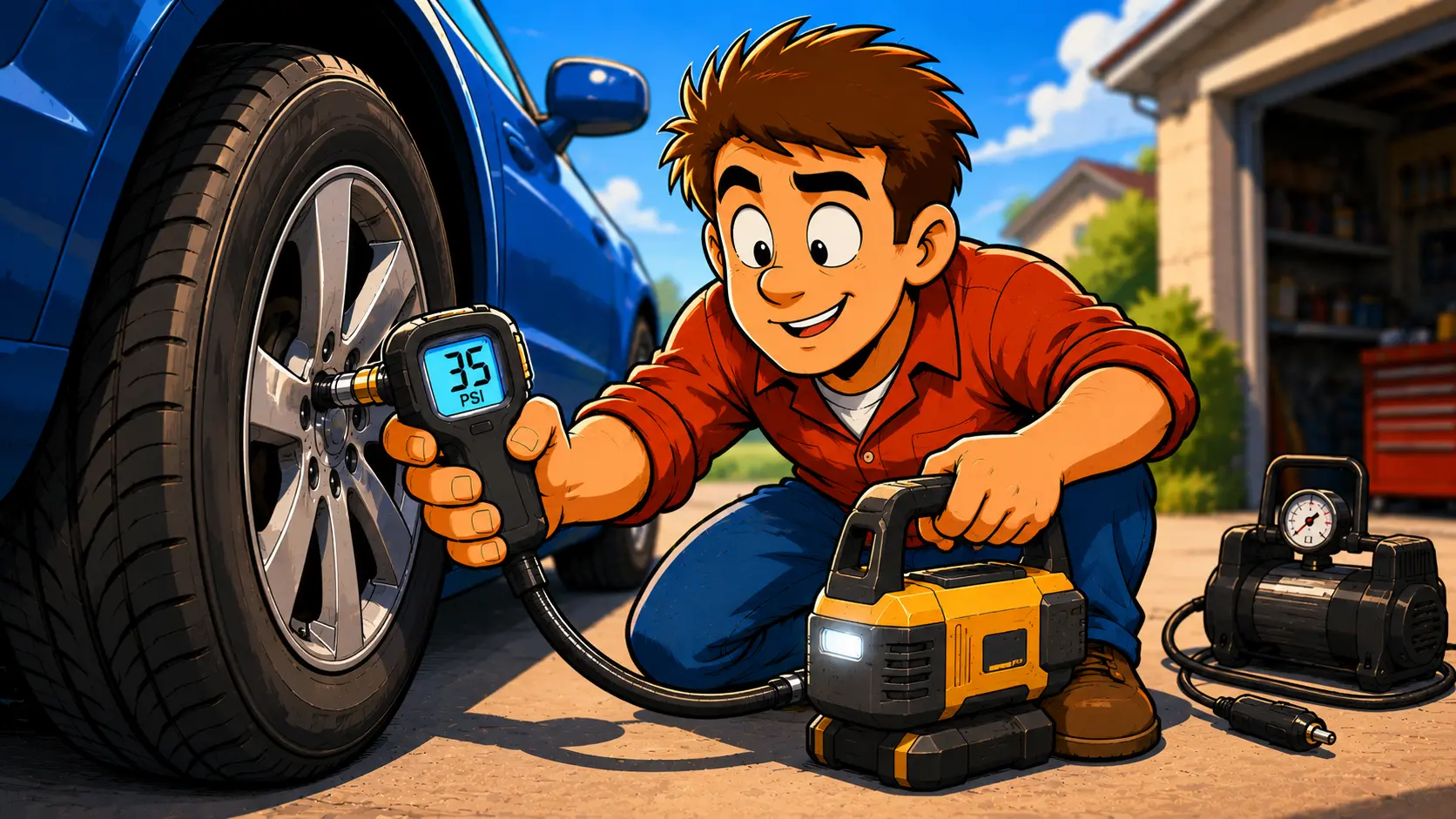
Quick Answer
The best overall pick is the AstroAI or JACO digital tire pressure gauge for plus or minus 1 percent accuracy at under $20. Pair it with a Ryobi or DeWalt cordless inflator if you already have those batteries, or a Viair 88P 12V plug-in compressor if you do not. Together they cost less than one tow truck call and pay for themselves in fuel economy and tire life.
Why Two $25 Tools Out-Earn Almost Anything Else in Your Trunk
Under-inflated tires cost the average US driver about $120 a year in extra fuel and shorten tire life by 25 percent. A $15 digital gauge and a $60 inflator pay for themselves in under a year and save you a roadside-assistance call the first time a tire reads 18 PSI on a cold morning. This guide breaks down the five best picks of 2026, when to grab digital over analog, and how to choose between cordless and 12V plug-in inflators.
How We Picked
Our team has measured, aired down, aired up, and trunk-stashed dozens of tire tools across daily commuters, overlanding rigs, and a high-mileage parts fleet. Picks were chosen on accuracy, durability, and real-world value, not on sponsored placements.
- →Accuracy: within plus or minus 1 PSI when cross-checked against a calibrated reference gauge.
- →Build quality: metal bodies, sealed chucks, and no plastic in the pressure path.
- →Auto shut-off (inflators): protects the tire and removes guesswork.
- →Real-world speed: we timed top-ups from 25 PSI to 35 PSI on a 235/55R18 tire.
- →Verified reviews: we cross-checked thousands of Amazon US and DE buyer ratings.
As an Amazon Associate we earn from qualifying purchases at no extra cost to you. Learn more.
Our Top 5 Picks
AstroAI / JACO Digital Tire Pressure Gauge
A backlit digital gauge with plus or minus one percent accuracy is the single most useful tool in your glove box. AstroAI and JACO both read instantly, hold the value, and bleed pressure with a side button. Easier than analog, more accurate than a pencil stick, and cheaper than a tank of gas.
What we like
- Plus or minus 1 percent accuracy across 0-150 PSI
- Backlit display readable at night
- Holds the reading until you reset it
- Auto-off saves the battery
Watch out for
- Needs CR2032 battery every 2 to 3 years
- Not as durable in extreme cold as analog
Best for: Every car owner. The cheapest piece of accuracy you can buy and the one tool every glove box should have.
Check price on AmazonAffiliate link. We may earn a small commission at no extra cost to you. Learn more.
Milton S-921 Analog Dial Tire Gauge
Milton's S-921 has been on tire shop counters for decades for a reason. The 2 inch dial face is impossible to misread, the bleed valve lets you set exact pressure on the fly, and there is no battery to die in the cold. Buy it once, hand it down to your kids.
What we like
- Commercial-grade brass body
- No battery dependency
- Side-bleed valve sets exact PSI
- Easy to read with gloves on
Watch out for
- Costs more than digital
- Slightly slower to read than a backlit digital
Best for: DIYers who keep tools forever, off-road and overland drivers airing down and back up regularly, and anyone in cold climates where batteries struggle.
Check price on AmazonAffiliate link. We may earn a small commission at no extra cost to you. Learn more.
Cordless Tire Inflator (Ryobi / DeWalt 18-20V)
If you already own a Ryobi or DeWalt battery platform, the bare-tool inflator is the most useful $80 add-on you can buy. Set the target PSI, press the trigger, and it shuts off automatically. Tops up all four tires on a single battery and lives in the garage like a power tool, not a one-job gadget.
What we like
- Auto shut-off at target PSI
- Runs on the same battery as your drill
- Inflates a car tire in 1 to 2 minutes
- Doubles as bike, sports ball, and float inflator
Watch out for
- Bare tool only (battery sold separately)
- Louder than a 12V plug-in compressor
Best for: Anyone already invested in Ryobi or DeWalt batteries. The fastest, most convenient way to keep all four tires correct year round.
Check price on AmazonAffiliate link. We may earn a small commission at no extra cost to you. Learn more.
Viair 88P / AstroAI 12V Portable Tire Compressor
The trunk inflator. Plug it into the cigarette lighter, screw the chuck onto the valve stem, and watch the gauge climb. Slower than a cordless unit, but it never runs out of battery and it costs half as much. Every road-trip kit should have one.
What we like
- No battery to charge or replace
- Cheaper than cordless options
- Built-in gauge with auto shut-off on most models
- Long enough hose to reach all four wheels
Watch out for
- Tethered to the car's 12V outlet
- Slower than cordless and shop air
Best for: Road trippers, daily drivers without battery platforms, and anyone who wants emergency-ready inflation under $60.
Check price on AmazonAffiliate link. We may earn a small commission at no extra cost to you. Learn more.
AstroAI Rechargeable Mini Tire Inflator
A pocket-size USB-C rechargeable inflator that lives in the glove box. Less powerful than a 12V compressor, but more than enough to top a tire from 25 to 35 PSI in under three minutes. Doubles as a bicycle and sports-ball pump.
What we like
- Lives in the glove box
- USB-C charging from any phone charger
- Auto shut-off at preset PSI
- Quieter than 12V compressors
Watch out for
- Not for fully flat tires
- Battery life limited to 2 or 3 tires per charge
Best for: Commuters, bicycle owners, motorcycle riders, and minimalists who want one small device that handles everyday top-ups.
Check price on AmazonAffiliate link. We may earn a small commission at no extra cost to you. Learn more.
Which One Should You Actually Buy?
Pair one gauge with one inflator. Pick the scenario closest to your driving life.
"I just want to check my tires every month."
Buy the AstroAI digital gauge. $15, lives in the glove box, reads in one second.
"I already own Ryobi or DeWalt batteries."
Buy the bare-tool cordless inflator. The fastest, most convenient way to keep four tires correct.
"I take road trips and want emergency-ready inflation."
Buy the Viair 88P 12V compressor. Never runs out of battery, lives in the trunk.
"I run a fleet, off-road, or change pressures often."
Buy the Milton S-921 analog gauge. Commercial dial, no battery, lasts forever.
"I want one small device for the glove box."
Buy the AstroAI USB-C mini inflator. Pocket-size, charges from your phone cable.
How to Check and Set Tire Pressure (90 Seconds)
- Park on level ground after the tires have been cold for at least 3 hours.
- Find the correct PSI on the sticker inside your driver's door jamb. Never use the tire sidewall number.
- Unscrew the valve cap and press the gauge straight onto the valve. A quick hiss is normal; a long hiss means you are off-center.
- Read the gauge. If under spec, attach the inflator and add pressure in 5 PSI increments, rechecking each time.
- If over spec, press the bleed button (digital) or center pin (analog) until you hit the target.
- Reinstall the valve cap snug. Repeat on the remaining three tires. Do not forget the spare every 6 months.
Need the full primer on what PSI to run and why? Read our tire pressure maintenance guide and our tire sidewall numbers guide.
CHECK PRESSURE COLD, NEVER HOT
Hot tires read 3 to 5 PSI higher than cold ones. The number on your driver's door jamb assumes cold. If you bleed off pressure when the tires are hot from highway driving, you will wake up to dangerously low cold pressure the next morning. Always check first thing, before you drive more than a mile.
What to Read Next
How-To
Tire Pressure Maintenance Guide
Correct PSI, monthly checks, and how to stop slow leaks.
Reference
Tire Sidewall Numbers Explained
Decode the size, load, and speed rating on every tire.
How-To
How to Rotate Your Tires
Extend tire life with the correct rotation pattern.
Checklist
Road Trip Prep Checklist
What to pack so a slow leak does not end your weekend.
Frequently Asked Questions
Don't Miss Critical Car Care Tips
Get exclusive guides, money-saving maintenance tips, and early warning signs delivered straight to your inbox.