How to Read Tire Sidewall Numbers and Codes
Quick Answer
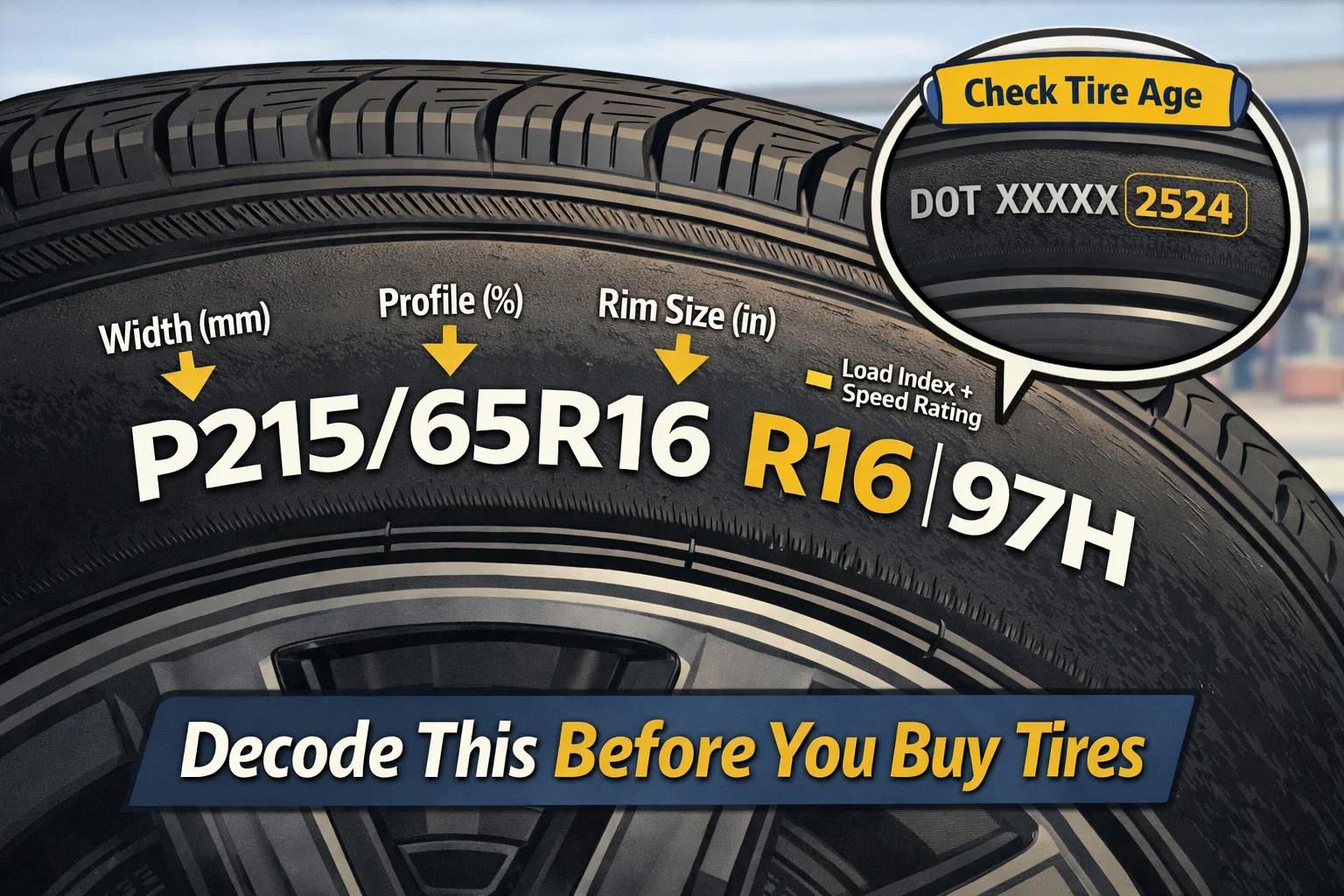
In P215/65R16 97H: P means passenger, 215 is width in mm, 65 is the sidewall height as a percentage of width, R means radial, 16 is the rim diameter in inches, 97 is the load index (1,609 lbs), and H is the speed rating (130 mph). The DOT date code (last 4 digits) tells you when the tire was made, such as 2523 meaning week 25 of 2023.
That String of Numbers on Your Tire Tells You Everything
Every tire has a code printed on the sidewall that tells you its width, height, construction type, rim size, load capacity, speed rating, and manufacturing date. Once you learn to read it, you can buy the right tires with confidence, check how old your tires are, and understand exactly what you are putting on your car.
Most drivers have no idea what P215/65R16 97H means. They rely on the tire shop to pick the right size, which usually works fine. But when you are shopping online, comparing prices, or buying used tires, knowing how to decode that sidewall can save you from expensive mistakes.
Let's break down every number and letter on your tire sidewall so you know exactly what you are looking at.
A typical tire size code looks like this: P215/65R16 97H. Each section represents a specific measurement or rating. Understanding these codes helps you buy the correct replacement tires, verify that a tire shop installed the right size, and compare tire options when shopping. The Tire Rack size guide is an excellent reference for looking up specifications by size code.
Anatomy of a Tire Size Code
Let's use P215/65R16 97H as our example and break down each piece:
| Code | Meaning | In Our Example |
|---|---|---|
| P | Tire type (P = Passenger, LT = Light Truck) | Passenger vehicle tire |
| 215 | Section width in millimeters | 215mm wide from sidewall to sidewall |
| 65 | Aspect ratio (sidewall height as % of width) | Sidewall is 65% of 215mm = 140mm tall |
| R | Construction type (R = Radial) | Radial construction (standard for modern tires) |
| 16 | Rim diameter in inches | Fits a 16-inch wheel |
| 97 | Load index (weight capacity per tire) | 1,609 lbs per tire maximum |
| H | Speed rating (max sustained speed) | 130 mph maximum |
Tire Type Codes
The letter(s) before the width number tell you what type of vehicle the tire is designed for:
- P (Passenger): Standard passenger vehicle tires for cars, minivans, and light SUVs.
- LT (Light Truck): Designed for pickup trucks, heavy SUVs, and vans. Built with stronger sidewalls for heavier loads.
- ST (Special Trailer): Trailer tires only. Never use these on a vehicle you drive.
- No letter (Euro-metric): Equivalent to P-metric but manufactured to European standards. Functionally identical for most purposes.
Section Width (The First Number)
The three-digit number (215 in our example) is the tire's width in millimeters, measured from one sidewall to the other when the tire is properly inflated and mounted. Wider tires generally provide more grip but also increase rolling resistance and can be noisier. Most passenger car tires range from 175mm to 275mm.
Aspect Ratio (The Second Number)
The two-digit number after the slash (65 in our example) is the aspect ratio. It tells you the sidewall height as a percentage of the section width. A 65-series tire on a 215mm width has a sidewall height of 140mm (215 x 0.65).
Lower aspect ratios (like 35 or 40) mean shorter sidewalls, which improves handling response but gives a firmer ride. Higher aspect ratios (like 70 or 75) mean taller sidewalls, which absorb bumps better but feel less precise when cornering.
Speed Rating Chart
The speed rating tells you the maximum speed the tire is certified to handle safely. Always match or exceed your vehicle's required speed rating when buying new tires.
| Rating | Max Speed (mph) | Typical Use |
|---|---|---|
| S | 112 | Family sedans, minivans |
| T | 118 | Family sedans, SUVs |
| H | 130 | Sport sedans, coupes |
| V | 149 | Sports cars, performance sedans |
| W | 168 | High-performance sports cars |
| Y | 186 | Exotic and supercars |
NEVER DOWNGRADE YOUR SPEED RATING
Installing tires with a lower speed rating than what your vehicle requires can compromise handling at highway speeds and may void your vehicle warranty. If your door placard specifies H-rated tires, do not install S or T-rated tires even if they are cheaper.
Load Index
The load index is a number (like 97 in our example) that corresponds to the maximum weight each tire can safely support. A load index of 97 means 1,609 pounds per tire, which gives a total vehicle capacity of 6,436 pounds across all four tires.
Common load index values for passenger vehicles range from 75 (853 lbs) to 105 (2,039 lbs). Trucks and SUVs with LT tires often have higher load indexes. Never install tires with a lower load index than your vehicle requires, especially if you tow or carry heavy cargo regularly.
DOT Date Code: How Old Are Your Tires?
Every tire has a Department of Transportation (DOT) code on the sidewall that includes the manufacturing date. The last four digits tell you the week and year the tire was made. For example, a code ending in 2524 means the tire was manufactured in the 25th week of 2024.
TIRE AGE MATTERS
Most tire manufacturers and the Tire Rack's tire aging research recommends replacing tires that are 6 to 10 years old, regardless of tread depth. Rubber compounds degrade over time, losing flexibility and grip. Check the DOT code on your tires right now, especially if you bought the car used or the tires have been sitting in a garage.
The DOT code is usually on the inner sidewall facing the vehicle. You may need to look at the inside of the tire (near the wheel well) to find it. Look for "DOT" followed by a series of letters and numbers. The last four digits are the date code.
UTQG Ratings: Treadwear, Traction, and Temperature
The Uniform Tire Quality Grading (UTQG) system provides three ratings required by the U.S. Department of Transportation:
- Treadwear: A comparative number indicating how long the tire should last. A tire rated 400 should last twice as long as one rated 200 under the same conditions. Most all-season tires range from 300 to 700.
- Traction: Graded AA, A, B, or C. Measures the tire's ability to stop on wet pavement. Most passenger tires are A or AA. Avoid anything rated C.
- Temperature: Graded A, B, or C. Measures the tire's ability to dissipate heat. Grade A tires handle sustained high-speed driving best. All tires sold in the U.S. must meet at least a C rating.
When to Replace Your Tires
Besides the DOT date code, here are the key indicators that your tires need replacing:
- Tread depth below 2/32": Insert a penny into the tread with Lincoln's head pointing down. If you can see the top of his head, the tread is worn out. Most states legally require at least 2/32" of tread.
- Tread wear indicators visible: Look for raised bars running across the tread grooves. When the tread is level with these bars, the tire needs replacing.
- Cracks in the sidewall: Small cracks or cuts in the sidewall indicate the rubber is drying out and aging. This can lead to sudden failure.
- Bulges or blisters: A bulge on the sidewall means the internal structure is damaged. Replace the tire immediately, as a blowout is likely.
- Vibration while driving: Unusual vibration can indicate internal tire damage, even if the tread looks fine.
Regular tire rotations help extend tire life by ensuring even wear across all four tires. Most experts recommend rotating every 5,000 to 7,500 miles.
What to Read Next
Tire Pressure Guide
Check and maintain the right PSI for safety and savings
Tire Rotation Guide
Even out wear and extend tire life by thousands of miles
Suspension Problems Guide
Diagnose vibrations, pulling, and uneven wear patterns
Road Trip Prep Checklist
Full pre-trip tire and vehicle inspection guide
Tire Tread Depth Check
Measure remaining tread and read what the wear pattern means
Frequently Asked Questions
Don't Miss Critical Car Care Tips
Get exclusive guides, money-saving maintenance tips, and early warning signs delivered straight to your inbox.