Best Cooling System Leak Detection Kits (UV + Pressure Tested) for 2026
Quick Answer
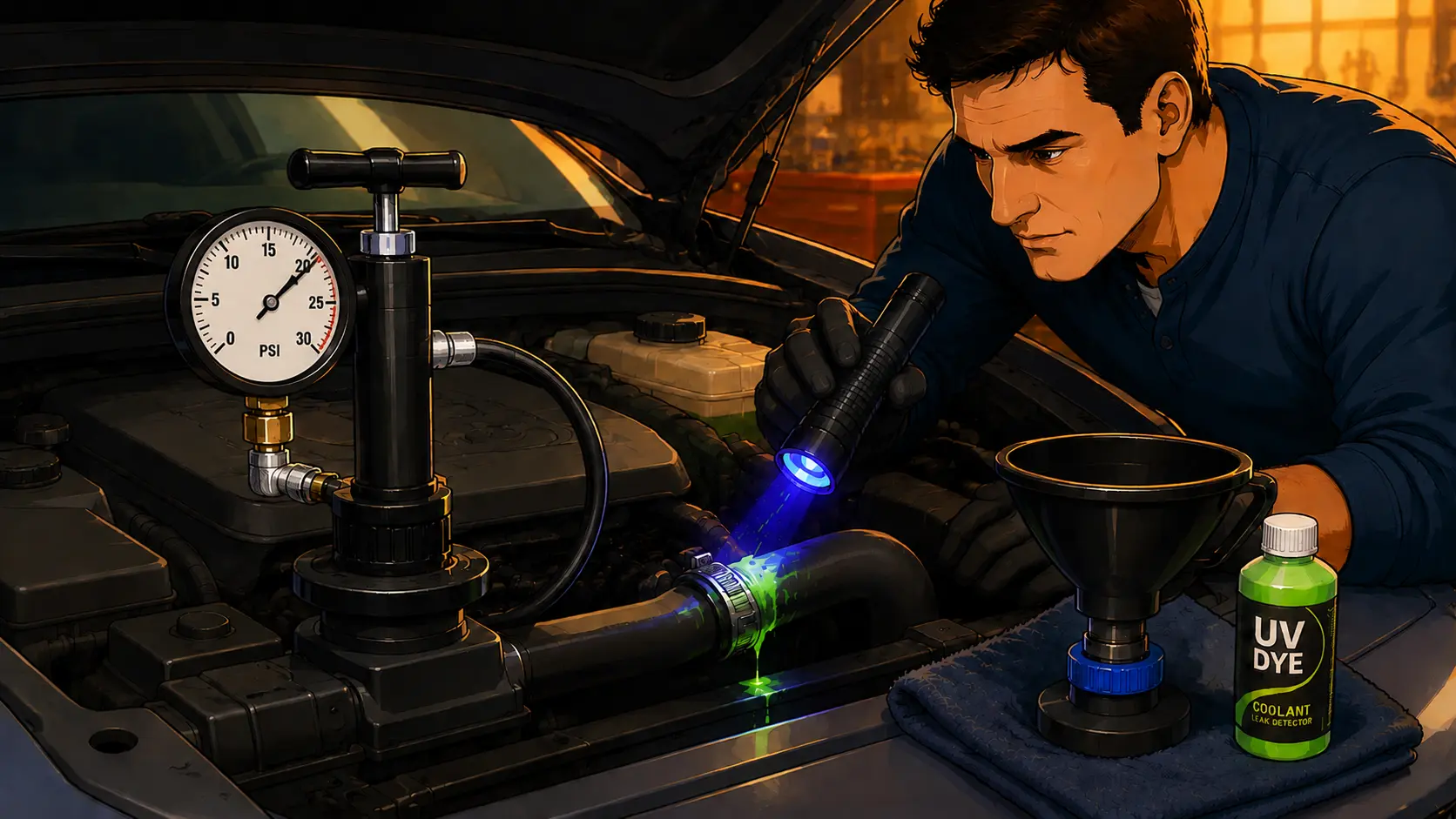
A universal cooling system pressure tester kit ($70 to $140) is the right pick for most DIYers. It finds external leaks in minutes and confirms head-gasket suspicions. Pair it with a $30 UV dye kit for hidden micro-leaks, a $15 radiator cap adapter to catch the most-missed cause of overheating, and a spill-free funnel for clean refills after the repair.
Stop Guessing Where Your Coolant Is Going
A car that overheats once is a warning. A car that overheats twice is a head gasket waiting to happen. Cooling leaks are sneaky because half of them evaporate before they hit the ground, and the other half hide behind belts, brackets, or in the heater core. This guide covers four tools that, used together, find any cooling leak on any vehicle, plus the one funnel that prevents a second trip into the engine bay after the repair.
How We Picked
Cooling system tools live or die on three things: the adapter coverage, the seal quality of the rubber bits, and whether the gauge is honest. We chose picks that meet professional shop standards without professional shop pricing.
- →Adapter coverage: fits domestic, Asian, and European cooling caps from 1990 to today.
- →Real seal quality: rubber bushings that do not leak around their own adapter under 18 PSI.
- →Honest gauge: a gauge that reads 16 PSI when bench-checked against a known reference.
- →Reliable dye: UV tracer rated for ethylene glycol and propylene glycol coolants.
- →Storage case included: loose adapters get lost. A blow-molded case keeps the kit usable for years.
As an Amazon Associate we earn from qualifying purchases at no extra cost to you. Learn more.
Our Top 4 Picks
Cooling System Pressure Tester Kit (Universal Adapters)
Pressurize the system cold, then watch and listen. This is the most reliable way to find an external coolant leak in under ten minutes. A quality universal kit comes with adapters for most domestic, Asian, and European vehicles. If you only buy one cooling tool, buy this.
What we like
- Finds 90 percent of external leaks fast
- Universal adapters cover most makes
- Reusable for a decade with basic care
- Confirms a head gasket suspect when nothing leaks externally
Watch out for
- Will not show leaks that only happen hot
- Adapter set can be confusing the first time
Best for: Any DIYer chasing a slow coolant loss, sweet smell from the engine bay, or a low-coolant warning.
Check price on AmazonAffiliate link. We may earn a small commission at no extra cost to you. Learn more.
UV Coolant Leak Detection Kit (Dye + Blacklight)
When a leak is too small to drip but coolant keeps disappearing, UV dye is the answer. Pour it into the reservoir, drive a day, then shine the included UV light around the engine bay at night. The leak glows green like a highway sign.
What we like
- Catches micro-leaks pressure tests miss
- Cheap and easy for first-timers
- Works for weeks until you find the drip path
- Same dye works on AC and power steering systems
Watch out for
- Needs a dark space to read clearly
- Some dyes are not compatible with all coolant types
- Cleanup requires a dye remover or repeated wipe-downs
Best for: Owners losing a half-cup every week with no visible puddle on the ground.
Check price on AmazonAffiliate link. We may earn a small commission at no extra cost to you. Learn more.
Radiator Cap Tester Adapter Kit
A weak radiator cap that loses pressure at 13 PSI instead of 16 is the most overlooked cause of repeat overheating. This adapter snaps onto your pressure tester and tells you in 60 seconds whether the cap holds spec or needs a $12 replacement.
What we like
- Catches a $12 fix that mimics expensive problems
- Adapts most pressure testers to most caps
- Compact, lives in the tester case
- Saves a full pressure test if the cap is the culprit
Watch out for
- Requires the main pressure tester to function
- Adapters do not fit every exotic cap
Best for: Anyone with an older vehicle, a recurring overheating issue, or a pressure tester already on the bench.
Check price on AmazonAffiliate link. We may earn a small commission at no extra cost to you. Learn more.
Spill-Free Coolant Funnel Kit (No-Spill, Multi-Adapter)
After every cooling repair you have to refill and burp the system. Trapped air pockets cause hot spots, overheating, and a second trip back into the engine bay. A spill-free funnel pushes air up and out cleanly. Cheap insurance for any cooling job.
What we like
- Eliminates air pockets in one fill
- Multi-adapter fits most filler necks
- No coolant on the alternator or accessory belts
- Doubles as a leak-down check by watching bubbles
Watch out for
- Not a diagnostic tool, used for refill only
- Cheap clones can leak at the adapter ring
Best for: Anyone replacing a water pump, thermostat, hose, or radiator who wants to avoid a second bleed.
Check price on AmazonAffiliate link. We may earn a small commission at no extra cost to you. Learn more.
Which One Should You Actually Buy?
Match your symptom to the right tool first. Buy the rest as you grow.
"I see a puddle and want to confirm where it comes from."
Buy the pressure tester. Ten minutes of pump-and-watch finds the source.
"No puddle, but coolant keeps disappearing."
Buy the UV dye kit. Drive a day, scan the engine bay at night, find the glow.
"My engine runs hot but I cannot find a leak."
Buy the cap adapter. A $12 cap is the most-missed cause of unexplained overheating.
"I'm replacing a water pump, hose, or radiator next weekend."
Buy the spill-free funnel. The refill bleed is where most DIY cooling jobs go sideways.
How to Pressure-Test Your Cooling System (90 Seconds)
- Let the engine cool completely. Hot coolant under pressure is dangerous.
- Remove the radiator or reservoir cap. Attach the correct adapter from the kit.
- Connect the pump and pressurize to the cap's rated PSI (printed on the cap).
- Watch the gauge for 10 minutes. If it drops, you have a leak.
- If pressure holds, start the engine and watch again. Combustion-driven pressure spikes hint at head gasket trouble.
- Release pressure slowly via the relief valve before disconnecting. Never just yank it off.
For the full walkthrough including UV dye procedure, see our cooling system leaks guide.
NEVER OPEN A HOT COOLING SYSTEM
Pressurized coolant at operating temperature can geyser six feet in the air at 240 F. Always wait until the engine has cooled to ambient before removing the cap or attaching any tester. If you have to test warm, crack the cap to the first detent and let pressure vent before going further. A scalded face is a permanent reminder of a five-minute shortcut.
What to Read Next
Diagnosis
Car Overheating: Causes and Fixes
The 7 most common reasons your temperature gauge climbs.
How-To
Cooling System Leaks Guide
Find and fix every common coolant leak source.
Repair
Water Pump Replacement Guide
When to replace, what it costs, and how to DIY.
Reference
Coolant Types Guide
OAT, HOAT, IAT, and why mixing the wrong ones costs you a radiator.
Frequently Asked Questions
Don't Miss Critical Car Care Tips
Get exclusive guides, money-saving maintenance tips, and early warning signs delivered straight to your inbox.