Windshield Wiper Replacement: Easy DIY Guide
Quick Answer
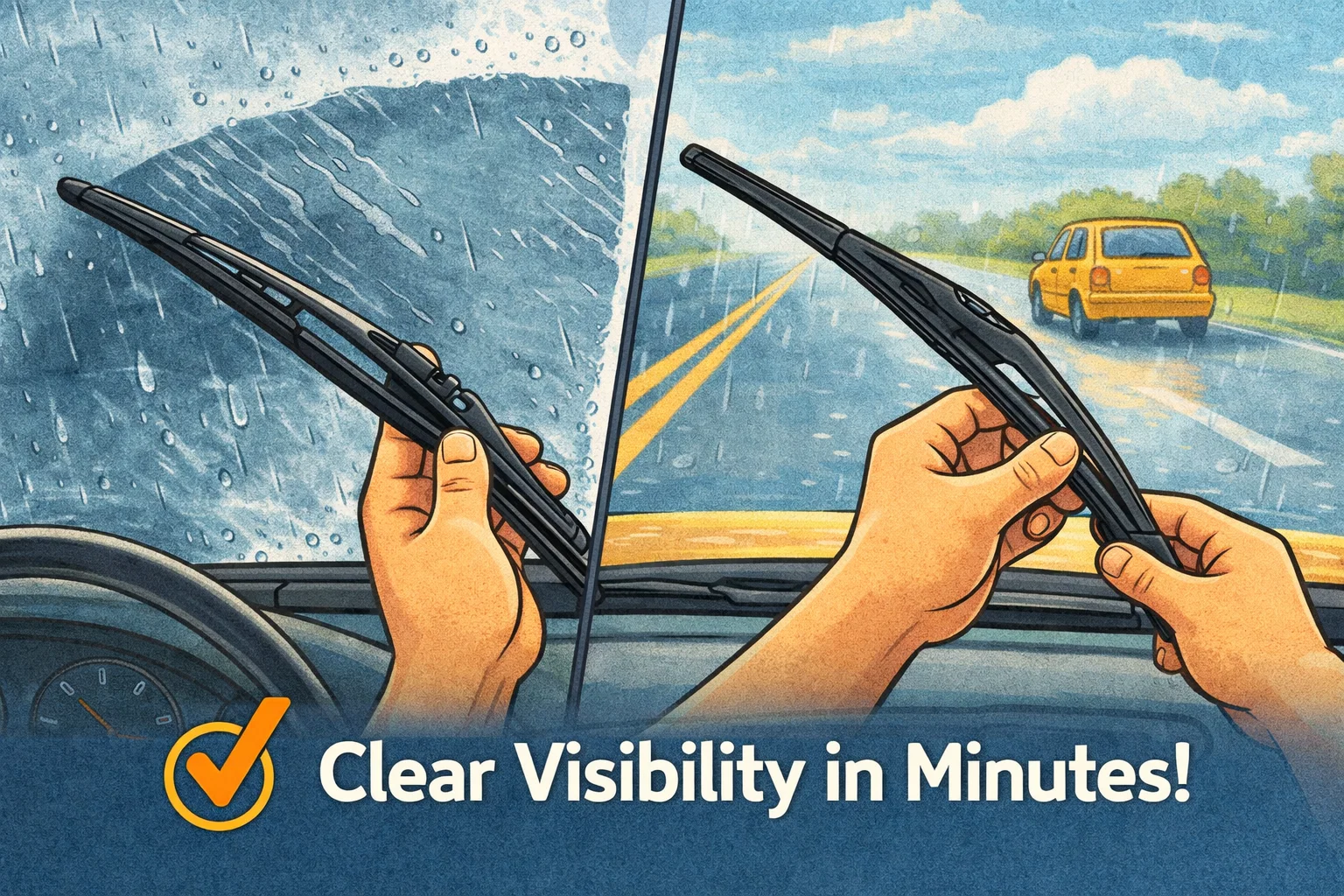
Replace wiper blades every 6 to 12 months or when they streak, skip, or squeak. Blades cost $10 to $25 each and take under 5 minutes to swap. Lift the wiper arm, press the release tab, slide the old blade off, and click the new one on. No tools required for most vehicles.
The $15 Safety Upgrade That Takes 5 Minutes
Worn wiper blades are one of the most overlooked safety hazards on the road. When a sudden spring rainstorm hits and your wipers are streaking, smearing, or chattering across the windshield, you have a visibility problem that no amount of careful driving can fix.
The good news is that replacing your wiper blades is one of the fastest and cheapest DIY jobs in all of automotive maintenance. No tools needed. Under five minutes from start to finish. And the improvement in visibility during rain is immediate and dramatic.
Spring is the ideal time to swap them. Winter cold, ice scraping, and road salt degrade rubber faster than any other season. According to the NHTSA, proper windshield visibility is a critical factor in wet-weather accident prevention.
Let's get your wipers performing like new in five minutes flat.
Windshield wiper blades should be replaced every 6 to 12 months, or as soon as they streak, skip, squeak, or leave unwiped areas. Most blades cost $10 to $30 per pair and snap on without tools. Replace both front blades at the same time, and do not forget the rear wiper if your vehicle has one. Spring is the best time to replace them after winter wear degrades the rubber.
6 Signs Your Wiper Blades Need Replacing
Most people wait until they can barely see through their windshield in a rainstorm. Do not be that person. Here are the warning signs:
- Streaking: Lines of water left behind on the windshield after each wipe.
- Skipping/Chattering: The blade bounces across the glass instead of gliding smoothly, making a stuttering noise.
- Squeaking: A loud rubber-on-glass squeal, especially on lightly wet surfaces.
- Smearing: Water gets pushed around but not cleared, leaving a hazy film.
- Missed areas: Sections of the windshield are not being contacted by the blade.
- Visible damage: Cracked, split, or torn rubber visible on the blade edge.
SAFETY ALERT
Worn wipers dramatically reduce visibility in rain, which is when you need them most. The difference between old and new wipers can be the difference between seeing a stopped car 200 feet ahead or seeing it at 50 feet. Do not wait for a heavy rainstorm to discover your wipers are shot.
Types of Wiper Blades: Which One Fits Your Car?
Conventional (Frame)
Metal frame with multiple pressure points. The traditional design found on older vehicles.
$5 to $12 each
Pros: Cheapest option
Cons: Collects ice, less aerodynamic
Beam (Bracketless)
Frameless curved design with uniform pressure. Standard on most modern vehicles.
$10 to $25 each
Pros: Better contact, less ice buildup
Cons: Slightly more expensive
Hybrid
Combines frame structure with aerodynamic shell. Best all-around performance.
$15 to $30 each
Pros: Aerodynamic, great in winter
Cons: Most expensive
For most drivers, beam-style blades offer the best balance of performance, durability, and price. They conform to curved windshields better than conventional blades and resist ice buildup in winter. Use the size lookup tool at any auto parts store by entering your year, make, and model. Your driver and passenger side blades are often different lengths.
Step-by-Step: Replace Your Wiper Blades
This is a tool-free job on most vehicles. The hardest part is figuring out the attachment type, and modern blades come with adapters for every common hook style.
Measure Your Current Blades
Measure each blade from end to end (driver and passenger sides are often different sizes). Write down both measurements. Common sizes range from 16 to 28 inches. Your rear wiper, if equipped, is usually 10 to 16 inches.
Buy the Correct Replacement Blades
Use the size lookup tool at any auto parts retailer. Enter your year, make, and model, and the system will show you exact sizes and compatible options. Buy both front blades at the same time for even performance. Modern blades include adapter kits for J-hook, pinch tab, bayonet, and slim top-lock connections.
Lift the Wiper Arm Away from Glass
Pull the wiper arm away from the windshield until it locks in the upright position. Place a folded towel on the windshield beneath the arm as a safety measure. If the arm snaps back without a blade, the metal can crack your windshield.
COLD WEATHER TIP
If your wipers are frozen to the windshield, run the defroster for a few minutes before attempting to lift the arms. Forcing frozen blades off the glass can damage the rubber and the arm mechanism.
Remove the Old Blade
Most blades use a J-hook attachment. Press the small tab where the blade meets the arm, then slide the blade downward off the hook. Some styles have a pinch release or a push-button mechanism. The new blade's instructions will show your specific type.
Attach the New Blade
Slide the new blade onto the wiper arm hook until it clicks into place. Give it a gentle tug to make sure it is secure. Lower the arm back onto the windshield carefully.
Test Your New Wipers
Spray your windshield washer fluid and run the wipers through several cycles. Check for full contact across the windshield, smooth operation without chattering, and even water clearance with no streaks. Repeat on the other side.
How to Make Your Wiper Blades Last Longer
- Clean the rubber edge monthly: Wipe the blade edge with a damp cloth or rubbing alcohol to remove grime buildup.
- Never use wipers on a dry windshield: Always spray washer fluid first. Dry glass abrades the rubber.
- Lift blades off the glass in winter: Prevents them from freezing to the windshield and stretching the rubber.
- Park in shade when possible: UV exposure degrades rubber faster than anything else.
- Clear ice and snow manually: Do not rely on your wipers to clear ice. Use an ice scraper and defroster first.
Related Maintenance
While you are maintaining visibility, consider these related tasks:
- Headlight clarity: Foggy headlights reduce nighttime visibility. Check our headlight restoration guide.
- Headlight bulbs: Dim bulbs compound visibility problems. See our headlight bulb replacement guide.
- Spring checklist: Wipers are part of your complete spring car maintenance checklist.
- Road trip prep: Fresh wipers are essential for any road trip preparation.
BOTTOM LINE
Replacing wiper blades takes five minutes, costs $15 to $30 for a pair, and is one of the most impactful safety upgrades you can make. Do it every spring and every fall, or as soon as you notice streaking. Clear visibility in rain is not optional.
Frequently Asked Questions
Don't Miss Critical Car Care Tips
Get exclusive guides, money-saving maintenance tips, and early warning signs delivered straight to your inbox.