Engine vs Cabin Air Filter: Which One Do You Need?
Quick Answer
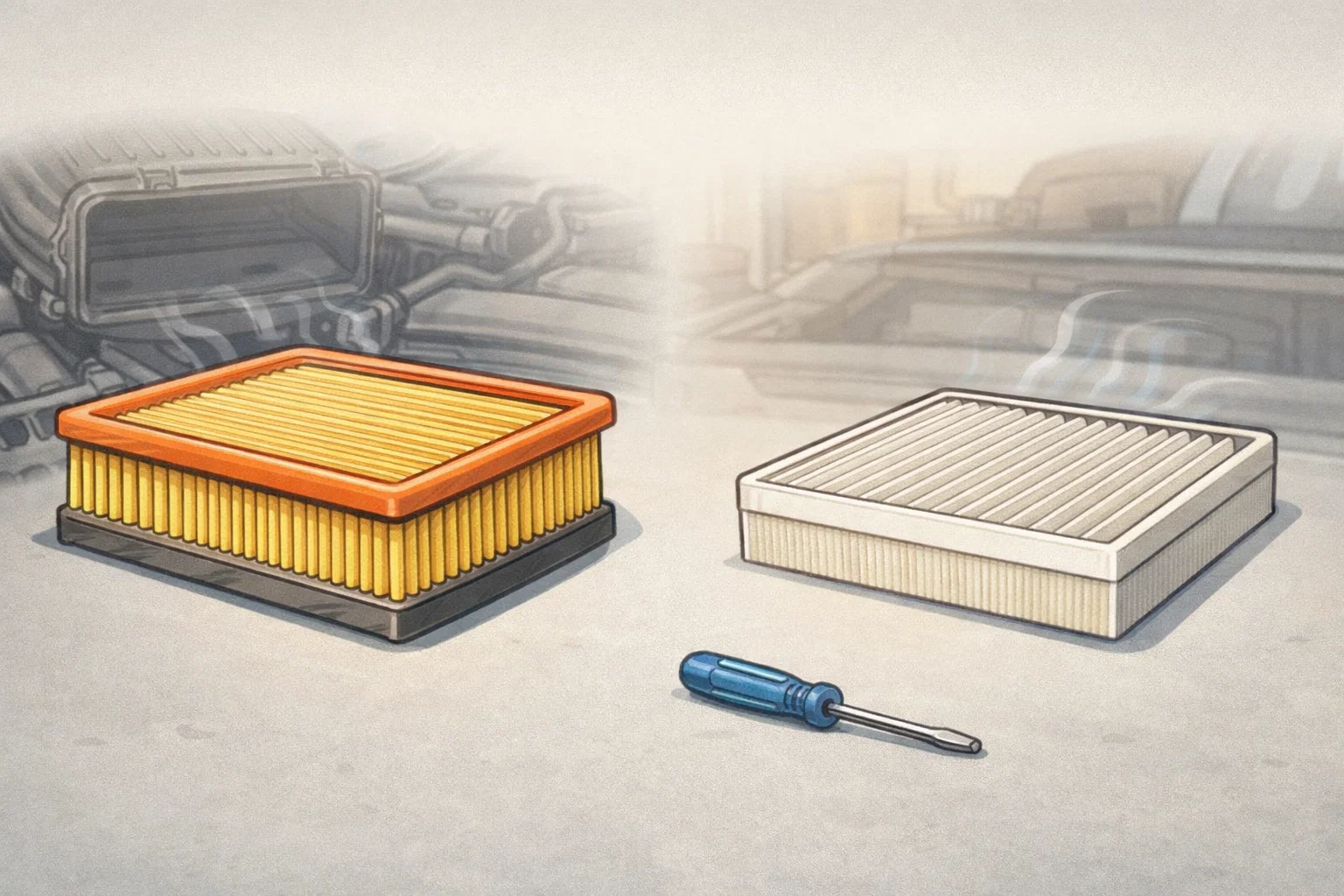
The engine air filter cleans the air going into your engine for combustion and is located under the hood in a black plastic airbox. The cabin air filter cleans the air entering the passenger compartment through your HVAC vents and is usually located behind the glove box. Both should typically be replaced every 15,000 to 30,000 miles. They are completely separate filters with different purposes, and most cars have both.
Two Different Filters, Two Different Jobs
Walk into any auto parts store and ask for an air filter, and the clerk will immediately ask which one. That confused look you give back is normal. Most drivers do not realize their car has two completely separate air filters: one for the engine and one for the cabin. Each does a different job, lives in a different location, and follows a different replacement schedule. Mix them up at the parts counter and you could waste $30 on the wrong filter.
The good news? Once you understand what each filter does and where it lives, you can replace both in under 30 minutes for around $30 in parts. That is a savings of $80 to $150 over a shop, and your engine and lungs will thank you.
You will learn what each filter does, where to find them, how often to replace them, and how to choose the right type for your driving conditions.
Cars have two separate air filters that serve completely different functions. The engine air filter sits in a black plastic airbox under the hood and cleans outside air before it enters the engine for combustion. The cabin air filter sits behind the glove box and cleans air flowing through the HVAC system into the passenger compartment. Both filters should typically be replaced every 15,000 to 30,000 miles, but high-pollution and dusty driving conditions can shorten that to 12,000 miles for both.
Side-by-Side Comparison
🔧 Engine Air Filter
- Job: Cleans air entering the engine for combustion
- Location: Under the hood, in a black plastic airbox
- Size: Larger, usually rectangular or panel-shaped
- Cost: $15 to $40
- Replace every: 15,000 to 30,000 miles
- Effect when clogged: Reduced MPG, sluggish acceleration, possible check engine light
- DIY time: 5 to 10 minutes, no tools (most cars)
🌬️ Cabin Air Filter
- Job: Cleans air entering the passenger cabin via HVAC
- Location: Behind the glove box (most cars)
- Size: Smaller, usually flat and pleated
- Cost: $10 to $25
- Replace every: 15,000 to 25,000 miles
- Effect when clogged: Weak airflow, musty odors, allergy symptoms while driving
- DIY time: 5 minutes, no tools (most cars)
How to Tell Which Filter Is Bad
The symptoms point you to the right filter every time:
Engine Air Filter Symptoms
- MPG dropping: A clogged engine filter starves the engine of air, hurting combustion efficiency
- Sluggish acceleration: Reduced airflow means reduced power, especially at higher RPMs
- Engine running rich: Black smoke from the exhaust under hard acceleration
- Check engine light: A severely clogged filter can throw a P0171 (system too lean) code in some vehicles
- Strange engine sounds: A sucking or whistling noise from the airbox
Cabin Air Filter Symptoms
- Weak airflow from vents: Even with the fan on max, very little air comes through
- Musty or stale odors: Trapped moisture creates mold and mildew growth
- Allergy symptoms while driving: Sneezing, watery eyes, congestion that goes away when you exit the car
- Foggy windows that will not clear: The defroster cannot push enough air through a clogged filter
- Excessive dust on the dashboard: Particles slip past a worn filter and settle on interior surfaces
QUICK VISUAL CHECK
Pull either filter and hold it up to a bright light. If you cannot see light through the pleats, it is overdue for replacement. If it looks grey, brown, or has visible debris (leaves, bugs, road grit), replace immediately. New filters are bright white and let plenty of light through.
DIY vs. Shop Cost for Both
Cost to Replace Both Filters
DIY Cost
$25 to $65
Both filters, 15 minutes total
Shop Cost
$120 to $200
Filters + 0.5 to 1 hour labor
Choosing the Right Type for Each Filter
Not all filters are equal. Choose based on your driving conditions and budget.
Engine Air Filter Options
- Standard paper: $15 to $25. Fine for daily commuting on paved roads.
- Premium synthetic: $25 to $40. Better filtration and longer life. Worth it if you live in dusty areas.
- Reusable performance (K&N style): $50 to $80 upfront, but lasts the life of the vehicle if cleaned every 50,000 miles. Slight performance gain but minimal real-world MPG difference.
Cabin Air Filter Options
- Standard particulate: $8 to $15. Filters dust and pollen.
- Activated carbon: $15 to $25. Adds odor and exhaust-fume absorption. Best for city driving.
- HEPA-type premium: $20 to $40. Captures 99% of particles down to 0.3 microns. Best for asthma and severe allergies.
STARTER RECOMMENDATION
For most drivers, a premium paper engine filter and an activated carbon cabin filter hit the sweet spot of price and performance. The carbon layer in the cabin filter is especially worthwhile if you commute in heavy traffic, where exhaust fumes from other vehicles can otherwise enter your car.
Replacement Schedule by Driving Style
Manufacturer intervals are general guidelines. Real-world replacement intervals depend on your driving conditions:
- Highway commuters: Every 30,000 miles for both filters
- City and traffic drivers: Every 15,000 to 20,000 miles for both
- Dusty, rural, or gravel roads: Every 10,000 to 15,000 miles, especially the engine filter
- Allergy sufferers: Cabin filter every spring before pollen season peaks
- Pet owners: Cabin filter every 8,000 to 10,000 miles to control dander and hair buildup
According to the U.S. Department of Energy fuel economy guidelines, replacing a clogged engine air filter on older fuel-injected vehicles can improve acceleration time and engine response, though MPG gains are modest on modern cars with sophisticated engine management.
Related Maintenance to Knock Out Together
Both filter changes pair perfectly with other quick maintenance tasks:
- Read our deep-dive on engine filters: Full guide to engine air filter selection and replacement at our air filters guide.
- Step-by-step cabin filter replacement: Visual walkthrough at our cabin air filter guide.
- Plan all your maintenance: See when to do filters and other tasks in our car maintenance schedule.
- Spring tune-up checklist: Both filters belong on your spring car maintenance checklist.
BOTTOM LINE
Engine air filter cleans air going into the engine. Cabin air filter cleans air going to your face. Both cost under $30 each, both take five minutes, and both should be replaced every 15,000 to 30,000 miles. Knock them out together every spring and save $100+ over a shop. Your engine and your lungs will both run cleaner.
What to Read Next
Engine Air Filter Guide
Choosing the right engine filter and replacement step by step.
Cabin Air Filter Replacement
Replace yours in 5 minutes for cleaner air and stronger AC.
Car Maintenance Schedule
When to do every maintenance task by mileage and time.
Spring Car Maintenance
Full seasonal checklist to get your car ready for warmer months.
Frequently Asked Questions
Don't Miss Critical Car Care Tips
Get exclusive guides, money-saving maintenance tips, and early warning signs delivered straight to your inbox.