Best Torque Wrenches for Home Mechanics (2026)
Quick Answer
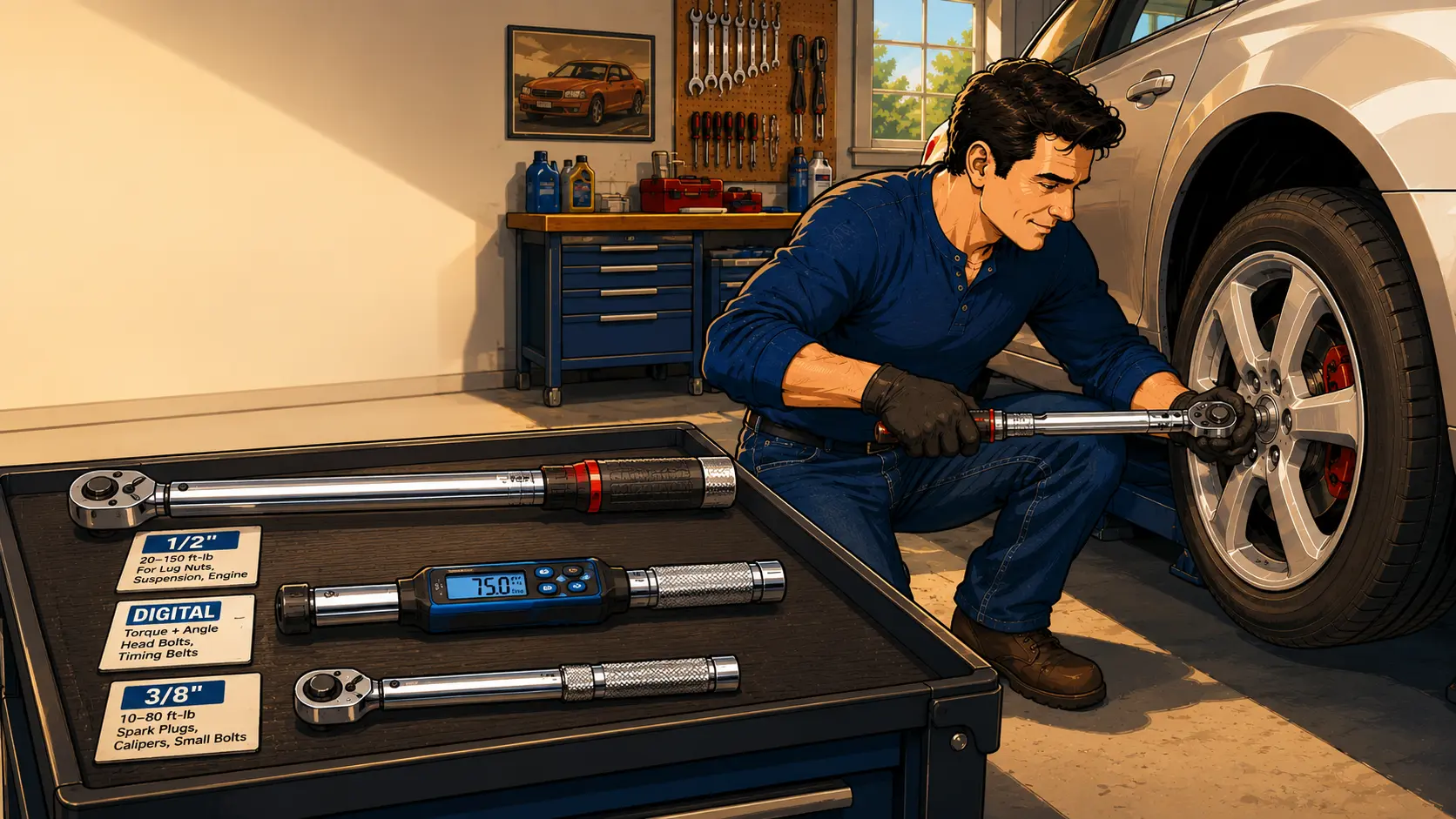
For most DIYers, a 1/2 inch clicker torque wrench in the 20 to 150 ft-lb range is the right first buy. It handles lug nuts, brakes, suspension, and most engine work. Add a 3/8 inch 10 to 80 ft-lb wrench later for spark plugs and brake calipers. A digital model is worth the extra cost only if you do head gaskets, timing belts, or torque-plus-angle work on modern German cars.
The One Tool That Pays for Itself the First Time You Use It
A warped brake rotor from over-torqued lug nuts costs $80 to $200 to replace. A stretched wheel stud costs $40 plus an hour of labor. A spark plug snapped off in the cylinder head costs an extension on a $1,500 repair bill. A $60 torque wrench prevents all three. This guide breaks down the four torque wrench tiers, when to pick each, and the one most home mechanics should buy today.
How We Picked
Our team has wrenched on personal vehicles, project cars, and family fleets for over a decade. We chose picks based on calibration accuracy, build quality, and real-world DIY usefulness, not on marketing claims or sponsored placements.
- →Calibration accuracy: within plus or minus 4 percent of reading from the manufacturer.
- →Range that matches DIY work: 10 to 150 ft-lb covers 95 percent of home jobs.
- →Build quality: heat-treated steel, sealed mechanism, no plastic in the load path.
- →Long-term track record: brands that have made torque wrenches for at least 10 years.
- →Real buyer reviews: we cross-checked thousands of verified Amazon US and DE reviews.
As an Amazon Associate we earn from qualifying purchases at no extra cost to you. Learn more.
Our Top 4 Picks
1/2" Clicker Torque Wrench (Tekton / CDI style)
The clicker is the workhorse of the home garage. A loud, unmistakable click at the target torque tells you to stop pulling. Brands like Tekton and CDI hold calibration for years, cover the 20 to 150 ft-lb range that handles lug nuts, axle nuts, and cylinder heads, and cost less than a single shop visit.
What we like
- Audible click is impossible to miss
- Holds calibration for 5 years or longer with normal use
- Covers 95 percent of DIY torque jobs
- Reversible head for left-hand threads
Watch out for
- No angle measurement
- Must be wound down to lowest setting between uses
Best for: Anyone doing wheels, brakes, suspension, or routine engine work. The default pick for almost every home mechanic.
Check price on AmazonAffiliate link. We may earn a small commission at no extra cost to you. Learn more.
Digital Torque Wrench (ACDelco / GearWrench style)
Digital wrenches add an LCD readout, a beep at target torque, and angle measurement (degrees of rotation after seating). Critical for head bolts and modern stretch bolts that spec a torque-plus-angle sequence. Saves you a separate $80 angle gauge.
What we like
- Torque-plus-angle in one tool
- Backlit readout for dark engine bays
- Selectable units (ft-lb, Nm, in-lb)
- Audible and visual cues
Watch out for
- Battery dependent
- Pricier than mechanical equivalents
- Sensitive to drops
Best for: DIYers tackling head gaskets, timing belts, or modern German cars where every bolt is torque-plus-angle.
Check price on AmazonAffiliate link. We may earn a small commission at no extra cost to you. Learn more.
3/8" Drive Torque Wrench (10-80 ft-lb)
Spark plugs at 15 ft-lb. Brake caliper bolts at 20 to 35 ft-lb. Oil drain plugs at 18 to 30 ft-lb. A 1/2 inch wrench is too clumsy and too coarse for these low-torque jobs. A dedicated 3/8 inch wrench in the 10 to 80 ft-lb band is far more accurate and easier to handle in tight spaces.
What we like
- Right tool for low-torque fasteners
- Slimmer head fits tight spots
- Cheap enough to own alongside a 1/2 inch
- Most include a storage case
Watch out for
- Not enough range for lug nuts
- Easy to over-tighten if you grab the wrong one
Best for: Anyone replacing spark plugs, brake pads, or oil filters. Pair it with the 1/2 inch clicker for full coverage.
Check price on AmazonAffiliate link. We may earn a small commission at no extra cost to you. Learn more.
Beam-Style Torque Wrench (Budget Pick)
Old-school beam wrenches have no clicks, no clutches, and no calibration drift. A steel beam bends under load and a pointer on a scale shows the torque. They cost less than a tank of gas, last forever, and never need recalibration. Just watch the dial while you pull.
What we like
- Never needs calibration
- Cheapest path to accurate torque
- No internal parts to wear out
- Lasts a lifetime in a glove box
Watch out for
- Hard to read in tight spaces
- No audible cue
- Awkward overhead
Best for: Anyone on a tight budget, beginners learning what 80 ft-lb feels like, or as a backup to a clicker.
Check price on AmazonAffiliate link. We may earn a small commission at no extra cost to you. Learn more.
Which One Should You Actually Buy?
Skip the analysis paralysis. Match yourself to the scenario that sounds most like you.
"I just want to torque my lug nuts properly."
Buy the 1/2 inch clicker. $60, done, lives in the wheel-change kit forever.
"I'm doing my own brakes and spark plugs."
Buy the 3/8 inch wrench alongside the 1/2 inch. Together they cover everything from oil drain plugs to wheel hubs.
"I'm tackling a head gasket or a timing belt."
Buy the digital wrench. Torque-plus-angle on modern stretch bolts is not optional, and a separate angle gauge costs almost as much.
"I'm on a tight budget and just want something accurate."
Buy the beam wrench. No calibration drift, never needs servicing, and lasts a lifetime.
How to Use a Clicker Torque Wrench (90 Seconds)
- Look up the torque spec in your service manual. Lug nuts are typically 80 to 100 ft-lb.
- Unlock the handle and rotate it until the main scale reads your target value. Lock it.
- Snug the fastener with a regular ratchet first. The torque wrench is not for breaking loose or final spinning.
- Apply slow, steady pressure on the handle until you hear and feel the click.
- Stop immediately. Do not double-click or continue pulling.
- When finished, wind the wrench back down to its lowest stored setting.
Want the full step-by-step on a real job? See our brake pad replacement guide or our spark plug replacement guide.
ALWAYS WIND IT DOWN BETWEEN USES
Storing a clicker torque wrench at high torque leaves spring tension on the internal mechanism, which drifts calibration over time. Wind it down to the lowest setting on the scale (not all the way to zero) before putting it away. Five seconds of habit, years of accuracy.
What to Read Next
How-To
Brake Pad Replacement Guide
Step-by-step DIY brake pad swap with torque specs.
How-To
Spark Plug Replacement Guide
Why exact torque matters and how to nail it every time.
How-To
Brake Rotor Replacement Guide
Avoid warped rotors with the right lug-nut torque sequence.
How-To
Wheel Hub Assembly Guide
Big axle nut torque values explained.
Frequently Asked Questions
Don't Miss Critical Car Care Tips
Get exclusive guides, money-saving maintenance tips, and early warning signs delivered straight to your inbox.