Best Fuel Injector Cleaners (2026): PEA-Tested Picks
Quick Answer
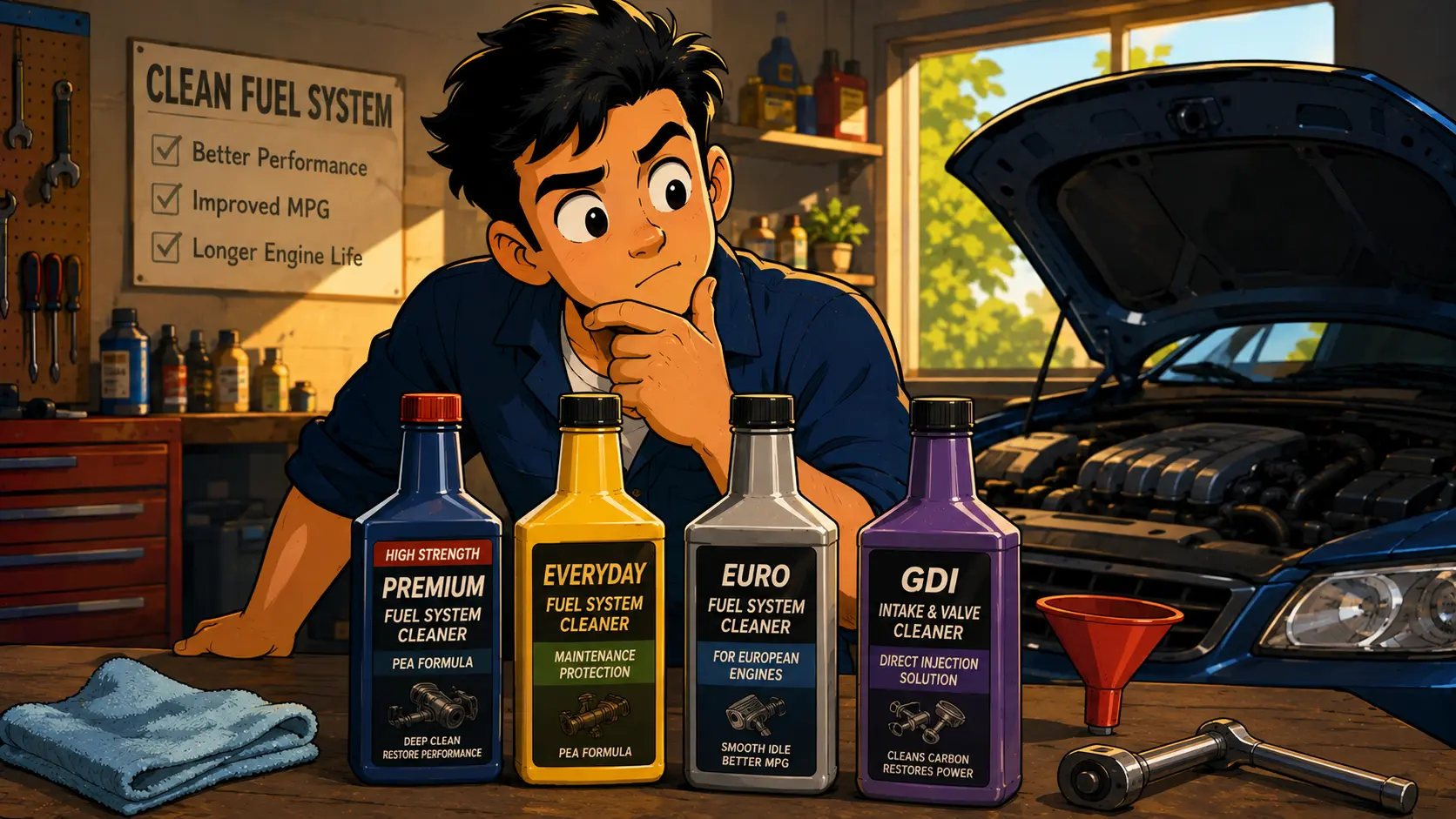
The best fuel injector cleaner in 2026 is Chevron Techron Concentrate Plus, a PEA-based cleaner that is safe for every gas engine and removes existing carbon rather than just preventing it. Red Line SI-1 has the strongest cleaning power for high-mileage engines, Gumout Regane High Mileage is the best budget option, Liqui Moly Jectron suits European engines, and CRC GDI IVD is the only realistic DIY fix for intake valve carbon on direct-injection engines.
One Ingredient Separates Real Cleaners From Coloured Water
Walk the additive aisle and you will find forty bottles making the same promises. The one thing that actually matters is whether the formula uses polyether amine, usually printed as PEA. PEA stays stable at combustion temperatures long enough to dissolve hardened carbon. Everything else mostly keeps clean injectors clean. This guide sorts the five bottles worth buying, and explains why a direct-injection engine needs a completely different product.
How We Picked
We compared detergent chemistry, treat ratios, and manufacturer approvals, then tracked idle quality and fuel trims before and after treatment on three high-mileage vehicles.
- →PEA content: confirmed polyether amine chemistry, not just marketing claims.
- →Cost per treated gallon: the fair way to compare bottle prices.
- →Emissions safety: safe for O2 sensors, catalytic converters, and particulate filters.
- →Measured effect: fuel trim and idle smoothness read on a scan tool.
- →Verified reviews: cross-checked thousands of Amazon US and DE ratings.
As an Amazon Associate we earn from qualifying purchases at no extra cost to you. Learn more.
Our Top 5 Fuel Injector Cleaner Picks
Chevron Techron Concentrate Plus
Techron is the default answer for a reason. It uses polyether amine (PEA), the only detergent chemistry that reliably removes baked-on carbon rather than just preventing new deposits, and it is safe for every gas engine including turbo, direct injection, and hybrids. Rough idle and hesitation on a neglected car often clean up within one tank.
What we like
- PEA detergent actually removes existing deposits
- Safe for oxygen sensors, catalytic converters, and GDI engines
- One bottle treats up to 20 gallons
- Available almost everywhere at a fair price
Watch out for
- Not the highest PEA concentration on the shelf
- Severe carbon buildup may need two or three treatments
Best for: Nearly every gas vehicle. Run one bottle every 5,000 to 10,000 miles and forget about injector problems.
Check price on AmazonAffiliate link. We may earn a small commission at no extra cost to you. Learn more.
Red Line SI-1 Fuel System Cleaner
SI-1 carries one of the highest PEA concentrations you can buy over the counter, and it shows on high-mileage engines with real carbon problems. It also adds upper-cylinder lubrication, which is welcome on older port-injected engines running low-quality fuel. Overkill for a healthy car, exactly right for a neglected one.
What we like
- Very high PEA content per bottle
- Adds upper-cylinder lubrication
- Noticeable improvement on high-mileage rough idle
- Treats up to 100 gallons in maintenance doses
Watch out for
- Priced above mainstream cleaners
- Overkill as routine maintenance on a modern, well-serviced car
Best for: Engines past 100,000 miles with rough idle, misfire codes, or a long history of cheap fuel.
Check price on AmazonAffiliate link. We may earn a small commission at no extra cost to you. Learn more.
Gumout Regane High Mileage Fuel System Cleaner
Regane High Mileage is a genuine PEA cleaner at drugstore pricing, aimed squarely at engines past 75,000 miles. It will not match Red Line's raw concentration, but running it every oil change costs almost nothing and keeps injectors and intake valves from getting dirty in the first place.
What we like
- Real PEA chemistry at the lowest price here
- Cheap enough to use every oil change
- Includes seal conditioners for older fuel systems
- Widely stocked at grocery and auto stores
Watch out for
- Lower detergent concentration than premium options
- Better at prevention than at heavy cleanup
Best for: Routine preventive maintenance on older daily drivers, used every 5,000 miles.
Check price on AmazonAffiliate link. We may earn a small commission at no extra cost to you. Learn more.
Liqui Moly Jectron Fuel Injection Cleaner
Jectron is the cleaner most VAG, BMW, and Mercedes owners settle on, partly because Liqui Moly formulates around European fuel and emissions hardware. It cleans injectors thoroughly, is safe with particulate filters and catalytic converters, and one 300 ml bottle treats a full tank.
What we like
- Formulated for European fuel systems and emissions hardware
- Safe with GPF and catalytic converters
- Smooths idle noticeably on port-injected European engines
- Strong reputation among independent European specialists
Watch out for
- Costs more per treated gallon than US mainstream brands
- Smaller bottle, one tank per treatment
Best for: VW, Audi, BMW, Mercedes, and other European engines on a 10,000 mile cleaning interval.
Check price on AmazonAffiliate link. We may earn a small commission at no extra cost to you. Learn more.
CRC GDI IVD Intake Valve & Turbo Cleaner
This one is different and important. On a direct-injection engine, fuel never washes the back of the intake valves, so no bottle poured in the tank can clean them. CRC GDI IVD is a spray-in aerosol fed into the intake with the engine running, and it is the only realistic DIY option short of walnut blasting.
What we like
- Reaches intake valve deposits that in-tank cleaners cannot
- Meaningfully cheaper than a walnut-blasting service
- Works on turbocharged GDI engines
- Visible carbon reduction in one 30-minute session
Watch out for
- Requires locating and safely accessing the intake
- Not a replacement for an in-tank injector cleaner
Best for: Any modern GDI or turbo GDI engine past 60,000 miles with cold-start stumble or rough idle.
Check price on AmazonAffiliate link. We may earn a small commission at no extra cost to you. Learn more.
Which Cleaner for Which Engine
Healthy modern car, routine maintenance
Chevron Techron every 10,000 miles. Safe everywhere, cheap insurance.
High-mileage engine with rough idle
Red Line SI-1 for two consecutive tanks, then drop back to maintenance doses.
European engine, VW, Audi, BMW, Mercedes
Liqui Moly Jectron, formulated around European fuel and emissions hardware.
Direct-injection or turbo GDI engine
Techron in the tank plus CRC GDI IVD sprayed into the intake. One cleans injectors, the other cleans valves.
How to Use a Fuel Injector Cleaner Correctly
- Run the tank down to roughly a quarter or less before treating.
- Check the bottle's treat ratio against your tank size. More is not better.
- Pour the cleaner in first, then fill with fuel so the concentrate mixes properly.
- Drive normally through the tank, including at least 20 minutes of highway running at steady RPM.
- Scan for pending codes afterwards. Freed carbon occasionally triggers a temporary misfire code.
- For heavy buildup, repeat on the next tank rather than doubling the dose in one.
- Log the mileage so you can hold a consistent 5,000 to 10,000 mile interval.
If the rough running does not clear up, read our check engine light diagnosis guide before spending more on additives.
AN ADDITIVE WILL NOT FIX A MECHANICAL FAULT
Misfires, hesitation, and poor economy are caused by worn spark plugs, failing coils, vacuum leaks, and clogged fuel filters at least as often as by dirty injectors. Pull the codes first. If a bottle of cleaner does not change anything after two tanks, the problem was never the injectors.
What to Read Next
How-To
Fuel Filter Replacement
A clogged filter starves injectors no additive can help.
How-To
Spark Plug Replacement Guide
The other half of a smooth idle and clean combustion.
Buyer Guide
Best OBD2 Scanners Under $100
Read fuel trims and confirm whether the cleaner did anything.
Buyer Guide
Best High-Mileage Motor Oil
Pair clean injectors with the right oil past 75,000 miles.
Frequently Asked Questions
Don't Miss Critical Car Care Tips
Get exclusive guides, money-saving maintenance tips, and early warning signs delivered straight to your inbox.