Best Floor Jacks and Jack Stands (2026)
Quick Answer
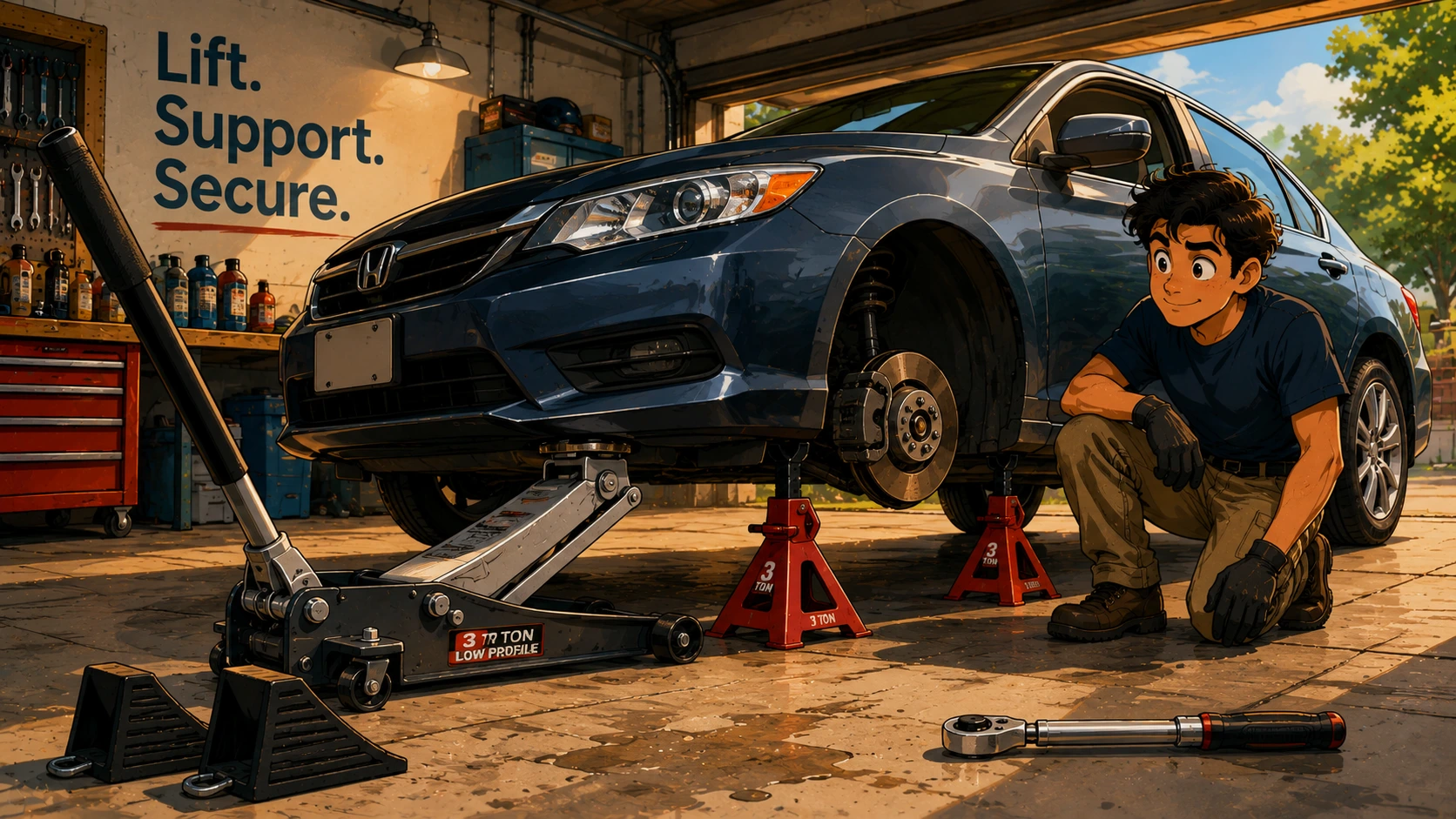
A 3 ton aluminum low-profile floor jack paired with a pair of ASME-certified 3 ton ratcheting jack stands is the best home-garage setup for most cars. On a budget, a Torin Big Red steel 2 to 3 ton jack does the same lifting for a third of the price if your car is not lowered. Add rubber wheel chocks in both cases, because a jack alone must never hold a car you are working under.
The Purchase That Unlocks Every Other DIY Job
Brakes, oil changes, suspension, exhaust, tyre rotations: every one of them starts with getting the car safely off the ground. A jack and stands set is a one-time $150 to $350 purchase that pays for itself on the very first brake job, where a shop charges $300 in labour alone. It is also the one place in the garage where buying the cheapest option is genuinely dangerous. Here are the five items worth owning, and the safety rules that go with them.
NEVER WORK UNDER A CAR HELD BY A JACK ALONE
Hydraulic jacks fail. Seals blow, release valves creep, and saddles slip off pinch welds. Jack stands are mechanical and cannot leak. Lift the car with the jack, lower it onto a matched pair of rated stands, then shove the bumper hard before any part of your body goes underneath. If the car rocks, start again.
How We Picked
Our team lifts cars weekly across a mixed parts fleet, from lowered hatchbacks to half-ton pickups. We weighted certification and stability far above lift speed or price, because this is safety equipment first and a convenience tool second.
- →Certification: ASME PASE compliance on every stand we recommend.
- →Saddle height: minimum clearance measured against real low-bumper cars.
- →Base footprint: wider bases resist tipping on the sloped driveways most people use.
- →Seal longevity: we favoured brands with available rebuild kits over disposable jacks.
- →Recall history: we excluded models with open safety recalls on the ratchet mechanism.
As an Amazon Associate we earn from qualifying purchases at no extra cost to you. Learn more.
Our Top 5 Picks
Arcan / Pro-Lift 3 Ton Aluminum Low-Profile Floor Jack
A 3 ton aluminum low-profile jack is the sweet spot for home garages. It slides under lowered cars and most modern sedans, weighs about half what a steel jack does, and the dual-pump piston reaches lift height in five or six strokes. Buy once, use for twenty years.
What we like
- Low 3 inch saddle clears low front bumpers
- Half the weight of a comparable steel jack
- Dual-pump reaches lifting height fast
- Rated well beyond any passenger car corner load
Watch out for
- Costs roughly double a basic steel jack
- Aluminum bodies dent if dropped on concrete
Best for: Serious DIYers doing brakes, suspension, and oil changes on modern cars, especially anything lowered or with side skirts.
Check price on AmazonAffiliate link. We may earn a small commission at no extra cost to you. Learn more.
Torin / Pro-Lift 3 Ton Ratcheting Jack Stands (Pair)
Never work under a car held up by a jack alone. A pair of 3 ton stands costs less than a single brake rotor and is the difference between a routine repair and a fatality. Look for a wide cast base, a double-locking ratchet bar, and an ASME PASE certification stamp.
What we like
- Double-locking pawl plus safety pin on better models
- Wide base resists tipping on sloped driveways
- Height range suits both sedans and light trucks
- Cheapest life insurance in the garage
Watch out for
- Ratchet teeth can be noisy to adjust under load
- Avoid unbranded stands with thin sheet-metal bases
Best for: Everyone. If you buy a jack, you buy stands in the same order. There is no scenario where the jack alone is enough.
Check price on AmazonAffiliate link. We may earn a small commission at no extra cost to you. Learn more.
Torin Big Red 2 to 3 Ton Steel Floor Jack
The classic red steel trolley jack. Heavier and slower than aluminum, and the saddle sits higher, but it lifts the same weight for a third of the price and it will outlive most of the cars you own. If your car has normal ride height, this is all you need.
What we like
- Best price for a genuinely capable jack
- Steel body shrugs off garage abuse
- Parts and seal kits widely available
- Plenty of lift for SUVs and pickups
Watch out for
- Too tall to slide under lowered cars
- Heavy to move around a driveway
Best for: Budget-focused DIYers with standard ride-height cars, SUVs, and trucks who lift a few times a year.
Check price on AmazonAffiliate link. We may earn a small commission at no extra cost to you. Learn more.
Heavy-Duty Rubber Wheel Chocks (Pair)
Chocks stop the wheels still on the ground from rolling while you lift the other end. On any sloped driveway they are as important as the stands themselves. Solid rubber grips better than plastic and does not skid on smooth concrete.
What we like
- Stops the car creeping off the stands
- Rubber grips both concrete and asphalt
- Cheap and stores in a wheel well
- Doubles for trailers and caravans
Watch out for
- Rubber can mark a clean garage floor
- Plastic budget versions slide on smooth surfaces
Best for: Anyone lifting a car on a driveway rather than a perfectly level garage floor, which is most people.
Check price on AmazonAffiliate link. We may earn a small commission at no extra cost to you. Learn more.
Low-Profile Rolling Creeper with Padded Headrest
Not a safety item, but the one accessory that turns a miserable job into an enjoyable one. A low-profile creeper keeps you off cold concrete, saves your back, and rolls you along the underbody instead of making you shuffle. Look for oil-resistant casters that do not pick up grit.
What we like
- Keeps you off cold, damp concrete
- Padded headrest saves neck strain
- Oil-resistant casters roll smoothly on sealed floors
- Many fold upright into a seat for wheel work
Watch out for
- Needs a smooth floor to roll well
- Bulky to store in a small garage
Best for: Anyone doing exhaust, oil, or suspension work who plans on spending more than ten minutes under the car.
Check price on AmazonAffiliate link. We may earn a small commission at no extra cost to you. Learn more.
Which Setup Should You Actually Buy?
Whatever you choose, stands and chocks are not optional extras. Budget for them in the same order as the jack.
"I drive a normal-height sedan or SUV and lift a few times a year."
Torin Big Red steel 3 ton jack plus 3 ton stands and chocks. Around $140 for the whole set.
"My car is lowered or has low side skirts."
Aluminum low-profile 3 ton jack. Nothing else will slide under without a ramp.
"I do my own brakes and suspension regularly."
Aluminum jack, four stands rather than two, chocks, and a creeper. Lift both ends and work in comfort.
"I only ever change a flat tyre."
The boot scissor jack is fine roadside, but a $70 steel trolley jack makes it far safer and quicker at home.
"I work on a sloped driveway."
Rubber chocks are mandatory, and lift the downhill end last so the car settles into the stands, not off them.
How to Lift a Car Safely (10 Minutes, Every Time)
- Park on level, solid ground. Concrete or asphalt only, never gravel, grass, or a soft driveway edge.
- Engage the parking brake, put an automatic in Park or a manual in first gear, and switch the engine off.
- Chock both wheels at the opposite end of the car from the end you are lifting.
- Find the correct jacking point in the owner's manual. On most unibody cars this is the reinforced pinch weld pad, and a slotted rubber jack pad protects it.
- Lift smoothly until the wheel clears the ground by a few inches, watching that the saddle stays square to the seam.
- Slide a rated jack stand under the frame rail or the manufacturer's support point and raise it to just under the load.
- Lower the jack slowly until the car rests on the stand, then leave the jack in light contact as a secondary backup.
- Push the car firmly at the bumper. If there is any rocking or shifting, lift it again and reposition the stand.
Ready to put the setup to work? Start with our DIY brake pad replacement guide or our tire rotation guide.
What to Read Next
How-To
DIY Brake Pad Replacement
The first big job your new jack pays for.
Buyer's Guide
Best Torque Wrenches
Torque the wheels correctly once the car is back down.
How-To
How to Rotate Your Tires
A 45 minute job that adds thousands of miles of tyre life.
How-To
Change Your Oil Like a Pro
Safe lifting is step one of every oil change.
Frequently Asked Questions
Don't Miss Critical Car Care Tips
Get exclusive guides, money-saving maintenance tips, and early warning signs delivered straight to your inbox.