Best Cabin & Engine Air Filters (2026 Brand Comparison)
Quick Answer
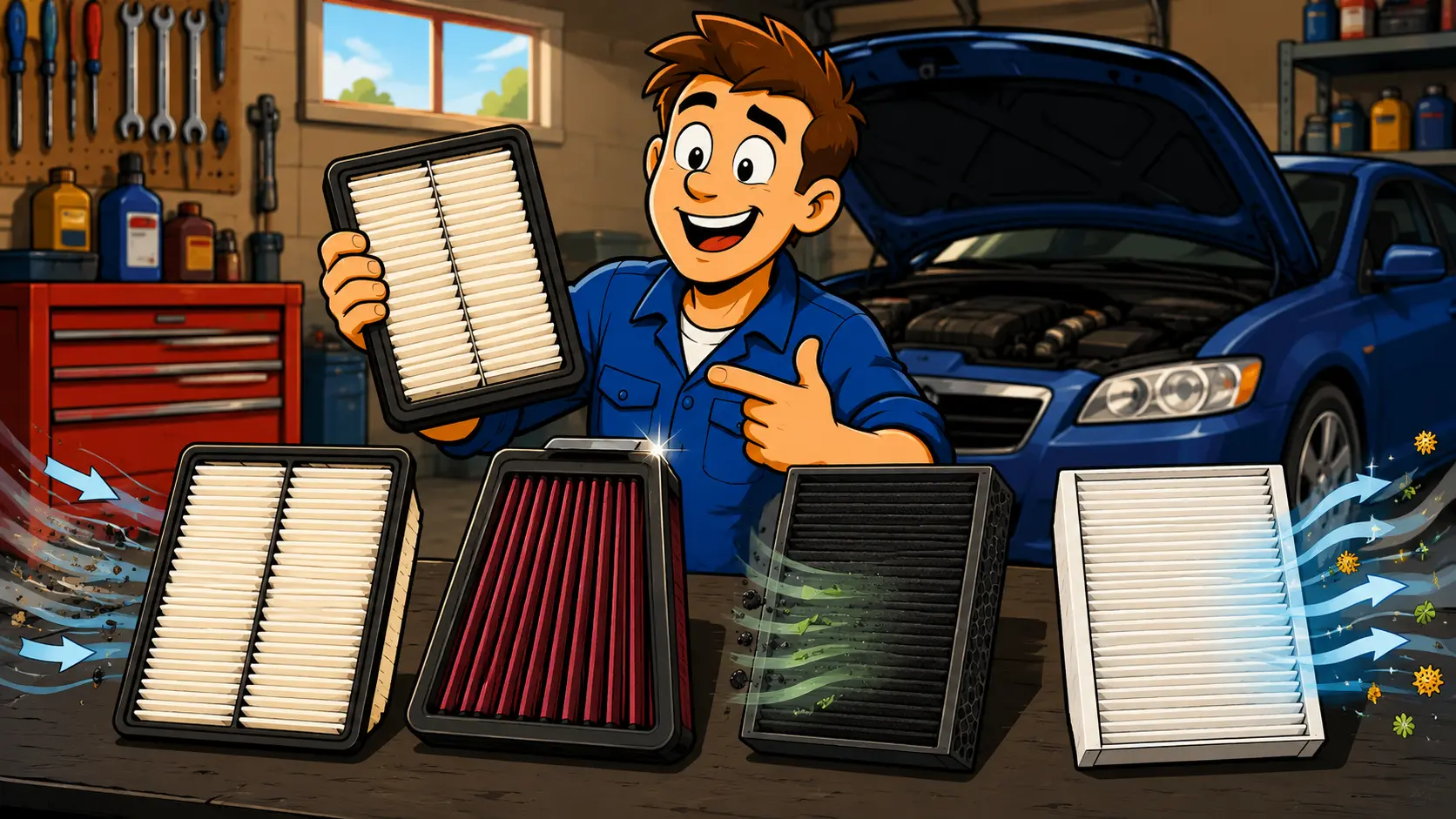
For your engine, a quality OEM-style paper filter from Mann, Bosch, or Fram is the right choice for most drivers. Upgrade to a washable K&N only if you keep your car long enough to recoup the cost. For your cabin, a carbon-activated filter blocks city exhaust fumes and a HEPA filter blocks 99.97% of pollen and smoke (the right pick for allergy sufferers). Change engine filters every 15-30k miles and cabin filters every 15-20k miles.
Two Filters, Four Tiers, One Quick Upgrade
Your car has two air filters and most owners forget about both of them. A clogged engine filter costs you 1 to 2 MPG and slowly suffocates your engine. A clogged cabin filter turns your HVAC into a mold-and-pollen distribution system. Both swaps take less than 15 minutes and cost between $15 and $50 in parts. This guide breaks down the four best filters of 2026 across both categories, who each one is for, and the one combination most drivers should run.
How We Picked
Our team has serviced personal vehicles and family fleets for years, in environments ranging from dusty rural roads to wildfire-affected cities. We chose picks based on filtration efficiency, real-world airflow, and replacement-interval honesty, not on marketing claims.
- →Filtration efficiency: matches or exceeds OEM at the rated micron level.
- →Direct fit: drop-in replacement, no modifications or adapters.
- →Real-world service life: matches manufacturer claims under normal use.
- →Wide vehicle coverage: available for popular vehicles from 1995 to 2026.
- →Real buyer feedback: we cross-checked thousands of verified Amazon US and DE reviews.
As an Amazon Associate we earn from qualifying purchases at no extra cost to you. Learn more.
Our Top 4 Picks
OEM-Style Engine Air Filter (Fram / Bosch / Mann)
A direct-fit paper element is what your engine was designed for. Brands like Mann (German OE supplier), Bosch, and Fram make filters that match factory pleat count, filtration efficiency, and airflow within OEM tolerances. Change every 15,000 to 30,000 miles or sooner in dusty environments.
What we like
- Drop-in fit, no modifications
- Filtration efficiency matches OEM (99% at 5 micron)
- Cheap enough to change on schedule
- Available for almost every vehicle made since 1990
Watch out for
- Single-use (toss when dirty)
- No measurable HP gain over a clean OEM filter
Best for: Daily drivers, commuter cars, and anyone who wants a reliable filter at a reasonable price.
Check price on AmazonAffiliate link. We may earn a small commission at no extra cost to you. Learn more.
K&N Washable Performance Air Filter
A K&N cotton-gauze filter is washable and reusable for the life of the vehicle. Pay once, never throw a filter away again. Slightly higher airflow than paper (real-world 1 to 4 HP gain on most engines) and a 10-year limited warranty. Requires a $15 cleaning kit every 30,000 to 50,000 miles.
What we like
- Reusable for 1 million miles per K&N
- Slightly higher airflow than OEM paper
- Reduces landfill waste from disposable filters
- Available for most popular vehicles
Watch out for
- Filtration slightly below OEM paper if over-oiled
- Requires cleaning kit
- Higher up-front cost
Best for: Enthusiasts, long-term vehicle owners, and anyone who hates throwing away a $20 filter every year.
Check price on AmazonAffiliate link. We may earn a small commission at no extra cost to you. Learn more.
Activated Carbon Cabin Air Filter
A standard cabin filter blocks dust. An activated carbon cabin filter also blocks exhaust fumes, diesel smoke, ozone, and odors from the truck in front of you in traffic. The carbon layer absorbs gaseous pollutants and turns a 5-minute upgrade into a noticeable cabin air quality improvement.
What we like
- Blocks exhaust fumes and odors
- Direct-fit replacement (10-minute job)
- Big upgrade for city commuters
- Same price as some basic filters
Watch out for
- Change every 15,000 to 20,000 miles
- Not specialized for allergies
Best for: City drivers, anyone stuck in traffic daily, and drivers sensitive to exhaust odors or smog.
Check price on AmazonAffiliate link. We may earn a small commission at no extra cost to you. Learn more.
HEPA-Grade Cabin Air Filter (Allergy Filter)
True HEPA filtration captures 99.97% of particles down to 0.3 microns: pollen, pet dander, mold spores, wildfire smoke, and PM2.5 fine particulates. If you, your kids, or anyone in the family has allergies, asthma, or respiratory sensitivity, this is the only cabin filter that meaningfully helps inside the car.
What we like
- Captures 99.97% of pollen, dander, smoke
- Big difference during allergy season and wildfire smoke
- Same install footprint as a standard filter
- Available for most popular vehicles
Watch out for
- More restrictive airflow (slight AC drop on high)
- Higher price
- May need to change every 12,000 miles
Best for: Allergy sufferers, families with kids, drivers in wildfire-prone regions, and anyone driving in polluted areas.
Check price on AmazonAffiliate link. We may earn a small commission at no extra cost to you. Learn more.
Which Combination Should You Actually Buy?
Match yourself to the scenario that sounds most like you.
"I just want to keep my car running well."
OEM paper engine filter plus a carbon cabin filter. Total: $30 to $50. Done.
"I keep cars for 8+ years and hate throwing things away."
K&N washable engine filter plus a carbon cabin filter. The K&N pays for itself by year 5.
"Someone in the car has allergies or asthma."
OEM engine filter plus a HEPA cabin filter. Non-negotiable during pollen season.
"I live in a wildfire-prone region."
HEPA cabin filter, year-round. The PM2.5 filtration is the only thing standing between you and outside air during smoke events.
How to Change Both Filters (90 Seconds)
- Engine filter: open the air box (clips or screws on top), pull the old filter out, drop the new one in the same orientation, close the lid.
- Cabin filter: drop the glove box (squeeze the sides inward to release the stops), pull out the filter housing cover, slide the old filter out.
- Note the airflow arrow on the new cabin filter (must point down or rearward, depending on vehicle).
- Slide the new filter in, close everything up, you are done.
- Reset the maintenance reminder if your dash has one.
Want the full walkthrough with photos and the most common mistakes? See our engine vs cabin air filter comparison and our cabin air filter replacement guide.
MIND THE AIRFLOW ARROW
Every cabin filter has an arrow showing airflow direction. Install it backwards and the filter still technically works, but the rigid backing faces the wrong way and the pleats collapse over time. 5-second check, years of proper filtration.
What to Read Next
Comparison
Engine vs Cabin Air Filter
What each one does and how to find both on your car.
How-To
Engine Air Filter Replacement
Step-by-step engine air filter swap in under 10 minutes.
How-To
Cabin Air Filter Replacement
Drop the glove box, swap the filter, breathe better.
Reference
Car Maintenance Schedule
When to change every filter, fluid, and wear item.
Frequently Asked Questions
Don't Miss Critical Car Care Tips
Get exclusive guides, money-saving maintenance tips, and early warning signs delivered straight to your inbox.