How to Jump Start a Car: Step-by-Step Guide
Quick Answer
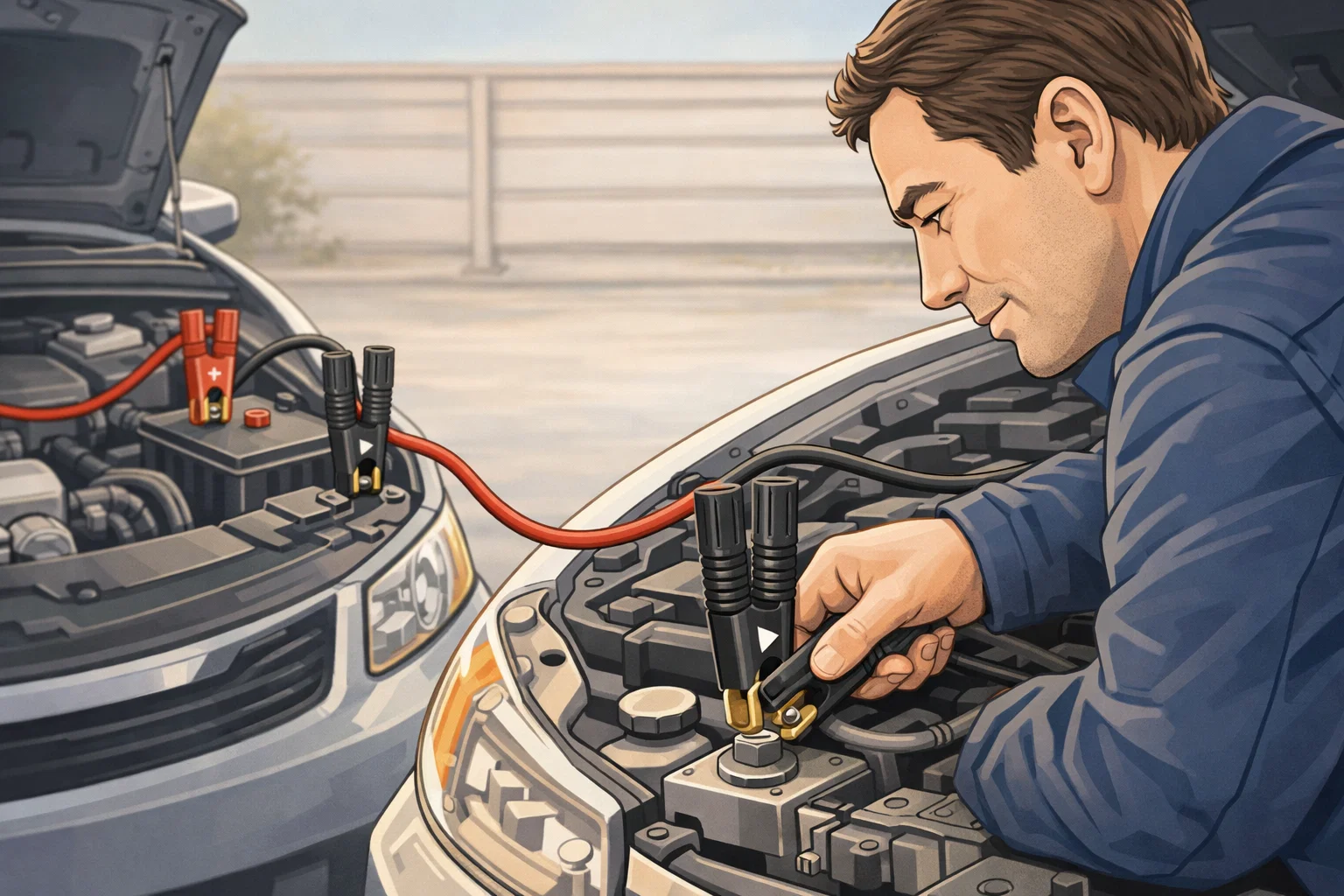
Connect red cable to dead battery positive, then to good battery positive. Connect black cable to good battery negative, then to an unpainted metal surface on the dead car (not the battery). Start the good car, wait 2 minutes, then start the dead car. Drive for at least 20 minutes to recharge.
The Emergency Skill Every Driver Should Know
You turn the key. Nothing happens. Maybe a feeble clicking sound. Your battery is dead, and you are stranded in a parking lot, your driveway, or worse, somewhere unfamiliar. It happens to millions of drivers every year, and according to AAA, dead batteries are the number one reason for roadside assistance calls in the United States.
Jump starting a car is a fundamental driving skill, but doing it wrong can fry your electronics, cause a battery explosion, or damage both vehicles. The process takes about 10 minutes when you know the correct cable order and safety precautions.
This guide covers the exact cable connection sequence, the critical safety steps most people skip, and how to tell whether your battery needs a jump, a charge, or a full replacement.
Save this guide on your phone. You will need it someday.
To jump start a car, connect the red (positive) cable to the dead battery's positive terminal first, then to the good battery's positive terminal. Connect the black (negative) cable to the good battery's negative terminal, then clip the other end to an unpainted metal surface on the dead car's engine block. Start the donor car, wait two minutes, then start the dead car. Let both idle for five minutes before disconnecting cables in reverse order.
Before You Connect Anything: Safety First
Batteries contain sulfuric acid and produce hydrogen gas, which is flammable. A spark near a venting battery can cause an explosion. This is not a scare tactic. It is why the cable connection order matters so much.
CRITICAL SAFETY CHECKS
Do NOT jump start if:
- The battery is cracked, leaking, or visibly swollen
- You smell rotten eggs (hydrogen sulfide) near the battery
- The battery is frozen (common in extreme cold below -20°F)
- Either vehicle is a hybrid or electric (different procedures apply)
If any of these apply, call roadside assistance instead.
What You Need
- Jumper cables: At least 4-gauge, 20 feet long. Thicker cables transfer current more efficiently. Keep a set in your trunk at all times.
- A running vehicle with a good battery (the "donor" car)
- Safety glasses (recommended but often skipped)
- Gloves (optional, protects from corrosion)
If you do not have jumper cables or another vehicle, a portable jump starter pack ($50 to $100) is a smart investment. It fits in your glove box and can start your car without needing a donor vehicle.
Is It Actually a Dead Battery?
Before you pull out the cables, confirm the battery is actually the problem. Here is a quick diagnostic:
For a deeper dive on diagnosing battery problems, see our complete battery troubleshooting guide.
Step-by-Step: How to Jump Start Your Car
Follow this exact cable order. Getting it wrong can damage electronics or cause sparking near the battery.
Position the Vehicles
Park the donor car close enough for the cables to reach both batteries, but make sure the vehicles are not touching. Put both cars in Park (or Neutral for manual transmissions), engage parking brakes, and turn off both engines. Remove the keys from both ignitions.
Identify Battery Terminals
Locate both batteries. Each has two terminals: positive (+) marked with a red cap or "+" symbol, and negative (-) marked with a black cap or "-" symbol. If terminals are corroded (white or greenish powder), brush them clean with a wire brush or rag before connecting cables.
Connect Red Cable to Dead Battery (+)
Attach one red (positive) clamp to the positive (+) terminal of the dead battery. Make sure it has a solid grip and does not slide off. This is always the first connection.
Connect Red Cable to Good Battery (+)
Attach the other red (positive) clamp to the positive (+) terminal of the donor (good) battery. Now both positive terminals are connected.
Connect Black Cable to Good Battery (-)
Attach one black (negative) clamp to the negative (-) terminal of the donor battery.
Connect Black Cable to Engine Ground (NOT the Dead Battery)
This is the step most people get wrong. Attach the final black clamp to an unpainted metal surface on the dead car's engine block or frame, at least 12 inches away from the battery. A bolt head, engine bracket, or alternator bracket works well.
WHY NOT THE DEAD BATTERY?
Connecting directly to the dead battery's negative terminal creates a spark right next to the battery, where hydrogen gas may be present. Connecting to the engine block instead moves the spark to a safe location.
Start the Donor Car and Wait
Start the donor car and let it idle for 2 to 3 minutes. If the dead battery is severely drained, rev the donor engine gently to 2,000 RPM to push more current through the cables.
Start the Dead Car
Try to start the dead car. If it does not start after 10 seconds of cranking, stop and wait another 2 to 3 minutes before trying again. Do not crank for more than 10 seconds at a time, as this can overheat the starter motor.
If it still will not start after three attempts, the battery may be too far gone, or the problem is something other than the battery.
Disconnect Cables in Reverse Order
Once the dead car is running, remove cables in the exact reverse order:
- Black clamp from the engine ground (dead car)
- Black clamp from the donor battery (-)
- Red clamp from the donor battery (+)
- Red clamp from the dead battery (+)
Let the jumped car idle or drive for at least 20 to 30 minutes to recharge the battery through the alternator.
What to Do After a Successful Jump
A single dead battery can be a fluke. Repeated dead batteries point to a bigger issue:
- Battery age: Most car batteries last 3 to 5 years. If yours is older, replacement is probably due. Check our battery troubleshooting guide for testing methods.
- Alternator problems: If the battery keeps dying even after charging, your alternator may not be keeping it charged. See our alternator replacement guide.
- Parasitic drain: Something is drawing power when the car is off. Common culprits include aftermarket stereos, dash cams, and interior lights left on. Our fuses and relays guide can help you track it down.
Portable Jump Starters: A Better Option?
Portable lithium-ion jump starter packs have become incredibly popular, and for good reason:
- No donor car needed
- Fits in your glove box or center console
- Can start most 4-cylinder and 6-cylinder engines
- Doubles as a USB power bank for phones and devices
- Prices range from $50 to $100 for reliable units
If you frequently park in remote areas, commute alone, or drive an older vehicle, a portable jump starter is one of the smartest $60 investments you can make.
BOTTOM LINE
Jump starting a car takes about 10 minutes when done correctly. Remember: red to dead positive, red to good positive, black to good negative, black to engine ground. Disconnect in reverse. Drive for 30 minutes to recharge. If the battery dies again within a week, test it or replace it. Keep jumper cables or a portable jump starter in your trunk at all times.
Frequently Asked Questions
Don't Miss Critical Car Care Tips
Get exclusive guides, money-saving maintenance tips, and early warning signs delivered straight to your inbox.