The Complete Guide to Automotive Fuses and Relays: Your Car's Electrical Guardians
Master the tiny components that protect your car's complex electrical systems and learn to diagnose problems like a pro
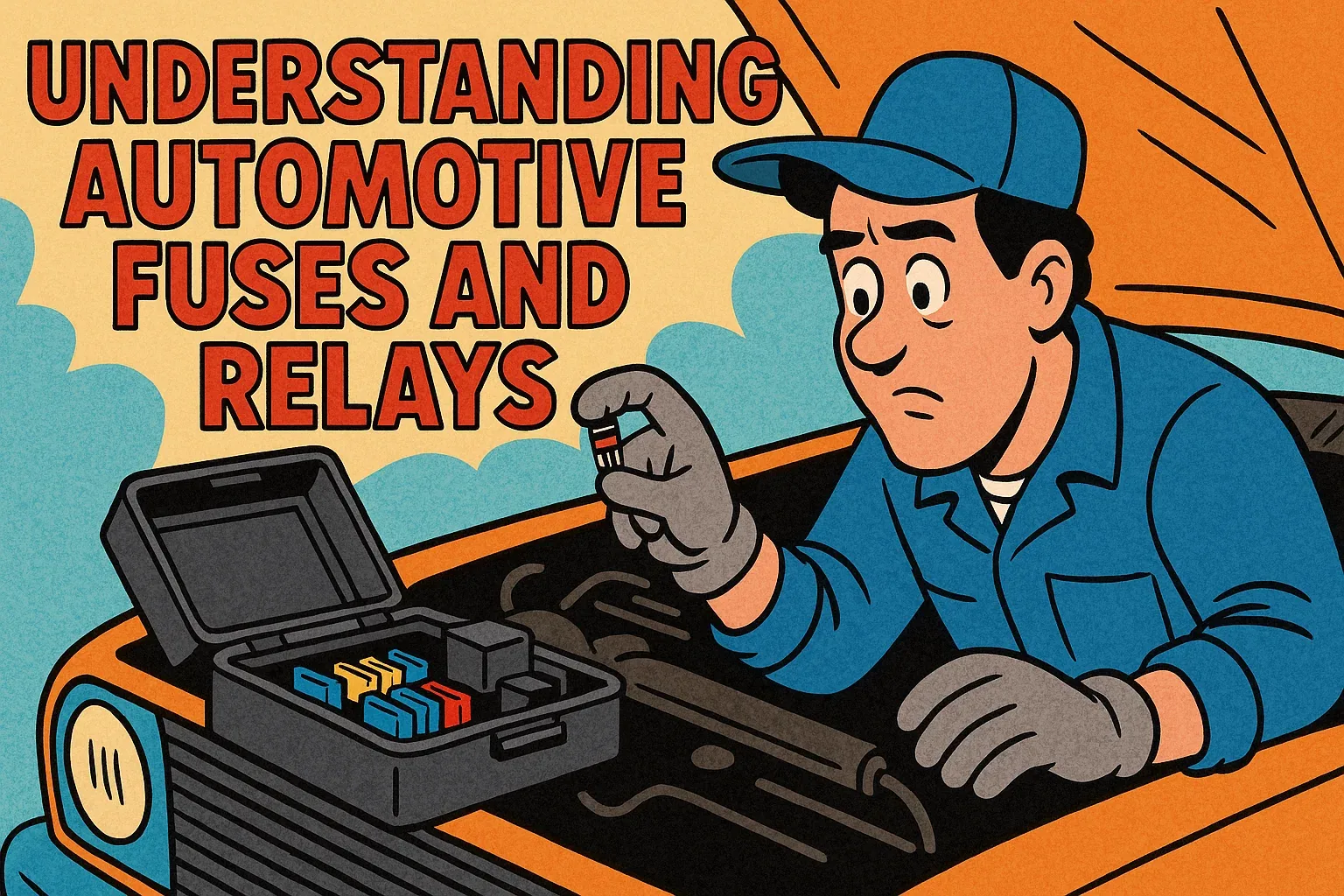
Alt Text: A close-up illustration of a mechanic in a blue uniform inspecting a small, colorful automotive fuse. With the open hood of a car and a fuse box visible in the background, the image perfectly captures the moment of diagnosing a potential electrical issue. The mechanic's expression suggests the frustration and focus that comes with troubleshooting, a feeling all drivers experience when their car's electrical systems fail.
Quick Answer
Fuses protect circuits from overload by blowing when too much current flows. Relays are electromagnetic switches that let small circuits control high-power components. When something electrical stops working, check the fuse box first. A blown fuse costs $1 to replace and takes 30 seconds.
Essential Knowledge for Every Driver
These small but mighty electrical guardians work around the clock to protect your vehicle's complex systems.
When they fail, they can leave you stranded. When they work properly, they prevent thousands of dollars in electrical damage.
Understanding how they function and knowing how to replace them isn't just useful knowledge, it's essential car ownership wisdom that can save you time, money, and frustration.
This guide will transform you from someone who's intimidated by automotive electrical systems into a confident problem-solver who can diagnose and fix common electrical issues in your own driveway.
Fuses 101: The Tiny Components That Save Your Car
The Basics That Matter
Think of fuses as the ultimate team players in your car's electrical system. They're designed to be the weakest link in any electrical circuit, and that's exactly what makes them heroes. The National Highway Traffic Safety Administration maintains a database of electrical-related recalls and safety bulletins at nhtsa.gov.
When too much electrical current flows through a circuit (due to a short circuit or component failure), the fuse sacrifices itself by burning out, protecting expensive components like your ECU, radio, or headlight assemblies.
Every fuse contains a thin metal strip or wire that's calibrated to handle a specific amount of electrical current, measured in amperes (amps).
When current exceeds this rating, the metal strip melts, breaking the circuit and stopping the flow of electricity. It's like having a tiny electrical bodyguard for every system in your car.
Cost-Effective Protection
Fuse Types You'll Actually Encounter
Blade Fuses: The Modern Standard
These rectangular plastic fuses with metal prongs are what you'll find in most vehicles built after 1980. They come in three main sizes:
- • Mini blade fuses (smallest, often yellow, orange, or red)
- • Standard blade fuses (medium size, various colors)
- • Maxi blade fuses (largest, typically handle 20-80 amps)
The color coding helps with quick identification: a yellow mini fuse is typically 20 amps, while a red standard fuse is usually 10 amps. However, always check the number printed on the fuse rather than relying solely on color.
Glass Tube Fuses: The Veterans
Found primarily in older vehicles and some European cars, these cylindrical glass fuses contain a visible wire element. While they're being phased out, you'll still encounter them in classic cars and certain applications. They're actually easier to diagnose because you can see the broken wire inside when they fail.
Specialty Fuses: The Heavy Hitters
Ceramic fuses handle extremely high currents and are typically found protecting major systems like the main electrical feed or air conditioning compressors. These larger, more expensive fuses rarely fail unless there's a serious electrical problem elsewhere.
Reading the Signs: Is Your Fuse Dead?
Visual Inspection: Your First Line of Defense
Pull the fuse from its socket and examine it closely. In blade fuses, look through the transparent plastic top. You should see an intact metal strip connecting the two prongs. If the strip is broken, melted, or missing entirely, you've found your culprit.
The Shake Test: Quick and Dirty Diagnosis
Sometimes a blown fuse isn't visually obvious, especially if the break is small. Gently shake the fuse near your ear. A good fuse will be silent, while a blown fuse might rattle if pieces of the metal element have broken off inside.
When Visual Inspection Isn't Enough
Relays Decoded: Your Car's Electronic Switches
Understanding Relay Logic
If fuses are the bodyguards of your electrical system, relays are the smart assistants. They're electromagnetic switches that allow a small electrical signal to control a much larger electrical load.
This is crucial in modern vehicles where sensitive electronic control modules need to operate high-power components like starter motors, air conditioning compressors, and cooling fans.
Here's the elegant simplicity: when your car's computer wants to turn on the cooling fan, it doesn't send high current directly to the fan motor.
Instead, it sends a small signal to a relay, which then closes its internal contacts and allows full battery power to flow to the fan. This protects the computer from high current loads and electrical noise while giving it precise control over powerful components.
Remote Control Benefits
Relay Types in Your Garage
4-Pin Relays: The Workhorses
These handle the majority of switching duties in your vehicle. They have four connections: two for the control circuit (coil) and two for the switched circuit (contacts).
When current flows through the coil, it creates a magnetic field that closes the contacts, completing the circuit to the component being controlled.
Common applications include headlights, cooling fans, air conditioning clutches, and fuel pumps.
The beauty of 4-pin relays is their interchangeability. Most 4-pin relays in your car can be swapped with each other for testing purposes.
5-Pin Relays: When You Need More Control
The fifth pin adds versatility by providing both normally open and normally closed contacts. This allows for more complex switching logic, such as reversing motors or providing backup circuits. You'll often find 5-pin relays controlling power windows, central locking systems, and some lighting circuits.
Specialty Relays: The Specialists
Flasher relays create the blinking pattern for your turn signals and hazard lights. Timer relays control delayed functions like interior lights that stay on after you close the door. Some modern vehicles use solid-state relays that have no moving parts but perform the same switching functions.
Diagnosing Relay Problems
The Click Test: Instant Feedback
This is every mechanic's favorite quick test. With the ignition on and the system activated, listen carefully to the relay while someone operates the switch. A healthy relay will produce a distinct clicking sound when it activates and deactivates. No click usually means a bad relay or no signal reaching the relay.
Swap Testing: Your Best Diagnostic Friend
Find another identical relay in your fuse box (they'll have the same part number) and swap them. If your problem moves to the other circuit, you've confirmed a bad relay. If the problem stays with the original circuit, the relay is fine and you have a wiring or component issue.
Silent Relay Failures
Location, Location, Location: Finding Your Fuse Boxes
The Great Fuse Box Hunt
Modern vehicles typically have multiple fuse and relay boxes scattered throughout the car, each serving different systems.
Understanding their locations and purposes will save you countless hours of frustration.
Engine Bay: The Power Center
The main fuse and relay box is usually located in the engine compartment, often near the battery or along the fender well. This box typically handles high-power circuits like the cooling fans, air conditioning, charging system, and engine management.
Look for a rectangular black box with a removable cover. The cover usually contains a diagram showing fuse and relay locations, along with their amperage ratings and circuit descriptions. This diagram is pure gold for troubleshooting, so take a photo with your phone for future reference.
Interior: The Convenience Center
Inside the passenger compartment, you'll find additional fuse boxes that control comfort and convenience features. Common locations include:
- • Under the dashboard on the driver's side
- • Behind kick panels near the driver's or passenger's feet
- • In the center console
- • Behind the glove compartment
These interior boxes handle lighting, radio, power windows, air conditioning controls, and other accessories that don't require the heavy-duty environmental protection of engine bay components.
Hidden Auxiliary Boxes: The Surprises
The Replacement Mission: Getting It Right
Before You Touch Anything
Safety First: Avoiding Electrical Disasters
Never work on electrical components in wet conditions or with wet hands.
Water and electricity don't mix, and automotive electrical systems carry enough current to cause serious injury.
Tools You Actually Need
The good news is that fuse and relay replacement requires minimal equipment:
- • Needle-nose pliers or fuse pullers (often provided in the fuse box)
- • A basic multimeter (helpful but not essential)
- • A flashlight or headlamp for visibility
- • Your smartphone camera for documenting fuse box layouts
Avoid using metal tools like screwdrivers to pry out fuses, as they can cause short circuits or damage to the fuse box.
The Step-by-Step Process
Proper Removal Techniques
Most fuse boxes include plastic fuse pullers that look like small tweezers. Use these whenever possible, as they're designed to grip fuses securely without damaging them. Grasp the fuse firmly and pull straight up with steady pressure. Avoid rocking or twisting motions that might damage the fuse contacts or socket.
Reading Amperage Ratings Correctly
This is crucial: always replace fuses with the exact same amperage rating. The amperage is printed on top of the fuse and should match what's shown in your fuse box diagram. Using a higher-rated fuse might seem like a solution to repeated failures, but it actually removes the protection the fuse is meant to provide.
Critical Safety Rule
Troubleshooting Common Electrical Gremlins
When Fuses Keep Blowing
Finding the Root Cause vs. Treating Symptoms
A fuse that blows repeatedly is trying to tell you something important: there's too much current flowing through that circuit. Simply replacing the fuse over and over is like putting a bandage on a broken pipe. You need to find and fix the underlying problem.
Common causes of repeated fuse failures include:
- • Short circuits in wiring (often caused by chafed insulation)
- • Failed components drawing excessive current
- • Water intrusion causing electrical leakage
- • Corroded connections creating high resistance
Short Circuit Hunting Without Expensive Tools
Start by visually inspecting all visible wiring in the affected circuit. Look for obvious damage like melted insulation, crushed wires, or areas where wiring might rub against sharp metal edges. Pay special attention to areas where wires pass through firewalls or around moving parts like doors and hoods.
If visual inspection doesn't reveal the problem, try disconnecting components one by one and testing the circuit after each disconnection. When removing a component stops the fuse from blowing, you've found your culprit.
Keep a Failure Log
Taking Control of Your Car's Electrical Health
Understanding fuses and relays transforms you from a helpless victim of electrical failures into an empowered problem-solver.
These small components play outsized roles in your vehicle's reliability, and knowing how to diagnose and replace them can save you hundreds of dollars in towing and repair costs.
The key to success lies in systematic troubleshooting rather than random part replacement.
Start with the simplest explanations (blown fuses) before moving to more complex possibilities (wiring problems). Use the swap test liberally with relays, and never ignore repeated failures as they're always symptoms of underlying problems.
Your Electrical Confidence Toolkit
- ✓Systematic approach to electrical troubleshooting
- ✓Knowledge of fuse and relay types and functions
- ✓Safe replacement procedures and proper tools
- ✓Understanding when to seek professional help
Remember that modern automotive electrical systems are both more complex and more reliable than their predecessors.
While this guide equips you to handle the majority of common fuse and relay problems, don't hesitate to seek professional help for complex issues or when safety is a concern.
For related electrical troubleshooting, see our battery diagnostics guide, alternator replacement guide, and dashboard warning lights reference.
Frequently Asked Questions
Expert answers to your electrical system questions
Still Have Questions?
Join our community of DIY enthusiasts for personalized advice and troubleshooting help.
Don't Miss Critical Car Care Tips
Get exclusive guides, money-saving maintenance tips, and early warning signs delivered straight to your inbox.